

Last Updated: October 19, 2026
Advanced sterile processing education for technicians is the difference between knowing how to run a washer-disinfector and knowing why a reprocessing workflow fails a survey.
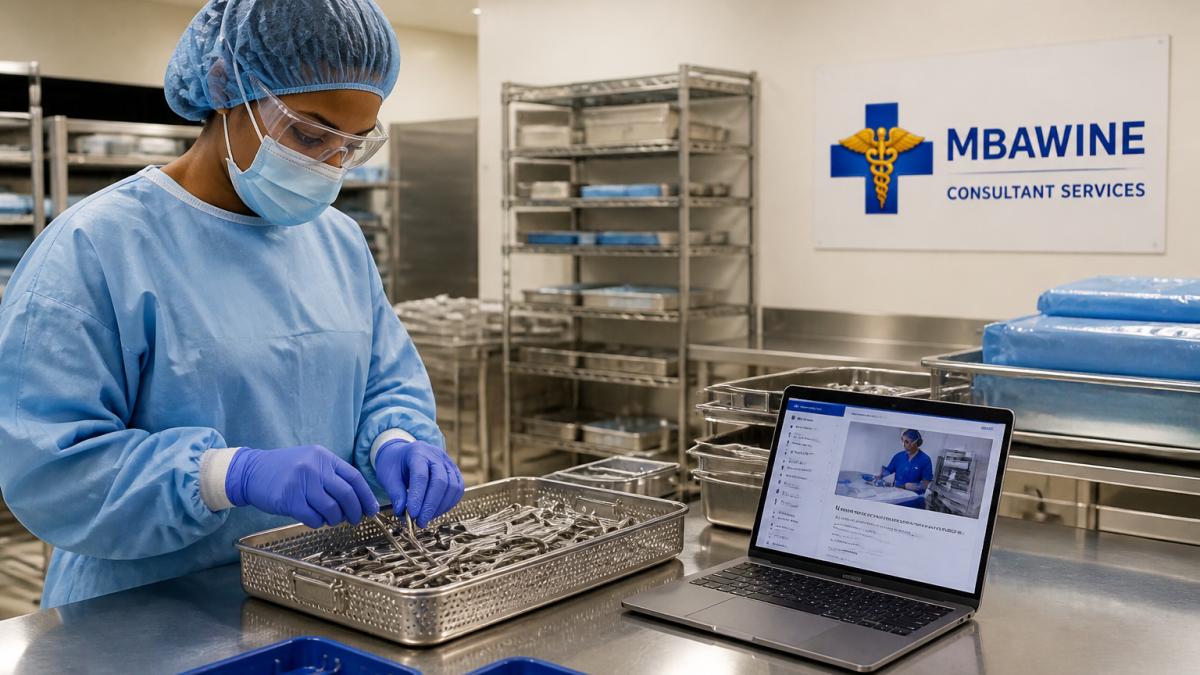
The floor teaches speed. It rarely teaches the reasoning behind standard precautions, quality assurance documentation, or instrument reprocessing standards that surveyors and accreditors examine.
That is the case for structured advanced sterile processing education. It converts hands-on competence into verifiable competency, the kind that shows up in a certification exam, an interview, and an audit.
Here is what most guides get wrong: they treat advanced training as a credential grab. It is not. It is a knowledge upgrade that changes how you see every tray that crosses your bench.
CRCST certification preparation should not start from scratch if you already work in central service. The Certified Registered Central Service Technician credential, administered through the Healthcare Sterile Processing Association (HSPA), is built around two components: a written exam and a documented hands-on experience requirement.
What trips people up is the written exam. It covers medical terminology, anatomy and physiology basics, microbiology, decontamination principles, sterilization methods and monitoring, sterile storage and distribution, and quality assurance. A technician who has only worked one station, say, decontamination only, often has blind spots in assembly, packaging, and sterilization documentation. The exam does not care that your department divides labor that way.
A good prep program does four things:
Most entry-level course pages treat CRCST as the only credential that matters. It is the foundational one, but experienced technicians should understand the landscape before they spend money.
Each credential has its own eligibility rules, exam blueprint, and recertification cycle. Do not assume that one course prepares you for all of them, and do not assume that a single credential covers every role. A lead technician posting and an endoscope reprocessing posting may list different preferred credentials even within the same department.
CIS certification for sterile processing is where instrument specialists separate themselves from generalists.
That means inspection under magnification, identifying damage before it reaches a surgeon's hands, correct assembly of complex and fragile sets, and knowing which instruments require manual cleaning before they ever touch an automated washer.
The FDA guidance on reprocessing reusable medical devices is worth reading even if you never take the exam. It explains why manufacturer instructions for use govern every step, and why "we've always done it this way" is not a defense during a survey.
CIS is not an entry-level credential. Eligibility generally requires current CRCST status plus documented hands-on experience, so the natural sequence for most technicians is CRCST first, then CIS after a period of instrument-focused work. Confirm the current eligibility rules and experience thresholds directly with the credentialing body before you plan a timeline, because requirements are updated periodically.
The exam scope goes deeper than the CRCST instrument sections: advanced inspection criteria, specialty instrument families, complex set assembly, and the documentation and quality-assurance practices that support instrument traceability. Renewal follows a continuing education cycle similar in structure to CRCST, but the specific hour categories and deadlines should be verified against the current recertification requirements rather than a colleague's recollection.
This is the part most course pages leave out, and it is where experienced technicians gain the most leverage.
What most guides miss is that CIS prep rewards technicians who already handle specialty services. If you work with microsurgical, orthopedic, robotic, or endoscope sets, your daily exposure is the best study material you have, but only if you pair it with structured education that names the standards behind what you are already doing.
CIS is a specialty credential, not a terminal one. It supports progression into instrument specialist roles, preceptor and educator positions, and, combined with a leadership credential, supervisory paths. The technicians who advance fastest are the ones who plan the sequence (CRCST, then CIS or CER, then a leadership credential) instead of collecting hours reactively at renewal time.
Online sterile processing training works for working technicians only when it is built around shift schedules, not semester schedules. Twelve-hour shifts and rotating weekends kill traditional classroom plans.
Self-paced learning helps, but self-paced is not the same as unsupported. The programs that actually get people across the finish line pair recorded modules with live audio, video, or web conferencing sessions where you can ask an instructor a real question.
Sterile processing continuing education is not optional maintenance. It is the mechanism that keeps a certification valid and a technician promotable.
Recertification requires documented continuing education hours on a recurring cycle, and the specifics depend on the credentialing body and your current status. Check the certification body's recertification requirements directly rather than relying on a colleague's memory, because requirements and deadlines change.
Career growth is the part technicians underestimate. The same continuing education hours that renew a CRCST can build a path toward lead technician, educator, or department management roles. Leadership credentials for central service professionals exist, and they reward people who planned their education instead of scrambling for hours at the last minute.
| Career Stage | Credential Focus | Education Priority |
|---|---|---|
| New technician | CRCST | Exam blueprint coverage, all stations |
| Experienced technician | CIS | Instrument inspection, specialty sets |
| Aspiring lead or manager | Leadership credential | Operations, quality assurance, staffing |
| Recertifying at any stage | Renewal hours | Documented continuing education |
Evaluate an advanced sterile processing education program on five things: instructor credentials, curriculum alignment, hands-on components, support structure, and total cost. Everything else is marketing.
Start with the instructors. Ask whether they hold current certifications and whether they have worked in a central sterile department, not just taught about one. A program led by credentialed practitioners talks differently about a failed biological indicator than a program led by career lecturers.
Then verify curriculum alignment. The course should map to the certification exam content outline and to recognized standards for decontamination, sterilization, and sterile storage.
Cost matters, and so does how a provider structures it. Ask for the full amount, the payment schedule, and what happens if you need to pause. Any provider that will not put the total in writing before you enroll is telling you something.
The hardest part of advancing in sterile processing is not the exam. It is finding education that respects your schedule, your existing skills, and your career direction. Too many technicians settle for generic courses and then wonder why the credential did not change anything.
At Mbawine Consultants, our credentialed experts deliver fast-track CRCST and CIS certification preparation through audio, video, and web conferencing, so you can study from home around real shifts. We also support departments with staffing and interim management when training and coverage have to happen at the same time.
Enroll with Mbawine Consultants and turn your floor experience into a credential that opens the next role.
Beyond the entry-level CRCST, experienced technicians can pursue the Certified Instrument Specialist (CIS) credential, which focuses on complex instrument inspection and assembly, and the Certified Healthcare Leader (CHL) for those moving into management. Each requires specific work experience and a passing exam. Advanced sterile processing education programs often bundle preparation for these credentials, helping technicians stack certifications without repeating foundational coursework.
Look for self-paced online sterile processing training with audio and video modules you can access between shifts. A typical prep plan includes reviewing the exam content outline, completing practice questions weekly, and scheduling the exam voucher only after scoring consistently above 80% on practice tests. Many working technicians study in 30-minute blocks before or after shifts, which adds up to 3-4 hours per week over a few months.
Most advanced sterile processing education programs run 8-16 weeks when taken part-time, though self-paced formats let you finish faster or slower depending on your schedule. CRCST preparation often takes 10-12 weeks for working technicians, while CIS prep may take 8-10 weeks if you already have instrument experience. Continuing education for recertification is ongoing, with credits earned through short courses and workshops throughout each certification cycle.
Advancing your education can open doors to specialized roles, leadership positions, and higher pay. The Bureau of Labor Statistics projects steady demand for sterile processing technicians, and certified technicians often qualify for roles that uncertified staff cannot fill. For those already on the floor, adding a CIS or CHL credential signals readiness for more responsibility and can make you a stronger candidate for supervisory or instrument specialist openings.


