

Last Updated: October 10, 2026
When a sterile processing department loses its leader unexpectedly, the ripple effects move fast. Surgical schedules slip. Instrument turnaround times stretch. Staff confusion about protocol changes creates safety gaps. This is where interim sterile processing managers step in to stabilize operations and prevent cascading failures across the facility.
Facilities hire interim leadership because the cost of delayed surgeries, compliance violations, and staff burnout exceeds the investment in temporary expertise. Interim managers arrive with established protocols and crisis management experience, enabling them to assess problems and make tough calls quickly without the emotional investment of permanent leadership.
A leadership gap of even a few weeks can erode quality standards that took months to build. Interim sterile processing managers prevent that erosion and position the department for successful transition, whether onboarding permanent leadership or stabilizing operations during planned departures.
Surgical schedules depend on predictable instrument availability. When a sterile processing manager leaves without a handoff, that predictability evaporates. Interim sterile processing managers restore it by stepping into existing workflows without requiring weeks of onboarding.
An interim manager's first priority is understanding current operations through audits of decontamination processes, sterilization logs, and instrument assembly bottlenecks, typically completed in 5-10 days. Once the baseline is clear, they reinforce what's working and address immediate inefficiencies.
Frontline technicians often feel unsettled during leadership changes. An interim manager who communicates clearly about what stays the same and what will change reduces anxiety and maintains productivity. Clear communication prevents a secondary wave of departures.
Interim managers can implement quick wins, simple workflow adjustments, building credibility with staff and demonstrating measurable value to administration.
Interim sterile processing managers focus on three productivity drivers: workflow efficiency, error reduction, and staff utilization.
Workflow assessment often reveals redundant steps. An interim manager might consolidate decontamination zones, adjust staffing schedules to match case volume, or simplify assembly processes. These changes are implemented quickly because interim leaders face less internal resistance than permanent hires making structural changes.
Interim managers establish formal error-tracking systems and baseline metrics, creating visibility into quality issues that become invaluable for the next permanent leader.
Interim managers identify advancement-ready technicians and provide targeted coaching. This investment often retains top talent, as staff respond to leadership focused on their growth.
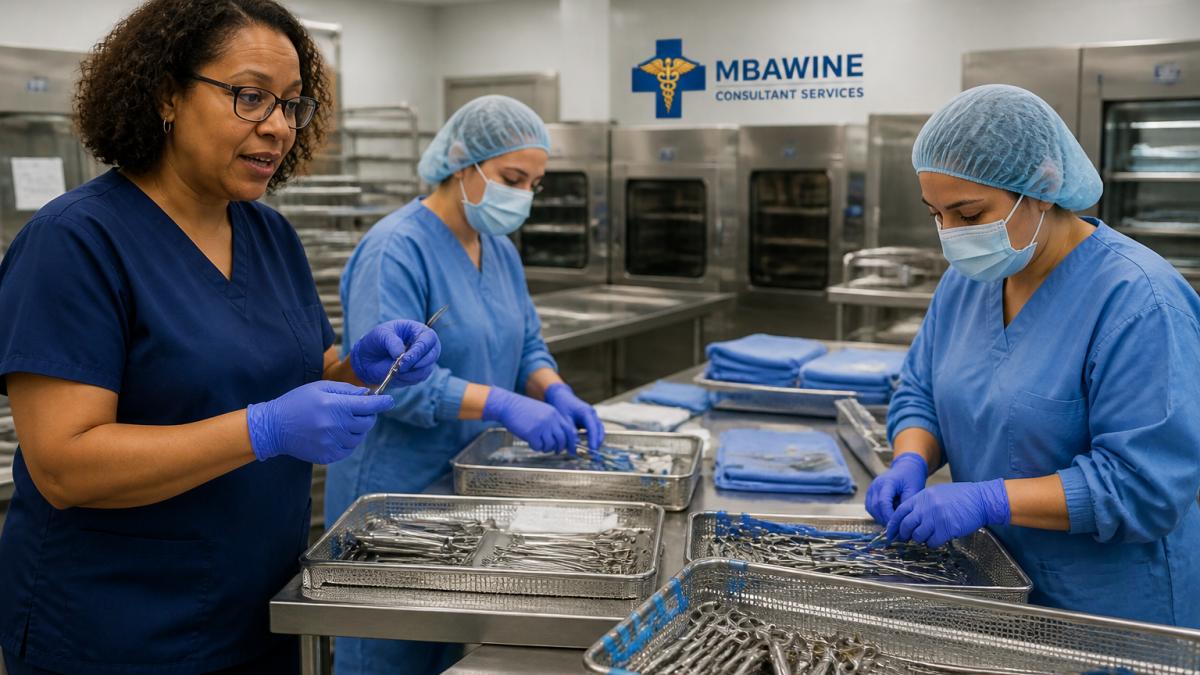
Interim sterile processing managers oversee daily operations, staff supervision, regulatory compliance, and process improvement with added urgency.
Interim managers monitor instrument availability, review sterilization records, and respond to staffing needs independently, bringing external perspective to problems internal staff have learned to accept.
Effective interim managers address staff concerns about job security and role changes directly while maintaining clear performance expectations.
Interim sterile processing managers must understand Joint Commission standards, FDA device reprocessing requirements, and state regulations. Baseline compliance audits identify and correct violations early, preventing serious issues.
Interim leaders add value through process improvement, adapting best practices from other facilities without the "we've always done it this way" resistance that slows permanent leaders.
Compliance gaps carry serious consequences: citations, surgical delays, and patient safety risks. Interim sterile processing managers prioritize compliance assessment in week one.
Compliance audits cover sterilization validation, equipment maintenance, staff training, and instrument traceability. Interim managers organize documentation to satisfy regulatory requirements and streamline audits.
Interim managers establish or strengthen incident reporting processes, creating a culture where staff safely report errors and near-misses, preventing small problems from escalating.
Interim managers prepare for external audits by ensuring complete records, staff protocol knowledge, and equipment maintenance, reducing audit findings and demonstrating regulatory commitment.
High turnover creates a vicious cycle of departures, increased workload, and burnout. Interim sterile processing managers interrupt this cycle by stabilizing workload, creating growth opportunities, and modeling retention-focused leadership.
Evaluating and Selecting an Interim Manager: A Practical Checklist
Before hiring an interim manager, define what success looks like for your facility. This clarity helps you evaluate candidates and set expectations. Use this checklist to assess fit:
Credentials and Compliance Knowledge
Leadership and Change Management Experience
References and Track Record
Cultural and Operational Fit
Stabilizing Workload and Preventing Burnout
Interim managers assess whether departments are understaffed, overscheduled, or both, many operate in crisis mode because staffing hasn't kept pace with surgical volume.
Interim managers identify excessive overtime causes, open positions, specialized equipment gaps, inflexible schedules, and recommend adjustments: hiring, cross-training, shift adjustments, or flexible scheduling.
Many changes require reorganization, not budget increases. Consolidating decontamination zones or adjusting break schedules can reduce overtime without adding headcount.
Identifying and Developing Advancement Candidates
Interim managers create advancement pathways for skilled technicians through training, mentoring, and clear timelines.
This includes shadowing assignments, CSPDT certification enrollment with study time, and documented advancement plans. Staff who see clear advancement paths are far less likely to leave.
Recognition, Engagement, and Retention
Interim managers who acknowledge strong performance and show staff the impact of their work improve engagement in a department that often feels invisible.
Simple practices, all-staff huddles celebrating wins, surgical staff thank-yous, written recognition, and explaining impact on patient care, reduce turnover and build long-term retention without cost.
Continuity After the Interim Assignment
By week 8 of a 12-week assignment, interim managers should document standard operating procedures, staff development plans, compliance status, permanent leadership recommendations, and external resources. If a permanent leader is being hired, the interim manager should participate in interviews to ensure continuity.
Successful interim assignments improve staff retention by modeling good leadership, developing internal talent, and creating sustainable systems that the permanent leader inherits.
Interim assignments succeed based on measurable outcomes: case delays prevented, instrument availability, compliance audit results, staff retention, and cost comparison against alternatives.
Establishing Baseline Metrics
Document baseline metrics before the interim manager arrives: case delays per week, instrument turnaround time, overtime hours, staff turnover rate, compliance audit findings, missing/damaged instruments, and tray defects. Establish these in week one if not already tracked.
Measuring Operational Improvements
Case delays directly impact revenue and patient satisfaction. A facility averaging 3-5 delays per week that drops to 1-2 per week demonstrates quantifiable operational stabilization within 30 days.
Turnaround time improvements (6 hours to 4 hours) or instrument availability gains (92% to 97%) demonstrate workflow improvement. Some facilities see 10-15% case cancellation reductions within two months.
Overtime reduction is a direct cost metric. Reducing 40 hours of weekly overtime to 15 hours yields concrete savings: 25 hours × hourly rate × 8-12 weeks.
Compliance and Quality Outcomes
Compliance audit findings show improvement when citations drop (e.g., 12 to 3). Document specific citations resolved to demonstrate accreditation impact and reduced regulatory risk.
Staff retention during the interim period is crucial. Maintaining a high percentage of the team represents significant avoided turnover costs.
Calculating ROI: Interim Investment vs. Operational Alternatives
An interim sterile processing manager represents an investment. Compare this against alternatives: operating without leadership, permanent recruitment, or internal promotion.
Typical ROI: Preventing case delays yields significant prevented costs over time, against an interim investment.
Tracking Progress and Adjusting Course
Establish weekly or bi-weekly reviews comparing baseline metrics to current performance. If metrics aren't improving by week 4, investigate support, staff resistance, or scope issues. Document all improvements in writing for the permanent leader, administration, and regulatory discussions.
Days 1-30: Assessment and Stabilization, Observe operations, review documentation, interview staff, identify top three issues, implement quick wins (reorganize decontamination, adjust schedules, implement tracking systems).
Days 31-60: Implementation and Development, Implement larger changes (staff training, equipment maintenance, process improvements), identify promotion candidates, establish regular communication channels.
Days 61-90: Transition Planning, Document recommendations for permanent leadership, create training materials, participate in hiring interviews if applicable, embed improvements as standard practice.
Interim sterile processing managers address a specific problem: the gap between leadership departure and stable operations. They bring expertise, external perspective, and urgency to departments in transition. Facilities that invest in quality interim leadership often find that the cost is far lower than the cost of operating without it, and the improvements often outlast the interim assignment itself.
Mbawine Consultants connects healthcare facilities with interim sterile processing managers who understand both the clinical demands and the operational realities of surgical support environments. Our team helps you evaluate interim leadership needs, select the right fit for your department, and ensure a smooth transition that strengthens your operations. Learn more about interim management solutions for surgical facilities and how we've supported departments through leadership transitions and operational improvements.
Interim sterile processing managers provide immediate operational continuity, reduce case delays, and ensure regulatory compliance without the cost of a permanent hire. They bring external expertise to identify workflow inefficiencies, coach frontline staff, and implement process improvements. Most facilities see improved turnaround times and instrument availability, plus reduced staff turnover when interim managers focus on retention and staff development strategies.
Interim managers assess current workflows, identify bottlenecks in instrument decontamination and assembly, and implement lean practices to increase throughput. They track key metrics like case delays, instrument turnaround time, and staff utilization rates. By coaching frontline staff and refining sterilization protocols, they typically reduce processing time per case and improve surgical instrument availability, directly impacting your facility's surgical schedule reliability.
Interim managers oversee daily sterile processing department operations, supervise and develop frontline staff, manage hiring and retention initiatives, ensure compliance with safety standards and regulatory requirements, and conduct operational assessments. They also coordinate instrument processing workflows, address quality assurance issues, and implement continuous improvement initiatives. Their experience allows them to hit the ground running without requiring extensive facility-specific onboarding.
Interim assignments typically range from 3 to 12 months, depending on your facility's needs. Some facilities use interim managers to cover permanent vacancies while recruiting, others to stabilize operations during transitions, and some to implement specific improvements before transitioning to a permanent hire. The timeline is flexible and based on your operational goals and staffing plan.


