

Last Updated: August 17, 2026
Sterile processing consultants are specialized professionals who help hospitals, ambulatory surgical centers, and third-party reprocessing units optimize their surgical instrument sterilization operations and meet regulatory compliance standards. These consultants bring deep expertise in decontamination protocols, instrument sterilization processes, regulatory requirements, and operational workflow redesign to healthcare facilities of all sizes.
The role extends beyond simple advice. A competent sterile processing consultant conducts gap analyses of your existing department, identifies compliance vulnerabilities, assesses staff competency levels, and develops actionable improvement plans. They help facilities understand where their processes fall short against accreditation standards and industry benchmarks. Many consultants also provide interim management support when a facility faces staffing shortages or leadership transitions, stepping in to stabilize operations while permanent solutions are implemented.
What sets experienced consultants apart is their ability to balance compliance with operational reality. They understand that a perfect system on paper means nothing if your staff can't execute it during a 12-hour surgical schedule. They know the difference between what regulatory bodies require and what actually prevents surgical site infections. They've seen what works in a 5-person department and what fails in a 50-person operation.
The best sterile processing consulting firms also offer education and certification preparation services. CRCST (Certified Registered Central Service Technician) and CIS (Certified Instrument Specialist) certifications represent the gold standard for individual technician credentials. Consultants who offer structured preparation programs help your team pass these exams while simultaneously improving their practical knowledge of infection control and sterilization science.
Mbawine Consultants stands as a choice for facilities seeking comprehensive sterile processing support combined with flexible, accessible education. The firm distinguishes itself through highly credentialed experts who bring current clinical knowledge and real-world facility experience to every engagement.
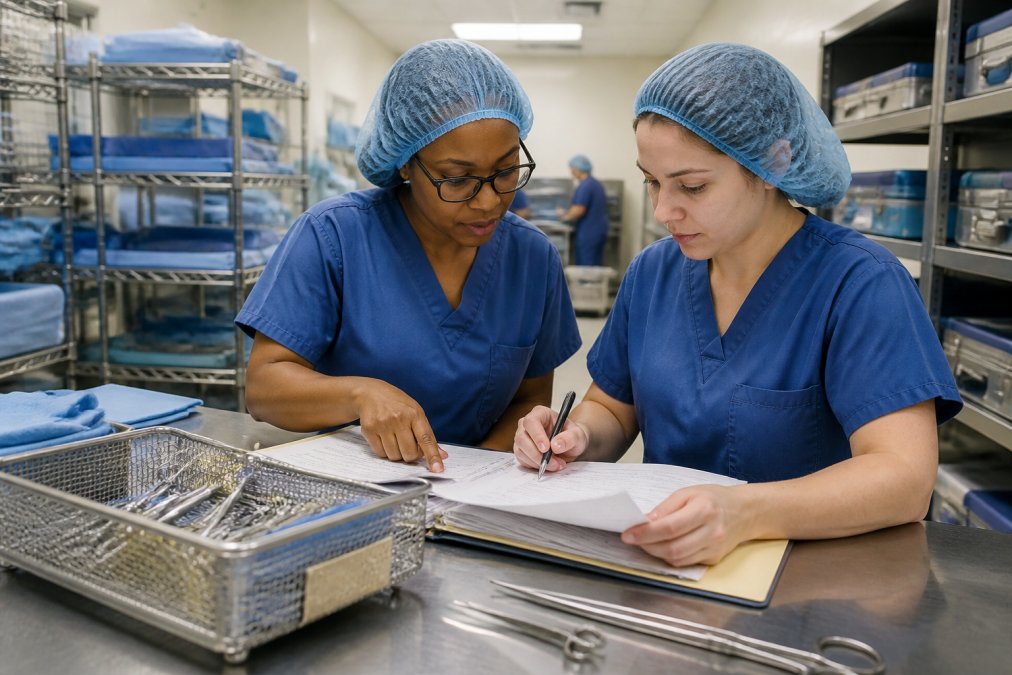
The core strength of Mbawine Consultants lies in its dual offering: operational consulting for facility improvement alongside advanced certification preparation for individual technicians. Their CRCST and CIS test preparation programs are specifically designed for working professionals. Audio, video, and web conferencing options mean you can study from home during your off-hours, not during your shift. This flexibility addresses a real pain point: most technicians working 12-hour shifts in the sterile processing department cannot attend traditional classroom programs.
Their interim management and staffing solutions address another critical gap. When a facility loses its SPD director or faces unexpected staffing shortages, Mbawine Consultants can provide qualified interim leadership while you recruit permanent staff. This prevents the operational chaos that typically follows a sudden leadership departure. Their temporary staffing also includes pre-vetted professionals who understand sterile processing protocols, reducing the training burden on your existing team.
Mbawine Consultants offers financing options with no payment required for the first 30 days. This structure lets you evaluate their programs before committing financially, reducing the risk of enrollment for budget-conscious departments. The firm's commitment to accessibility, both in terms of scheduling and cost, makes advanced sterile processing expertise available to facilities that might otherwise lack resources for professional development.
Beyond Mbawine Consultants, several other consulting firms offer sterile processing support. Some specialize in interim staffing and temporary leadership. Others focus exclusively on compliance audits and regulatory readiness assessments. A few offer education and certification prep services similar to Mbawine's approach, though with less flexibility around scheduling and fewer options for remote learning.
When evaluating other providers, pay attention to the depth of their expertise. Some firms employ consultants with extensive SPD background and current certifications. Others staff their consulting teams with general healthcare administrators who lack hands-on sterile processing experience. The difference shows up quickly in the quality of recommendations and the credibility you gain with your own staff.
Many competing providers also lack integrated solutions. They'll audit your department, identify problems, and hand you a report. Then you're on your own to implement changes. Mbawine Consultants, by contrast, combines assessment with ongoing support, education, and interim management, allowing facilities to address gaps comprehensively rather than piecemeal.
Before hiring any sterile processing consultant, conduct your own evaluation of what you actually need. This checklist helps you assess gaps in your department and identify which consultant services will deliver the most value.
Operational Efficiency and Workflow:
Compliance and Accreditation:
Staff Competency and Training:
Equipment and Technology:
Supply Chain and Inventory:
A qualified sterile processing consultant will help you complete this assessment accurately and identify which gaps pose the highest risk to patient safety and operational efficiency.
Certification in sterile processing demonstrates that a technician has met standardized competency requirements. The CRCST (Certified Registered Central Service Technician) credential covers the full scope of sterile processing work, while the CIS (Certified Instrument Specialist) focuses specifically on surgical instrument knowledge and handling.
Many healthcare facilities now require or strongly prefer CRCST certification for technicians. Achieving this credential requires passing a comprehensive exam that covers decontamination, sterilization science, inventory management, quality assurance, and safety protocols. The exam is challenging because it demands both theoretical knowledge and practical understanding of real-world sterile processing operations.
Quality certification preparation programs do more than provide study materials. They teach the underlying principles that explain why certain protocols exist. A technician who understands the science of steam sterilization, temperature, pressure, exposure time, and steam quality, can troubleshoot sterilization failures rather than simply following a checklist. This deeper knowledge translates directly to better patient safety outcomes.
Mbawine Consultants' certification preparation services are structured for working professionals. Audio modules allow technicians to study during commutes. Video content demonstrates proper techniques and protocols. Web conferencing options provide live instruction and question-and-answer sessions without requiring travel or time away from the facility. This flexibility matters enormously for technicians working 12-hour shifts in demanding SPD environments.
The firm also recognizes that certification preparation is an investment in career advancement. Technicians who earn CRCST or CIS credentials qualify for higher-paying positions, supervisory roles, and eventually leadership opportunities like Certified Healthcare Leader (CHL) credentials. By making preparation accessible, Mbawine Consultants helps individual technicians build careers while simultaneously improving the overall competency of healthcare facilities.
Unexpected departures in sterile processing leadership create operational crises. When an SPD director leaves suddenly or a facility lacks experienced management, the entire department can destabilize within days. Surgical schedules depend on reliable sterilization and instrument availability. If neither is assured, elective surgeries get cancelled and revenue evaporates.
Interim management consultants step into these gaps temporarily. The best ones bring sufficient authority and expertise to stabilize operations immediately while you recruit permanent leadership. They understand facility politics, can earn staff trust quickly, and know how to maintain compliance during transitions.
Interim staffing solutions address a different problem: chronic understaffing or unexpected absences. Temporary technicians from staffing providers vary widely in competency. Some have genuine sterile processing experience and require minimal orientation. Others have healthcare backgrounds but lack SPD-specific knowledge, requiring significant training investment from your existing team. This training burden can actually decrease productivity rather than improve it.
Mbawine Consultants' staffing model emphasizes pre-vetted professionals with actual sterile processing experience. This reduces the orientation burden and allows your facility to maintain normal productivity levels while temporary staff are in place. For small departments (8-10 people), this difference is especially critical. You cannot afford to spend your experienced staff's time training temporary workers when you're already understaffed.
The firm also offers permanent placement assistance, helping facilities recruit experienced technicians and supervisors. They understand the qualifications that matter in sterile processing and can help you evaluate candidates based on technical competency rather than just credentials on paper.
| Staffing Type | Duration | Best For | Key Benefit |
|---|---|---|---|
| Interim management | Weeks to months | Leadership transitions | Operational stability during recruitment |
| Temporary technicians | Days to weeks | Unexpected absences | Maintains productivity without training burden |
| Permanent placement | Ongoing | Building team capacity | Access to vetted, experienced professionals |
| Consulting support | Project-based | Specific improvements | Expert guidance on targeted issues |
Choosing the wrong consultant wastes money and creates organizational frustration. Selecting the right one accelerates improvement, builds staff confidence, and delivers measurable results.
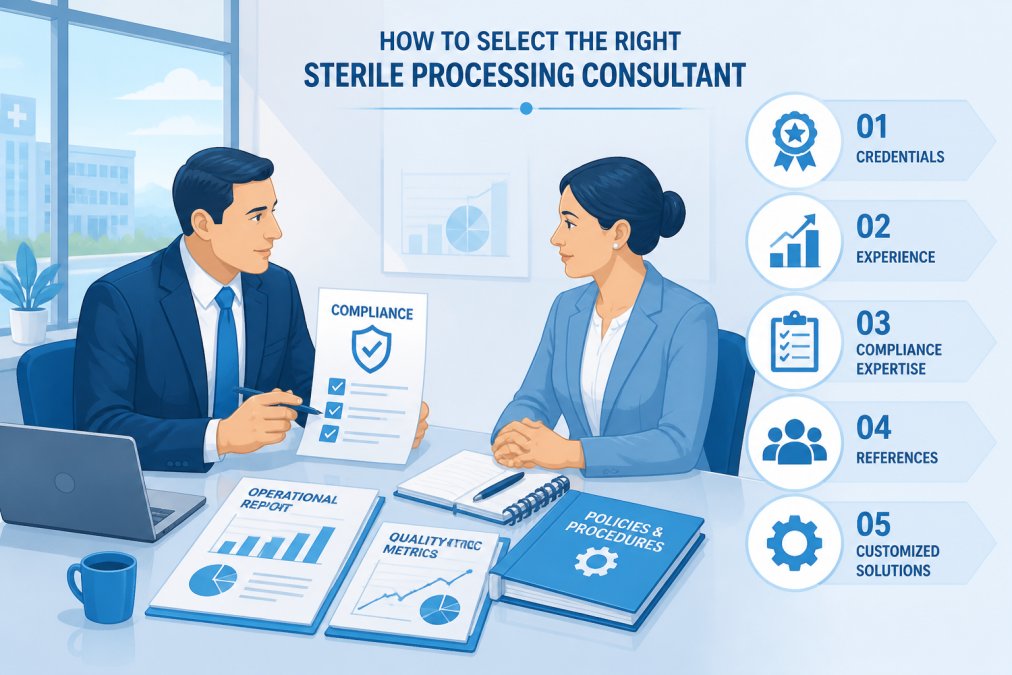
Define Your Primary Need
Start by identifying whether you need assessment and improvement planning, interim management, education and certification support, or some combination. A consultant strong in operational efficiency might lack expertise in regulatory compliance. Another might excel at certification preparation but offer limited interim management capabilities. Mbawine Consultants' integrated approach covers all these areas, but other providers may specialize narrowly.
Verify Credentials and Current Experience
Ask whether consultants hold current CRCST or CIS certifications themselves. Outdated knowledge becomes obvious quickly to your staff. A consultant who cannot answer practical questions about current sterilization standards or infection control protocols loses credibility immediately. Request references from similar-sized facilities where they've worked recently.
Assess Communication and Cultural Fit
A consultant who delivers harsh criticism without offering solutions creates defensiveness rather than improvement. The best sterile processing consultants understand that your staff works in a high-pressure environment. They deliver honest feedback while respecting the professionals who execute daily operations. They frame recommendations as collaborative problem-solving, not top-down mandates.
Evaluate Flexibility and Accessibility
If certification preparation is part of your need, verify that the consultant offers scheduling options compatible with your staff's reality. Can technicians access materials at home? Are live sessions recorded for those who cannot attend? Do they offer financing options that reduce financial barriers to participation?
Understand the Cost Structure
Request transparent pricing for different services. Some consultants charge by the day. Others use project-based fees. Still others offer retainer arrangements for ongoing support. Mbawine Consultants' no-payment-for-30-days financing structure removes some financial risk from evaluation. Understand what you're actually committing to before you sign.
Check References Specifically for Your Use Case
If you need interim management, ask for references from facilities where they provided it. If certification prep is your priority, speak with technicians who completed their programs. Generic references don't tell you whether a consultant can actually solve your specific problem.
Assess Post-Engagement Support
Some consultants deliver recommendations and disappear. Others provide follow-up support to ensure improvements actually stick. Ask how they handle implementation support and whether they adjust recommendations based on your facility's feedback during the engagement.
The quality of your sterile processing department directly determines patient safety and surgical efficiency. Sterile processing consulting firms help you optimize operations, ensure regulatory compliance, develop staff competency, and navigate leadership transitions. The best consultants combine operational expertise with accessibility and a collaborative approach to improvement.
Mbawine Consultants delivers comprehensive sterile processing support through highly credentialed experts, flexible CRCST and CIS certification preparation accessible from home, interim management and staffing solutions, and transparent financing with no payment required for the first 30 days. Their integrated approach addresses multiple needs simultaneously, whether you're improving operational efficiency, preparing staff for certification, managing unexpected leadership gaps, or building long-term departmental excellence.
AAMI sterilization standards and guidelines provide the technical foundation for proper sterilization processes. CDC guidelines on surgical site infection prevention establish the infection control principles that drive sterile processing protocols. Healthcare Sterile Processing Association resources offer industry benchmarking and professional development standards that help facilities evaluate their operational performance.
Whether your facility is small or large, facing immediate staffing challenges or planning long-term improvement, the right sterile processing consultant accelerates your path to operational excellence and regulatory confidence. Mbawine Consultants' combination of expertise, accessibility, and integrated services makes them a logical choice for facilities serious about achieving excellence in sterile processing.
A sterile processing consultant evaluates your SPD operations, identifies compliance gaps, and develops improvement strategies. They assess decontamination workflows, instrument tracking systems, staff competency, and regulatory readiness. Many consultants also provide interim management support, staff training, and help prepare technicians for CRCST and CIS certification. Their goal is to optimize operational efficiency while ensuring patient safety and infection control standards.
Look for consultants with CRCST (Certified Registered Central Service Technician) or CIS (Certified Instrument Specialist) credentials, as these demonstrate hands-on sterile processing expertise. Leadership certifications like CHL (Certified Healthcare Leader) or CHES (Certified Healthcare Executive Specialist) indicate management capability. Verify current certification status and ask about continuing education. Consultants should also understand AAMI standards, Joint Commission requirements, and OSHA regulations relevant to surgical services.
Assess effectiveness by reviewing their experience with facilities similar in size and complexity to yours. Ask for references from hospitals or surgical centers they've worked with, and inquire about measurable outcomes like reduced turnaround times, improved compliance scores, or successful accreditation. Evaluate their approach to gap analysis and whether they provide post-engagement support to sustain improvements. A strong firm should offer clear metrics, transparent reporting, and ongoing education to build internal capability rather than creating dependency.
Yes. Reputable sterile processing consultants are well-versed in AAMI standards for sterilization and instrument reprocessing, as well as Joint Commission requirements for surgical services. They conduct compliance audits, identify deficiencies in your standard operating procedures, and recommend corrective actions. Many consultants help prepare your department for accreditation surveys by ensuring documentation, staff competency, and processes meet regulatory expectations. They can also provide staff training on compliance requirements.
External consultants bring objective assessment of your operations, identifying blind spots your internal team may miss. They provide specialized expertise in regulatory compliance, workflow optimization, and staff development without the cost of hiring full-time leadership. Consultants accelerate improvement timelines, reduce patient safety risks, and help contain costs through process redesign. They also offer interim staffing during transitions and provide staff training that builds long-term departmental capability, reducing turnover and improving clinical outcomes.
This article was written using GrandRanker


