

Last Updated: October 23, 2026
Quick Summary
The Bronx is New York City's northernmost borough and the only one on the mainland, home to roughly 1.4 million people. It divides into distinct neighborhoods, from the redeveloping South Bronx to Riverdale's steep, green streets, and it is the birthplace of hip-hop.
The Bronx added 63,066 housing units between 2010 and 2025, according to Furman Center housing data, and 43,719 of those were income-restricted. That single figure explains more about the Bronx than any skyline photo: this is a borough being rebuilt while the people who live here fight to stay. At Mbawine Consultants, we work with healthcare teams across the region, and the Bronx we hear about from staff and students is not the one in the old headlines. It is denser, younger in its institutions, and changing block by block.
The Bronx is the northernmost of New York City's five boroughs and the only one on the mainland, home to roughly 1.4 million people. Below, we break down its neighborhoods, its transit, its music, and what the 2026 numbers actually say, so you can plan a visit or understand the place you work in.
Bronx neighborhoods divide sharply by geography and history, and the differences matter if you are choosing where to spend a day or where to work. The South Bronx carries the borough's densest housing and its most visible redevelopment. The north and west hold the borough's greenest streets and its largest institutions.
Mott Haven, Melrose, and Port Morris form the borough's waterfront edge, where 19th-century industrial buildings sit beside new residential towers. The area has absorbed a large share of the borough's recent construction, and the streets around the Mott Haven historic district still hold brownstones and church facades from the 1800s. Expect construction noise and heavy foot traffic on weekday mornings.
Riverdale feels nothing like the rest of the borough: steep streets, large houses, views across the Hudson to the Palisades. Fordham and Kingsbridge sit lower and denser, anchored by Fordham University and the retail spine along Fordham Road. If you want green space and quiet, go north. If you want the borough's everyday commercial energy, go to Fordham.
The Bronx Zoo and the New York Botanical Garden anchor the borough's visitor map, and both sit within walking distance of each other near Fordham Road. The Botanical Garden's 250 acres include the Enid A. Haupt Conservatory and a native forest, while the zoo remains one of the largest urban wildlife parks in the country. Beyond those two, the borough's strongest draw is food: Arthur Avenue in Belmont, where Italian bakeries and butchers still run family operations, and the Grand Concourse, a boulevard lined with Art Deco apartment buildings. Wave Hill in Riverdale offers gardens and a view across the Hudson that most visitors never see.
Getting around the Bronx runs on three systems: the subway, the bus network, and Metro-North. The subway's numbered lines serve the western and central Bronx, with the 4, B, and D lines covering the Concourse corridor and the 2 and 5 reaching further north and east. Metro-North's Hudson, Harlem, and New Haven lines stop in the borough and cut travel time to Manhattan dramatically from stations like Fordham and Riverdale.
Buses fill the gaps the subway leaves, particularly east of the Bronx River, where rail coverage thins out. For a broader New York City travel guide with itinerary and transit tips, see our companion article.
| Mode | Best For | Coverage |
|---|---|---|
| Subway | Fast north-south trips | Western and central Bronx |
| Metro-North | Manhattan commutes | Fordham, Riverdale, and east Bronx |
| Bus | East Bronx and crosstown trips | Borough-wide |
Bronx hip-hop history begins in the recreation rooms and outdoor parties of the South Bronx in the early 1970s, when DJs isolated percussion breaks and MCs talked over them. A 2025 Fordham University thesis on the borough's urban planning and transportation history notes how the same decades of highway construction that displaced communities also shaped the spaces where the music took root.
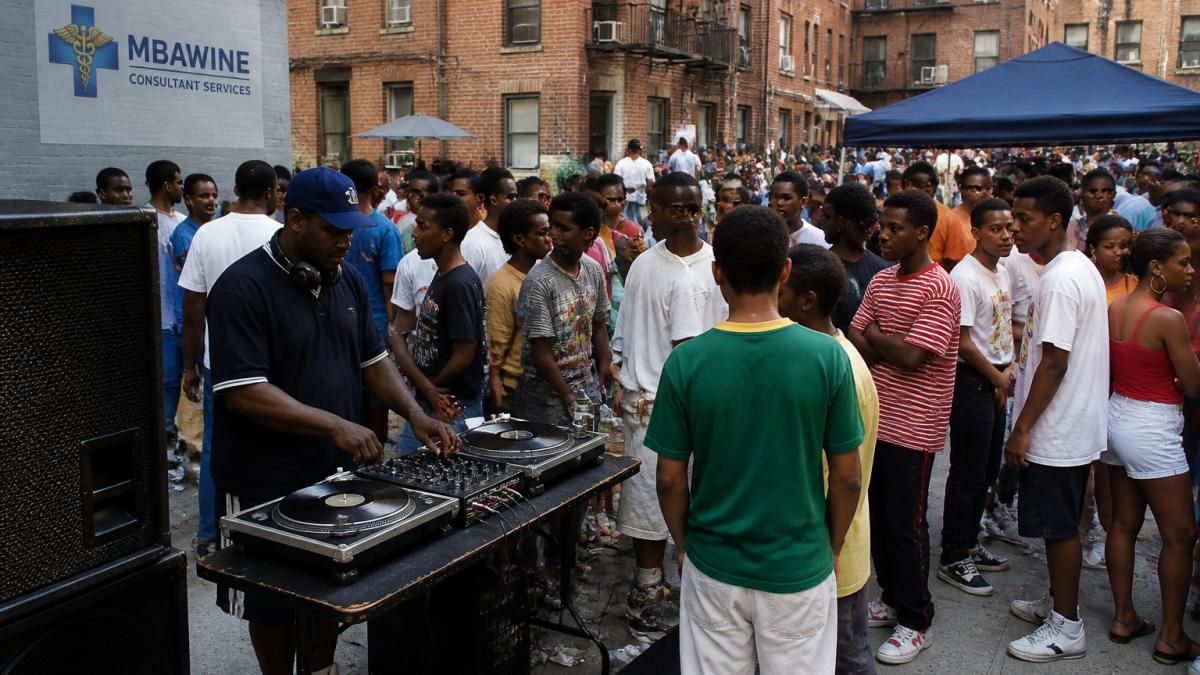
The sound spread from park jams to global stages, and the borough still treats that origin as civic identity rather than nostalgia. Walking the Grand Concourse, you will find murals and small venues that carry the lineage forward.
Enrollment in Bronx District 1 through 32 schools fell by about 3% in the 2025-2026 school year, according to New York City Public Schools data, after three years of relative stability. Bronx County's unemployment rate stood at 6.1% in 2026, per Data Commons county statistics, while the borough's population reached an estimated 1,406,612 with annual growth of 0.02%.
Health data tells its own story. The share of Bronx County residents with obesity was 32.8% in 2024, and a CDC case study on asthma and air pollution in the Bronx documented the environmental-justice questions that shape how the borough's health research gets done. Environmental work here is not abstract: a Bronx River watershed case study framed the river as a test case for analysis beyond simple distribution of harm.
The Bronx in 2026 is a borough where new housing, old institutions, and unresolved environmental questions sit on the same blocks. Understanding that tension is the difference between a tourist visit and a real read on the place. For more articles on the region and on professional development in healthcare, browse the Mbawine Consultants blog.
The Bronx rewards people who look past the shorthand. Whether you are planning a visit, weighing a move, or building a career in one of its hospitals, the borough's numbers and neighborhoods tell a more complicated story than its reputation does. At Mbawine Consultants, we support sterile processing professionals and department leaders with certification preparation for CRCST and CIS, remote audio, video, and web conferencing for flexible study, and interim management and staffing for surgical and ambulatory-surgical facilities. Enroll with Mbawine Consultants and build the credentials your next role requires.
The Bronx is known as the birthplace of hip-hop, home of the New York Yankees, and the site of the Bronx Zoo and New York Botanical Garden. It is also the only New York City borough on the mainland, which shapes how it grew. Between 2010 and 2025 the borough added 63,066 housing units, 43,719 of them income-restricted, according to the Furman Center. Its identity blends cultural history with ongoing neighborhood change.
The fastest routes are the subway and Metro-North. The 4, 5, B, and D lines cross into the Bronx from Manhattan, and Metro-North's Harlem and Hudson lines stop at stations including Yankees-E 153rd Street, Fordham, and Riverdale. Getting around the Bronx by bus fills the gaps between subway lines. Driving is possible, but parking near Yankee Stadium on game days is slow and expensive, so transit usually wins.
The Bronx has dozens of neighborhoods. The South Bronx includes Mott Haven, Melrose, and Port Morris. Central and west areas include Fordham, Kingsbridge, and University Heights. Riverdale and Fieldston sit in the northwest and are known for leafy streets and hilltop views. Co-op City in the northeast is one of the largest housing complexes in the country. Each area has its own housing stock, transit access, and character.
Most visitors spend their time at major attractions, and those areas are busy and well-trafficked. As in any large city, awareness matters: stick to main streets after dark, keep valuables out of sight, and check current conditions before exploring unfamiliar blocks. Bronx County's unemployment rate was 6.1% in 2026, per Data Commons, which reflects economic pressure in parts of the borough. Plan daytime visits to parks and cultural sites.


