

Last Updated: October 17, 2026
The Certified Instrument Specialist exam study guide exists because the CIS credential tests what general sterile processing certification does not: identifying, inspecting, and troubleshooting surgical instruments at a level a department can rely on. Built on the CRCST foundation, the CIS exam assumes you already understand reprocessing workflow.
The certification matters because instrument specialization is where departments have their thinnest bench. A technician who spots a hairline crack in a rongeur jaw or a misaligned ratchet before it reaches the OR prevents a case delay, a reprocessing failure, and a patient safety event.
CRCST is the entry-level certification for central service technicians, covering the full reprocessing cycle: decontamination, preparation and packaging, sterilization, sterile storage, and distribution. CIS narrows the focus to instruments: identification, inspection criteria, function testing, and assembly.
The practical difference is depth. A CRCST candidate needs broad workflow knowledge; a CIS candidate must look at a tray and explain what each instrument is, what it does, how it should be inspected, and what defects disqualify it.
The Certified Instrument Specialist exam topics cluster into a few core areas, and the official exam content outline is the only study map worth following. Request it and map every study session to a line item. Candidates who study from general textbooks without cross-referencing the outline over-prepare on workflow and under-prepare on instrument-specific detail.
Below is how we would divide the material for study purposes.
| Topic Area | What to Focus On | Study Weight |
|---|---|---|
| Instrument identification | Names, categories, specialty uses | High |
| Inspection and function testing | Defect criteria, testing methods | High |
| Cleaning and decontamination | Manual and mechanical processes | Medium |
| Sterilization principles | Methods, parameters, load configuration | Medium |
| Assembly and preparation | Tray configuration, protection | Medium |
Instrument identification is the ability to name an instrument, state its category, and describe its function without a reference sheet.
A common mistake is memorizing photos without learning the terminology. The exam will describe an instrument in words, so you need to recognize "a curved, double-action forceps with serrated jaws and a ratchet" as readily as you recognize a picture of one.
Inspection is where the CIS exam separates serious candidates from casual ones. Know what makes an instrument unusable: cracks, pitting, corrosion, bent tips, worn serrations, loose box locks, and ratchets that slip under load.
Sterilization methods round out this section. Know the common methods, what each is suited to, and why instrument design and material affect which method applies.
Eligibility and registration rules are set by the certifying organization and change. In general terms, the CIS credential expects prior sterile processing certification and relevant work experience, but the exact hours and documentation are yours to verify.
The official certification and exam information from the Healthcare Sterile Processing Association is the authoritative source for eligibility, application steps, scheduling, and retake rules. Read it before you pay for anything.
Once you know your test window, work backward to set your study start date.
A realistic CIS exam study plan starts with the hours you actually have. Twelve-hour shifts and rotating schedules break most plans, so build around short, repeatable sessions instead of long weekend blocks you will skip. Tie the plan to the official exam content outline so you can see progress domain by domain.
Request the current exam content outline and copy every domain and subdomain into a spreadsheet or notebook. Assign each line item a confidence score from 1 to 5 before you study anything.
A workable split for most candidates looks like this:
Treat those percentages as a starting allocation, then shift hours toward whichever domain scores lowest on your first practice test. The outline is the map; your baseline scores decide the route.
Count the realistic study hours you have in a normal week. A technician on five eight-hour shifts can usually protect five to seven 30-minute sessions; one on three or four twelve-hour shifts often does better with two longer sessions on days off plus short audio review on commute days.
Here is a ten-week structure that assumes about four to five hours per week:
If your test date is closer than ten weeks, compress the identification block first, not the inspection block. Identification improves quickly with daily repetition; inspection judgment needs more spaced exposure.
After each study block, update your confidence score for the items you covered; after each practice test, log the percentage by domain. Two numbers matter: your overall trend and your worst domain.
A simple tracker with four columns works: outline item, baseline score, latest score, and date reviewed. Review it every Sunday. Candidates who track by domain catch gaps weeks earlier than candidates who only watch an overall practice-test percentage.
Have a minimum version of the plan for weeks when everything goes wrong: one 15-minute flashcard session and one audio review. It keeps the habit alive without pretending a 12-hour shift leaves room for a two-hour study block.
Sterile processing instrument identification improves fastest with visual repetition, not reading.
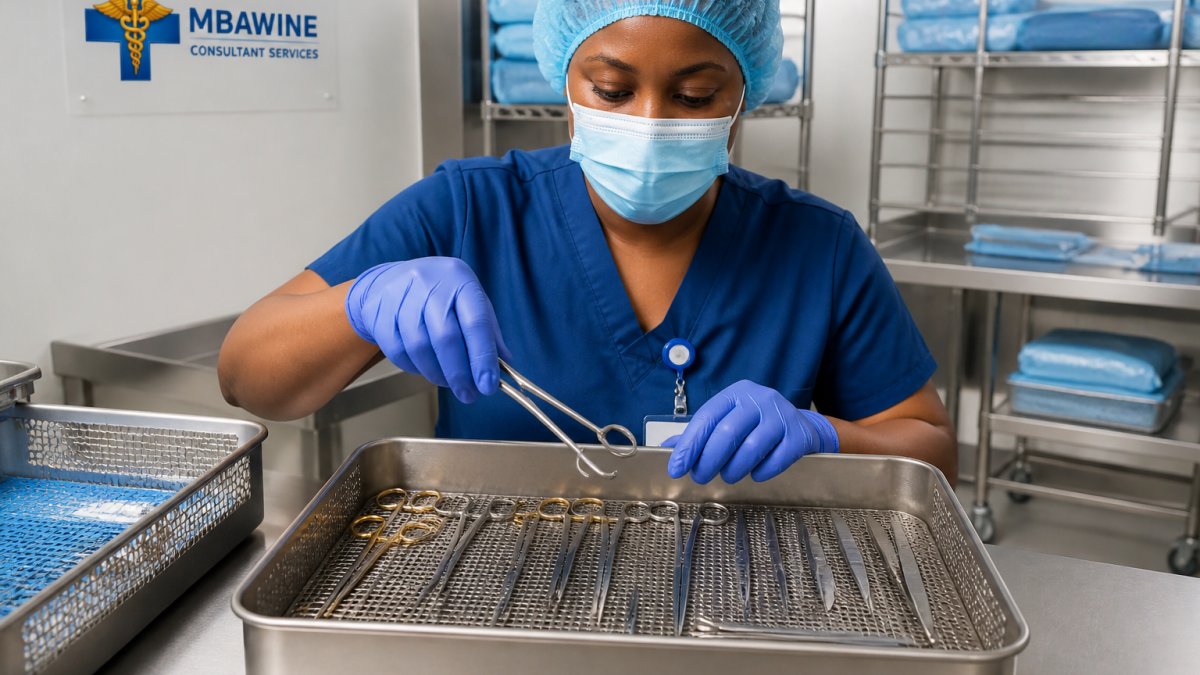
Use these methods in combination:
The last method is the one most candidates skip, and it pays off most on inspection questions. Pair visual study with terminology drills so you can answer a written description as confidently as a photograph.
A CIS exam practice test is a diagnostic tool, not a score to brag about. The value is in the answer explanations, not the percentage. Take one early, before you feel ready, so you know where to spend your remaining study time, and treat every missed question as a short lesson.
Step 4 is the one most candidates skip, and it separates a practice test from a quiz. Candidates who repeat practice tests without reviewing explanations plateau quickly. The review is the studying.
Consider a question asking which defect disqualifies a hinged instrument.
A second example: a ratchet that holds when closed slowly but slips under load. The ratchet teeth or spring are worn, and the instrument fails function testing even though it looks intact.
A third example: why a sterilization method is unsuitable for a given instrument.
When you write your own explanation for each miss, force it into three parts: what the question was really testing, why the wrong answer is tempting, and what principle makes the right answer correct.
Keep a running log with four columns: question topic, what you chose, the principle you missed, and the retest date. Group it by domain to see patterns. If most misses cluster in inspection and function testing, your next week of study is decided for you.
Retest logged items after about a week, not the next day. Spacing the retest tells you whether the principle stuck or whether you only remembered the answer.
Full-length timed tests also train pacing. Note how long you spend on identification questions versus inspection scenarios, most candidates lose time on long scenarios and rush the short ones. Answer the questions you know first and return to the scenarios, so a slow question never costs you three easy ones.
The biggest study mistake is treating the CIS exam like the CRCST exam with extra instruments. It is a different test with a different emphasis, and candidates who reuse CRCST study habits over-index on workflow and under-prepare on identification and inspection.
Other frequent errors:
The CIS exam rewards technicians who prepare with structure, visual repetition, and honest practice testing, and it punishes those who cram. If your schedule is full, the fix is not more hours but better-designed ones.
That is where Mbawine Consultants comes in. We also offer financing options with no payment for the first 30 days, so you can start preparing before budget becomes the obstacle. Enroll with Mbawine Consultants and walk into the CIS exam knowing exactly what it will ask.
Most candidates need six to ten weeks of consistent preparation, though your timeline depends on how much instrument experience you already have. A realistic CIS exam study plan runs four to six hours per week, split into short sessions after shifts. Focus the first weeks on instrument identification and inspection criteria, then move to practice tests. Candidates working full-time on the sterile processing floor often move faster because they handle instruments daily. Track your readiness score on practice quizzes and extend your timeline if scores stay below 80 percent.
The Certified Instrument Specialist exam topics break into several areas: instrument identification and terminology, inspection and function testing, cleaning and decontamination, sterilization principles and methods, assembly and preparation, and proper handling for infection prevention. You also need working knowledge of specialty instruments used in orthopedic, laparoscopic, and microsurgical procedures. The exam tests how you apply this knowledge to real scenarios, not just definitions. Build your study plan around each subject area and use the official exam content outline as your checklist so nothing gets skipped.
The CRCST credential covers the full sterile processing workflow, from decontamination through sterilization and storage. The CIS exam goes deeper into instruments themselves: identifying hundreds of specialty instruments, inspecting them for defects, testing function, and knowing how each one is assembled and reprocessed. If you already hold a CRCST, the CIS is a natural next step that signals specialized expertise. Many employers pay more for the CIS because instrument-focused roles carry more responsibility for surgical outcomes and infection prevention.
The exam is challenging because it tests applied knowledge across a large instrument catalog, not just general concepts. Candidates who rely on memorizing definitions without hands-on practice tend to struggle with inspection and identification questions. The most effective preparation combines a structured study guide, visual instrument identification practice, and full-length practice tests with detailed answer explanations. Give yourself enough weeks to review every exam topic, and use practice quiz scores as a readiness signal. Most people who study consistently and review their wrong answers pass on the first attempt.
Look for study materials built around the official exam content outline, with separate sections for each subject area and practice questions that include answer explanations. Mbawine Consultants offers instructor-led CIS and CRCST preparation with audio, video, and web conferencing, so you can study from home around your shift schedule. Whichever resource you choose, confirm it covers instrument identification, inspection criteria, and sterilization methods, and that practice questions explain why each answer is right or wrong, since that explanation is where most learning happens.
Certification exams in sterile processing typically use a scaled scoring system, and the passing threshold is set by the certifying body, so confirm the current requirement before you register. If you do not pass, most certifying bodies allow a retake after a waiting period, often with a separate retake fee. Use the score report to see which subject areas pulled your result down, then rebuild your CIS exam study plan around those weak spots. Retakes are common, and candidates who review their weak areas systematically usually pass on the second attempt.


