

The Certified Registered Central Service Technician designation is not merely a professional credential; it represents the definitive benchmark of clinical discipline and academic mastery within the contemporary sterile processing department. For those seeking to establish themselves as guardians of patient safety, obtaining the crcst certification serves as a critical milestone that validates technical proficiency and commitment to rigorous institutional standards. You likely recognize that the path to this achievement is often obscured by confusion regarding the mandatory 400-hour hands-on experience requirement and a pervasive anxiety concerning the technical depth of the national examination. This professional roadmap is designed to alleviate those concerns by providing a comprehensive strategy for mastering the current Healthcare Sterile Processing Association requirements and successfully navigating the certification process in 2026.
By following this structured guidance, you'll gain a thorough understanding of the necessary prerequisites and a clear study plan to overcome common obstacles. We will detail the specific domains of the examination, provide insights into effective preparation, and explore how this professional designation acts as a catalyst for increased earning potential. This guide ensures that every candidate possesses the clarity and confidence required to transition from entry-level interest to recognized industry expertise.
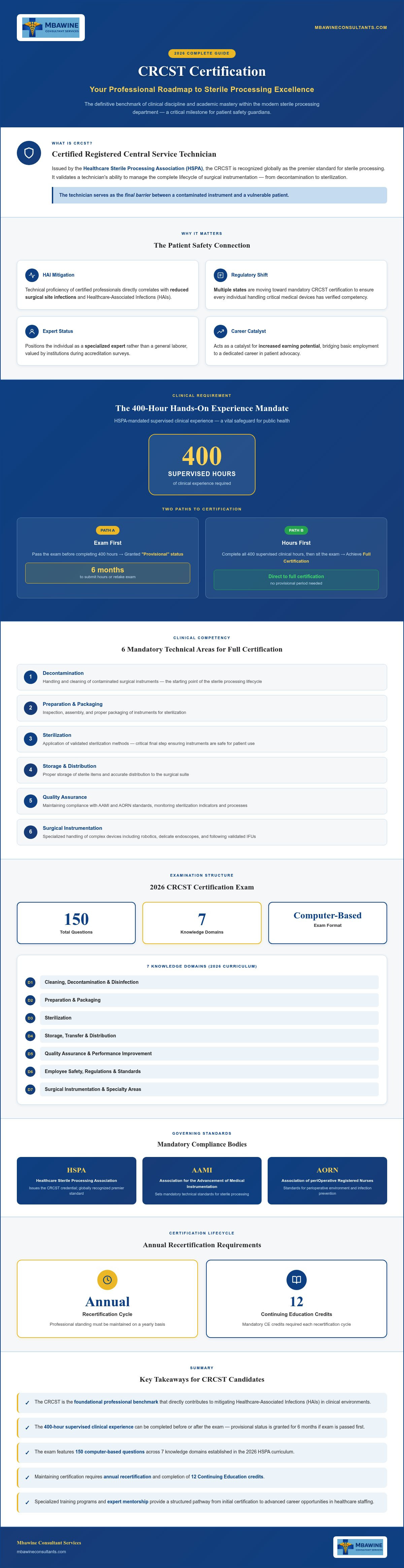
The Certified Registered Central Service Technician (CRCST) designation serves as the primary professional benchmark for individuals operating within the modern sterile processing department. This credential isn't merely an optional accolade; it's a rigorous validation of a technician's ability to manage the complex lifecycle of surgical instrumentation. As we progress into 2026, the healthcare sector faces an escalating challenge in the mitigation of Healthcare-Associated Infections (HAIs). The technical proficiency of a certified professional directly correlates with reduced surgical site infections. This clinical link has prompted a significant regulatory shift across the country. Multiple states now move toward mandatory certification to ensure that every individual handling critical medical devices possesses a verified level of competency. The role carries immense professional gravity, as the technician serves as the final barrier between a contaminated instrument and a vulnerable patient.
A certified technician's duties extend far beyond basic cleaning. They must master a systematic process that begins in the decontamination suite and concludes with high-level sterilization or chemical disinfection. Adherence to standards set by the Association for the Advancement of Medical Instrumentation (AAMI) and the Association of periOperative Registered Nurses (AORN) is mandatory. Modern surgical environments rely heavily on complex robotics and delicate endoscopes. These instruments require specialized handling and precise disassembly. Failure to follow validated instructions for use (IFU) can lead to catastrophic patient outcomes. Mastery of these technical protocols is essential for maintaining the integrity of the surgical workflow and ensuring equipment is ready for the next procedure.
The crcst credential, issued by the Healthcare Sterile Processing Association (HSPA), is recognized globally as the premier standard for the field. While other secondary certifications exist, the HSPA curriculum remains the most comprehensive regarding technical rigor and clinical application. Obtaining this certification demonstrates a commitment to excellence that institutions value during accreditation surveys. It positions the individual as a specialized expert rather than a general laborer. For those aiming to enter this high-stakes environment, enrolling in specialized preparatory classes provides the necessary foundation to meet these exacting standards. This professionalization of the workforce ensures that public safety remains the central focus of every surgical procedure. It's the bridge between basic employment and a dedicated career in patient advocacy.
The clinical component of the crcst certification represents the practical application of theoretical knowledge within a live surgical environment. HSPA mandates that every candidate complete 400 hours of supervised clinical experience to ensure they possess the manual dexterity and critical thinking skills required for the role. This requirement serves as a vital safeguard for public health. Candidates may choose to take the certification exam before or after completing these hours. If you pass the examination prior to finishing your clinical time, you're granted "provisional" status. This status remains valid for six months, during which you must finalize and submit your hours to achieve full certification. Failure to meet this deadline requires the candidate to retake the examination, emphasizing the need for a disciplined approach to clinical scheduling.
To meet the standards for full certification, candidates must gain experience across six specific technical areas. These domains ensure a well-rounded competency in the sterile processing lifecycle:
Accurate documentation is the cornerstone of a successful certification application. Candidates must use the official HSPA Experience Verification Form, which requires a signature from a department manager or authorized supervisor. It's not enough to simply be present in the department; your supervisor must verify that you've performed tasks in each of the mandatory domains. You should maintain a personal daily log to track your progress independently of the facility's timekeeping system. This practice ensures administrative accuracy and provides a clear record if any discrepancies arise during the verification process. Ethical reporting is paramount, as any falsification of hours can lead to a permanent ban from the HSPA certification program.
Securing a location for your 400 hours is often the most challenging aspect of the journey. Many healthcare facilities prefer interns who have already demonstrated a commitment to the field through formal education. You should approach sterile processing managers with a professional resume and a clear explanation of your certification goals. Many students find success by sterile processing classes that offer established clinical placement assistance. These programs act as a bridge between the classroom and the hospital, often placing students in mentor-led environments where they can learn under experienced technicians. If you're struggling to find a placement independently, consider enrolling in a structured preparatory program that provides the networking opportunities necessary to enter a high-volume surgical department.
The crcst examination is a rigorous, three-hour computer-based assessment comprising 150 multiple-choice questions designed to evaluate technical proficiency across the entire sterile processing spectrum. For candidates seeking to navigate the 2026 curriculum, it's essential to utilize the latest edition of the HSPA Technical Manual, as this resource reflects the most current standards in instrument reprocessing and infection control. A disciplined study approach is necessary because the exam demands more than rote memorization; it requires the ability to apply complex regulatory standards to real-world clinical scenarios. We recommend a structured 12-week study timeline to ensure comprehensive material retention. This duration provides sufficient time to progress through the seven mandatory domains of knowledge while balancing professional responsibilities. Early weeks should focus on foundational microbiology and infection prevention, while the final month is dedicated to intensive review and simulated assessments.
The 2026 examination weighting emphasizes the high-risk areas of the sterile processing lifecycle. Cleaning, Decontamination, and Disinfection typically constitute the largest portion of the test, as these stages are critical for preventing cross-contamination. Candidates must demonstrate an exhaustive understanding of enzymatic detergents, mechanical washer parameters, and the validation of cleaning processes. Mastering Sterilization Processes is equally vital, requiring technicians to distinguish between different modalities such as saturated steam, ethylene oxide, and hydrogen peroxide gas plasma. You must also be prepared to answer detailed questions regarding equipment management, sterile storage environmental controls, and the specific handling requirements for surgical robotics and patient care equipment.
Success requires moving beyond passive reading toward active engagement with the material. Utilizing active recall and spaced repetition allows you to commit technical terminology and chemical properties to long-term memory. Practice examinations are an indispensable tool for identifying specific knowledge gaps before the actual test date. For many, the most efficient pathway involves CRCST certification preparation through structured, consultant-led programs. These sessions provide the expert mentorship needed to clarify complex HSPA standards and offer a systematic framework for exam success. By integrating these advanced techniques into your routine, you'll transform the daunting task of the crcst exam into a manageable, step-by-step professional achievement.
Achieving the crcst designation establishes your professional foundation, but maintaining this status requires a continuous commitment to industry evolution. HSPA mandates an annual renewal process to ensure that every certified professional remains current with the latest sterilization technologies and regulatory updates. This cycle isn't merely administrative; it serves as a critical quality control mechanism for healthcare facilities. If you began your journey with provisional status, you must transition to full certification within six months by submitting your verified 400 hours of clinical experience. Failing to meet this specific deadline results in the immediate expiration of your credentials, which necessitates a complete retake of the national examination. The consequences of a lapsed certification are severe. Most clinical environments require active certification for employment, and a lapse can lead to immediate suspension or termination of duties. Beyond individual employment, institutional accreditation depends on the verified credentials of the sterile processing staff. This makes your active status a matter of institutional compliance and public safety.
To uphold the integrity of the crcst credential, technicians must complete 12 Continuing Education (CE) credits during each one-year renewal period. These credits must focus on topics directly relevant to the sterile processing field, such as microbiology, instrumentation, and infection control protocols. Approved sources for these credits include HSPA webinars, specialized technical workshops, and peer-reviewed professional journals. Technicians are responsible for documenting their participation and submitting their credits through the official HSPA portal before their certification anniversary. Engaging in advanced healthcare sterilization training is the most effective way to stay current with the 2026 standards and ensure your clinical practice remains beyond reproach.
The foundational certification serves as a prerequisite for more specialized and advanced designations within the field. Professionals often pursue the Certified Instrument Specialist (CIS) or the Certified Healthcare Leader (CHL) credentials to further distinguish their expertise. These advanced certifications are essential for those aiming to transition into department management, interim leadership, or healthcare consulting roles. Developing a long-term professional development plan allows you to move from entry-level technical tasks to high-level strategic oversight of the sterile processing department. This progression not only increases your earning potential but also positions you as a mentor for the next generation of technicians. To begin building this professional foundation, you should enroll in our preparatory classes to ensure you meet the rigorous standards required for long-term career success.
Mbawine Consultant Services operates as the definitive bridge between entry-level interest and professional mastery, functioning as a specialized conduit for individuals pursuing the crcst designation. We recognize that the contemporary surgical environment demands a workforce that is not only technically proficient but also deeply committed to the principles of public safety and institutional compliance. Our approach integrates rigorous academic preparation with the practical realities of real-world clinical application, ensuring that every candidate we mentor possesses the resilience required for a high-stakes medical career. By choosing a partner that understands the specific demands of the 2026 regulatory landscape, you're positioning yourself within an elite network of professionals who are recognized as the primary guardians of sterile processing standards. This professionalization of the workforce is essential for reducing healthcare-associated infections and maintaining the integrity of the surgical suite.
Our educational offerings are meticulously designed to mirror the technical depth and domain weighting of the current HSPA examination. We provide flexible learning environments, including both online and in-person options, to ensure that working professionals can access high-level instruction without compromising their current clinical duties. The curriculum focuses on the sophisticated decontamination and sterilization protocols that define the modern department, moving beyond basic instrument sets to include complex surgical robotics and high-level disinfection processes. This structured mentorship is essential for candidates who wish to move beyond provisional status with confidence and authority. Those who are prepared to commit to this level of professional excellence should enroll in upcoming classes to secure their place in the next cohort and begin their journey toward certification.
The value of our consultancy extends far beyond the classroom through our dedicated staffing and placement services, which support alumni as they transition into the professional workforce. The healthcare industry is currently navigating a significant SPD workforce crisis, characterized by a critical shortage of certified technicians across the nation. Mbawine addresses this challenge by connecting our certified professionals with premier healthcare facilities that require interim management, healthcare sterile processing consulting, and 24/7 emergency staffing. This national scope provides our graduates with the flexibility to explore diverse clinical environments while maximizing their professional earning potential and career longevity. If you're seeking a strategic partner to assist in your long-term career trajectory, we invite you to contact Mbawine for personalized career guidance and join a mission-driven community dedicated to the highest standards of patient care.
Achieving the crcst credential is a transformative step that requires a disciplined synthesis of clinical practice and theoretical mastery. You've explored the necessity of the 400-hour experience requirement and the systematic study methods required for the 2026 curriculum. Maintaining this certification through continuous education ensures you remain a vital asset in the mitigation of surgical site infections and the protection of patient safety within the modern surgical environment.
Mbawine Consultant Services provides the specialized bridge you need to transition from entry-level interest to recognized industry leadership. Our expert-led sterile processing mentorship and comprehensive 2026 exam alignment prepare you for the technical rigor of the national assessment; meanwhile, our nationwide healthcare staffing network supports your long-term career growth. The path to professional excellence is structured and attainable with the right institutional partner. Enroll in Mbawine's CRCST Preparation Course Today and begin your journey toward technical mastery and career advancement with confidence. Your dedication to excellence starts with a commitment to higher professional standards.
Full certification is granted only after a candidate successfully passes the certification examination and completes 400 hours of supervised clinical experience. Provisional status allows candidates to sit for the exam first; however, they must verify their clinical hours within six months of passing. This distinction ensures that every technician possesses both the theoretical knowledge and the practical dexterity required to maintain the safety of the surgical environment.
The timeline typically spans four to six months depending on the candidate's study discipline and clinical placement availability. A structured 12-week study plan is recommended for exam preparation, while the 400 hours of clinical experience can be completed in approximately ten weeks of full-time work. Enrolling in specialized sterile processing classes can often accelerate this process by providing structured learning and assistance with clinical rotations.
As of 2026, the crcst examination is primarily administered through authorized computer-based testing centers to maintain strict proctoring standards and institutional integrity. While some remote options have been explored in previous years, candidates should consult the official HSPA candidate handbook for the most current delivery methods. These physical centers ensure a controlled environment that validates the technical proficiency of every aspiring sterile processing professional.
If the 400-hour requirement isn't finalized and submitted within the six-month provisional window, the candidate's status expires immediately. This necessitates a full retake of the certification examination to regain professional standing. This strict deadline emphasizes the importance of securing a clinical site before or immediately after passing the test. It's a critical measure to ensure that practical skills are developed while theoretical knowledge remains current.
Yes, the certification is recognized as the premier professional standard across all 50 states within the United States. While only certain states have passed legislation making certification mandatory for employment, the vast majority of healthcare facilities require it as a condition of hire. This nationwide recognition allows certified technicians to utilize staffing and placement services to find opportunities in diverse clinical settings across the country.
The examination fee is paid directly to the Healthcare Sterile Processing Association and covers the cost of the testing seat and the initial processing of professional credentials. This fee does not typically include study materials, such as the HSPA Technical Manual, or preparatory course tuition. Candidates should verify the current fee structure on the official HSPA website to ensure they have the necessary funds before scheduling their testing session.
The most effective resources for the 2026 crcst exam include the latest edition of the HSPA Technical Manual and structured preparatory classes led by industry experts. These programs offer a systematic review of the seven knowledge domains and provide practice assessments that mirror the actual testing environment. Utilizing these specialized training programs ensures that candidates understand the clinical application of standards rather than relying on rote memorization alone.
No, a college degree is not a prerequisite for becoming a Certified Registered Central Service Technician. The foundational requirements include a high school diploma or an equivalent secondary education credential. This low barrier to entry, combined with the high demand for specialized technical skills, makes the field an accessible pathway for individuals seeking a meaningful career in healthcare without the significant time and financial investment of a traditional degree.

Article by
Mba Akuribila
Mba‑Akuribila is a healthcare leader, educator, and founder of Mbawine Consultants, a Bronx‑based institution recognized nationwide for advancing excellence in sterile processing and allied health workforce development. Born in Bongo in Ghana’s Upper East Region, his journey from rural beginnings to national impact reflects a lifelong commitment to service, empowerment, and community advancement.
For over two decades, he has trained sterile processing employees, mentored, and placed thousands of healthcare professionals across the United States. Through Mbawine Consultants, he established one of the country’s most trusted Sterile Processing Certification Test Prep Programs, preparing new Americans and career‑changers for successful entry into the field. The organization, as at 2026, has graduated more than 15,000 sterile processing technicians who now serve in hospitals, ambulatory centers, dental practices, and reprocessing facilities nationwide.
Under his leadership, Mbawine Consultants has expanded into a full Healthcare Staffing Agency, connecting nurses and allied health professionals to meaningful employment opportunities. His team also provides Interim Management Services, supporting hospitals and surgical centers with experienced leaders who stabilize operations, strengthen compliance, and improve workflow efficiency.
As a former surgical technician, sterile processing manager, educator, and system‑wide director, Mba‑Akuribila brings deep expertise to Sterile Processing Consulting, helping healthcare facilities elevate quality, safety, and regulatory readiness.
His work in the United States and Ghana continues to reflect his core philosophy: service above self, opportunity for all, and excellence without compromise.


