

The integrity of a surgical suite is only as robust as the sterile processing department that supports it, yet many healthcare facilities mistakenly treat staffing shortages as a mere logistical hurdle rather than the clinical crisis they truly represent. When instrument backlogs begin to dictate the surgical schedule, the resulting delays and the increased risk of a failed Joint Commission inspection create an environment of unsustainable professional liability. You recognize that internal staff burnout, driven by excessive overtime and the relentless pace of reprocessing, eventually compromises the meticulous attention to detail required for patient safety. Implementing a strategic solution for emergency sterile processing staffing is not simply about filling a vacancy; it is a critical clinical intervention designed to safeguard the standard of care.
This comprehensive guide provides the necessary framework to stabilize your department during periods of acute personnel deficiency while ensuring that your facility maintains its commitment to excellence. You will discover how to integrate certified experts who can immediately alleviate backlogs and minimize the impact on surgical throughput. We will explore the systematic methodologies required to maintain rigorous sterilization standards and the role of interim management in fortifying your department against future disruptions.
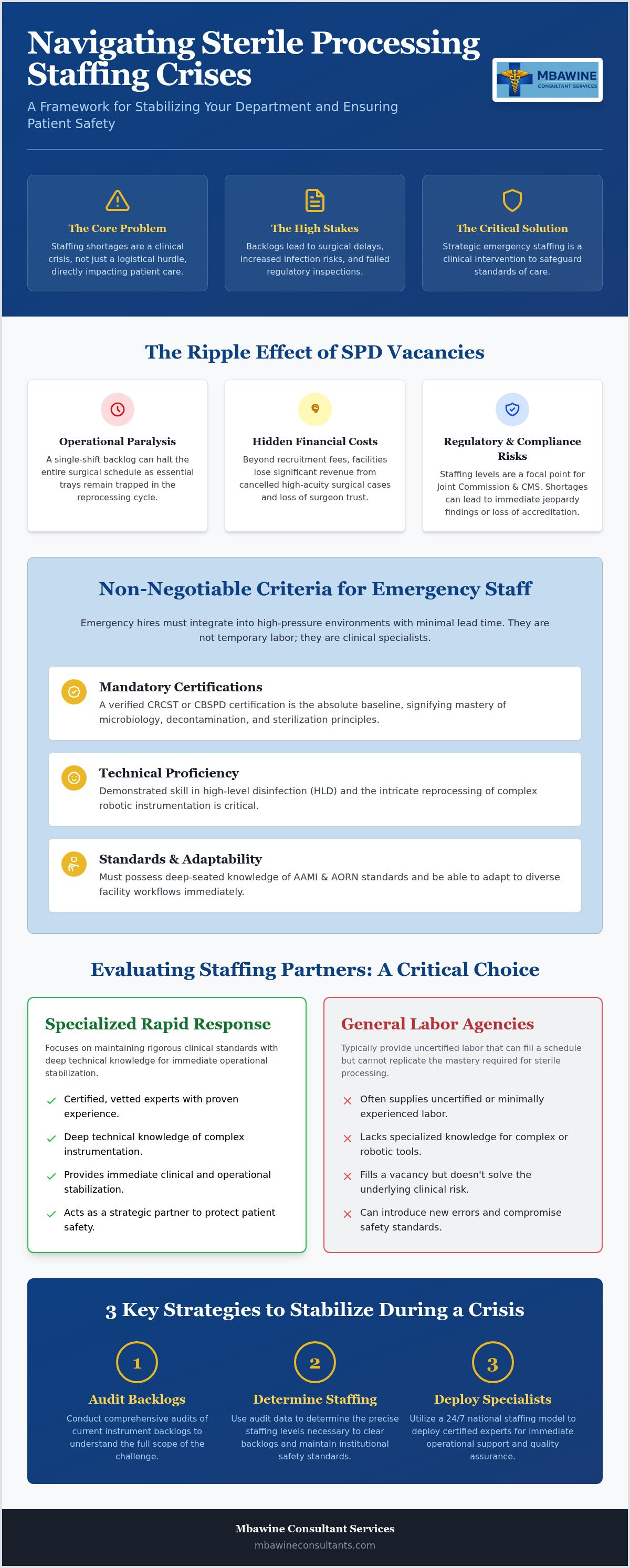
The institutional gravity of a staffing crisis in the sterile processing department cannot be overstated, as the department serves as the primary engine for surgical operations. Emergency sterile processing staffing refers to the rapid, tactical deployment of certified technicians during periods of acute crisis, such as sudden mass resignations, medical leaves, or unexpected surges in surgical volume. Unlike traditional temporary labor, this specialized intervention focuses on maintaining the rigorous clinical standards required for complex instrumentation. When vacancies reach a critical threshold, the department's ability to provide sterile, functional tools is compromised, which directly correlates with increased surgical site infection (SSI) risks and potential patient harm.
A bottleneck in the decontamination stage isn't just a localized delay; it's a systemic failure that ripples through the entire hospital. Within a single shift, a backlog can halt an entire surgical schedule as essential trays remain trapped in the reprocessing cycle. This operational paralysis often triggers immediate regulatory scrutiny from governing bodies that view staffing instability as a primary indicator of compromised safety. Implementing a strategy for emergency sterile processing staffing allows a facility to stabilize these workflows before they result in catastrophic procedural cancellations.
Calculating the financial impact of SPD vacancies requires looking beyond recruitment fees. The loss of a single high-acuity surgical case represents a significant deficit in institutional revenue and facility fees. The psychological impact on the internal team is equally devastating. Burnt-out staff are more prone to errors in assembly and sterilization, which further jeopardizes the facility's standing. Over time, these failures lead to a loss of surgeon trust, potentially driving high-volume providers to move their cases to competing institutions. Facilities requiring immediate stabilization often turn to professional consulting and staffing services to bridge these gaps without sacrificing quality.
Staffing levels are a focal point during Joint Commission and CMS inspections. These agencies evaluate whether the facility has the human resources necessary to follow its own written policies and national standards. Maintaining consistent documentation, such as biological indicator logs and sterilizer printouts, becomes increasingly difficult when personnel are stretched thin. It's imperative that every emergency hire possesses verified credentials, such as the CRCST certification, to ensure that the department remains compliant with institutional and federal mandates. Regulatory bodies do not offer leniency for staffing shortages, and a failure to maintain standards during a crisis can lead to immediate jeopardy findings or loss of accreditation.
The selection of personnel for emergency sterile processing staffing requires a rigorous vetting process that transcends basic recruitment metrics. Because these technicians must integrate into high-pressure environments with minimal lead time, a verified CRCST or CBSPD certification serves as the absolute baseline for any emergency hire. These credentials signify a foundational mastery of microbiology, decontamination, and sterilization principles that uncertified labor simply cannot replicate. Beyond these basics, a candidate must demonstrate proficiency in high-level disinfection (HLD) and the intricate reprocessing requirements of complex robotic instrumentation. These specialized assets require meticulous attention to detail to prevent mechanical failure or cross-contamination during surgical procedures.
Successful rapid-response technicians possess a demonstrated ability to adapt to diverse facility workflows without the luxury of extensive training periods. They must arrive with a deep-seated understanding of AAMI and AORN standards, ensuring that every tray processed meets national compliance requirements from the first hour of their shift. This level of expertise is what separates a specialized clinical intervention from a generic staffing solution. It's the difference between merely filling a seat and actively protecting the surgical schedule.
Professional certification ensures that technicians possess the critical thinking skills necessary to handle deviations from standard operating procedures. While uncertified staff might follow a checklist, certified professionals understand the scientific rationale behind sterilization parameters. It's essential for facility leaders to verify these credentials through the HSPA or CBSPD databases to ensure the integrity of their personnel. Facilities that prioritize excellence often seek staff who have undergone rigorous Mbawine CRCST preparation, as this training emphasizes the synergy between academic knowledge and clinical application for staff excellence.
An emergency technician's value is often determined by their familiarity with the specific technology used within a facility. This includes the ability to operate various steam and low-temperature sterilizer models, such as V-PRO or STERRAD systems, without hesitation. Proficiency in surgical asset tracking software and inventory management systems like SPM or Censis is equally vital for maintaining throughput and traceability. To ensure safety, facilities should implement competency-based onboarding for emergency SPD roles. This is a structured verification process that requires technicians to demonstrate specific skill sets through direct observation and documented performance before they are cleared for independent work. If you are looking to elevate your team's standard of care, consider how specialized certification training can fortify your department's long-term resilience.
The decision to engage an external partner during a staffing crisis should be predicated on a thorough assessment of the partner's clinical governance and technical specialization. Traditional staffing agencies often operate as generalists, maintaining broad databases of healthcare workers where sterile processing is merely one category among many. This volume-centric approach frequently results in the deployment of personnel who lack the specific, high-level technical mastery required for complex surgical environments. In contrast, rapid response partners specialize exclusively in the reprocessing of surgical instrumentation and the nuances of sterilization technology. Selecting a partner for emergency sterile processing staffing requires more than a simple review of hourly rates; it demands a partner that understands the clinical stakes of a contaminated tray.
Specialized firms provide a level of oversight that general agencies cannot match, often including interim management to supervise temporary staff performance and ensure adherence to local policies. This clinical leadership is vital for maintaining the continuity of care when the internal hierarchy is strained by vacancies. A specialized partner's vetting process is typically conducted by SPD experts who can verify technical competencies that a general recruiter might overlook.
An SPD-focused partner understands your specific instrument challenges, from the intricacies of da Vinci robotic arms to the specific parameters of orthopedic power tools. They don't just provide 'travelers'; they provide emergency consultants who are trained to identify and rectify workflow inefficiencies. The value of a partner that also provides professional education is significant, as it ensures the staff being deployed are current on the latest evidence-based practices. This synergy between education and staffing creates a higher caliber of technician capable of making critical decisions in high-pressure decontamination environments.
In the current healthcare environment of 2026, lead times for general staffing can often extend into weeks, leaving departments vulnerable. Specialized firms prioritize rapid deployment, recognizing that a 24/7 department requires immediate support to prevent surgical cancellations. These firms handle the administrative burdens of credentialing and background verification internally, allowing technicians to begin contributing to the workflow almost immediately upon arrival. This agility is essential for managing sudden department crises, such as equipment failures or unexpected regulatory audits, where every hour of downtime carries a heavy institutional cost. If your facility is currently facing an operational deficit, reaching out to a dedicated staffing consultant can provide the immediate stabilization your surgical team requires.
Stabilizing a department in crisis requires a methodical transition from reactive chaos to a structured clinical workflow. The first objective is the execution of a comprehensive audit to quantify the existing instrument backlog and categorize it by surgical priority. It's impossible to manage what hasn't been measured. Once the backlog is defined, leadership must determine the minimum staffing levels required to maintain safe throughput without compromising sterilization cycles. Securing a partner with a national reach for emergency sterile processing staffing ensures that your facility isn't limited by local labor shortages. This partnership allows for the rapid deployment of technicians who are already vetted for high-acuity environments and complex surgical cases.
Orientation for these incoming professionals must be expedited yet thorough. Focus strictly on facility-specific safety protocols, such as fire safety, unique sterilizer operations, and site-specific tracking software. This ensures that the integration period is minimized while safety remains uncompromised. When technicians arrive with a foundational understanding of national standards, the orientation can focus entirely on the nuances of your specific facility's equipment and layout.
Effective crisis management relies on a transparent communication loop with the Operating Room. Leadership should conduct twice-daily briefings to identify essential trays required for the upcoming 48-hour schedule. This prevents the department from wasting resources on low-priority sets that aren't immediately needed. Managing 'loaner' tray volume is particularly critical during a staffing emergency. If the internal team is overwhelmed, it's often necessary to limit the intake of new loaner assets or require vendors to provide additional support for pre-processing. By focusing on high-turnover surgical specialties, such as orthopedics or cardiovascular cases, the department can maintain the highest possible surgical volume during the stabilization phase.
The presence of interim SPD managers is often the deciding factor in whether a department stabilizes or collapses under pressure. These leaders provide a buffer for permanent staff, addressing the psychological burden of burnout and stabilizing department morale through expert guidance. Quality assurance checks must increase in frequency during a crisis to catch potential errors before they reach the sterile field. As the department stabilizes, the focus shifts toward a gradual transition from emergency sterile processing staffing back to permanent operations. This involves a phased reduction of temporary staff as new permanent hires are onboarded. To ensure your future workforce meets these rigorous standards, you can enroll your new hires in specialized certification classes to build long-term internal resilience.
Mbawine Consultant Services provides a sophisticated infrastructure for 24/7 national emergency staffing support, specifically designed to address the clinical and operational deficits discussed throughout this guide. Unlike generalist recruitment firms, our organization functions as a specialized clinical partner, ensuring that every technician deployed is prepared to meet the high-stakes demands of modern surgical environments. We recognize that emergency sterile processing staffing is a critical intervention, and therefore, we maintain a rigorous internal vetting process that aligns with the highest industry standards. Our interim management solutions provide the necessary leadership to bridge the gap between acute crisis and long-term department stability, allowing facility directors to focus on broader institutional goals while we manage the granular details of reprocessing workflows.
Our consulting services extend beyond immediate personnel placement to identify the underlying root causes of staffing turnover within your facility. By conducting comprehensive departmental assessments, we help leadership implement sustainable changes that reduce reliance on temporary labor over time. This holistic approach ensures that we aren't just treating the symptoms of a staffing shortage but are actively fortifying the department's operational foundation through expert analysis and systematic improvement.
The quality of our personnel is directly attributable to the rigor of our sterile processing classes, which are designed to produce technicians who excel in high-pressure clinical settings. We believe that professionalization is the most effective safeguard for public safety, and our curriculum emphasizes the technical mastery required for complex instrumentation and regulatory compliance. By positioning ourselves as a guardian of sterilization excellence, we ensure that our staff alumni carry a sense of mission and professional gravity into every facility they serve. This commitment to academic and professional reliability means that your department receives more than just labor; it receives a dedicated advocate for industry standards who understands the scientific principles of sterilization.
Initiating an emergency staffing request with our team is a streamlined process designed for rapid response during institutional crises. Facility leaders should be prepared to provide a detailed assessment of their current instrument backlog and specific technical requirements to ensure a precise match with our available experts. Preparing for a successful interim management engagement involves establishing clear lines of communication and granting our consultants the necessary access to departmental data and personnel. This collaborative approach facilitates a faster stabilization period and a more effective transition back to permanent operations. To secure the future of your department and maintain the highest standards of patient care, you may enroll in our professional programs or request staffing support here to begin the stabilization process today.
Maintaining the operational integrity of a sterile processing department requires a commitment to clinical excellence that transcends basic workforce management. As established throughout this guide, the successful resolution of a personnel crisis depends on the rapid integration of certified professionals who understand the scientific rigor of sterilization. Facilities that prioritize specialized emergency sterile processing staffing ensure that surgical throughput is maintained without compromising the stringent safety protocols required by regulatory bodies. By leveraging interim leadership and comprehensive departmental audits, your institution can transition from a state of reactive crisis to one of sustainable stability. It's this proactive approach that prevents minor vacancies from evolving into systemic failures.
Mbawine Consultant Services remains dedicated to this professionalization, offering 24/7 national emergency response and specialized CRCST certification training to safeguard both patient outcomes and institutional reputations. You can secure certified emergency staffing and professional training to restore your department's standard of excellence immediately. Your commitment to these higher standards ensures that your surgical team can continue to provide life-saving care with absolute confidence in the integrity of their instrumentation.
Response times are determined by the facility's geographic location and the complexity of the clinical requirements, though specialized firms prioritize immediate 24/7 engagement to address acute vacancies. Rapid deployment protocols often allow for personnel to be identified and credentialed within a few business days. This agility is essential for facilities facing immediate surgical delays due to instrument backlogs that threaten the daily operative schedule.
Professional certification, specifically the CRCST or CBSPD designation, is the mandatory baseline for technicians engaged through emergency sterile processing staffing protocols. This requirement ensures that every temporary staff member possesses a verified understanding of sterilization science and microbiology. Certification acts as a safeguard, providing the facility with clinical professionals who can maintain high standards of care without requiring foundational training on national reprocessing mandates.
Specialized firms utilize a technical vetting process that matches a technician's documented experience with the specific sterilizer models and tracking software used at your facility. This includes verifying proficiency with complex robotic instrumentation and high-level disinfection systems such as V-PRO or STERRAD. Competency-based onboarding further ensures that every professional can navigate your specific inventory management systems, like Censis or SPM, with immediate accuracy.
Specialized sterile processing firms provide interim management to oversee department stabilization and ensure that temporary personnel adhere to all institutional policies. These leaders serve as a critical bridge between a period of crisis and the return to operational normalcy. They focus on maintaining quality assurance checks and stabilizing department morale, which is often compromised during periods of heavy overtime and high-volume backlogs.
A specialized partner offers deep clinical leadership and a focus exclusively on the technical nuances of the sterile processing environment. General agencies often lack the expertise to vet candidates for specific technical competencies, such as the reprocessing of intricate orthopedic power tools. By choosing a dedicated emergency sterile processing staffing partner, you ensure that your department is supported by experts who understand the clinical stakes of a contaminated surgical tray.
Emergency staffing protects departmental compliance by providing the necessary human resources to follow rigorous AAMI and AORN documentation standards. When a department is understaffed, the risk of human error in biological indicator logging or sterilization parameters increases significantly. Supplementing your team with certified experts ensures that all reprocessing steps are completed according to evidence-based practices, which maintains the facility's regulatory standing during inspections.

Article by
Mba Akuribila
Mba‑Akuribila is a healthcare leader, educator, and founder of Mbawine Consultants, a Bronx‑based institution recognized nationwide for advancing excellence in sterile processing and allied health workforce development. Born in Bongo in Ghana’s Upper East Region, his journey from rural beginnings to national impact reflects a lifelong commitment to service, empowerment, and community advancement.
For over two decades, he has trained sterile processing employees, mentored, and placed thousands of healthcare professionals across the United States. Through Mbawine Consultants, he established one of the country’s most trusted Sterile Processing Certification Test Prep Programs, preparing new Americans and career‑changers for successful entry into the field. The organization, as at 2026, has graduated more than 15,000 sterile processing technicians who now serve in hospitals, ambulatory centers, dental practices, and reprocessing facilities nationwide.
Under his leadership, Mbawine Consultants has expanded into a full Healthcare Staffing Agency, connecting nurses and allied health professionals to meaningful employment opportunities. His team also provides Interim Management Services, supporting hospitals and surgical centers with experienced leaders who stabilize operations, strengthen compliance, and improve workflow efficiency.
As a former surgical technician, sterile processing manager, educator, and system‑wide director, Mba‑Akuribila brings deep expertise to Sterile Processing Consulting, helping healthcare facilities elevate quality, safety, and regulatory readiness.
His work in the United States and Ghana continues to reflect his core philosophy: service above self, opportunity for all, and excellence without compromise.


