

Last Updated: September 6, 2026
Stepping into an interim sterile processing management role is different from earning a promotion within a familiar department. You have limited time to build trust, learn the facility's specific workflows, and address the issues that prompted the leadership gap. The essential skills for sterile processing interim managers go beyond technical certification; they demand a blend of clinical expertise, diplomatic leadership, and rapid adaptability.
This guide breaks down the seven skill areas that determine success in these assignments. Whether you are a Certified Registered Central Service Technician (CRCST) aiming for a Certified Healthcare Leader (CHL) role or a seasoned manager between permanent posts, these competencies will help you deliver results from day one. We will examine how to establish authority, drive improvements, and leave the department stronger than you found it.
Sterile processing is the systematic decontamination, preparation, and sterilization of medical devices for safe patient use. Your credibility as an interim manager rests on demonstrating command of these procedures, because the staff will test whether you understand the work at the instrument level, not just the policy level.
You must be able to audit the entire workflow, from point-of-use treatment and transport through decontamination, assembly, and sterilization. This includes verifying proper autoclave operation, correct chemical and biological indicator use, and adherence to aseptic technique during tray assembly. A common mistake for new interim leaders is focusing only on the final sterilization step. The highest risk of error often sits in the decontamination phase and in how instruments are handled before they ever reach the sterilizer.
Regulatory compliance in sterile processing is non-negotiable, and as an interim manager you are the accountable leader for it. You must ensure the department meets accreditation standards from bodies such as The Joint Commission and AAMI (Association for the Advancement of Medical Instrumentation) guidelines for steam sterilization and high-level disinfection.
Your first week should include a focused compliance audit. Review sterilization logs for completeness, check that biological monitoring results are properly documented, and verify that staff competencies are current. The goal is not to assign blame but to identify gaps before an external surveyor does. According to AAMI's sterilization standards and resources, adherence to established standards is the foundation of safe reprocessing and patient care.
Workflow optimization is where you can demonstrate immediate value. An interim manager who improves turnaround time and instrument availability earns respect faster than one who only enforces rules. Start by mapping the current workflow and identifying bottlenecks, which often appear at case cart assembly or in the decontamination area.
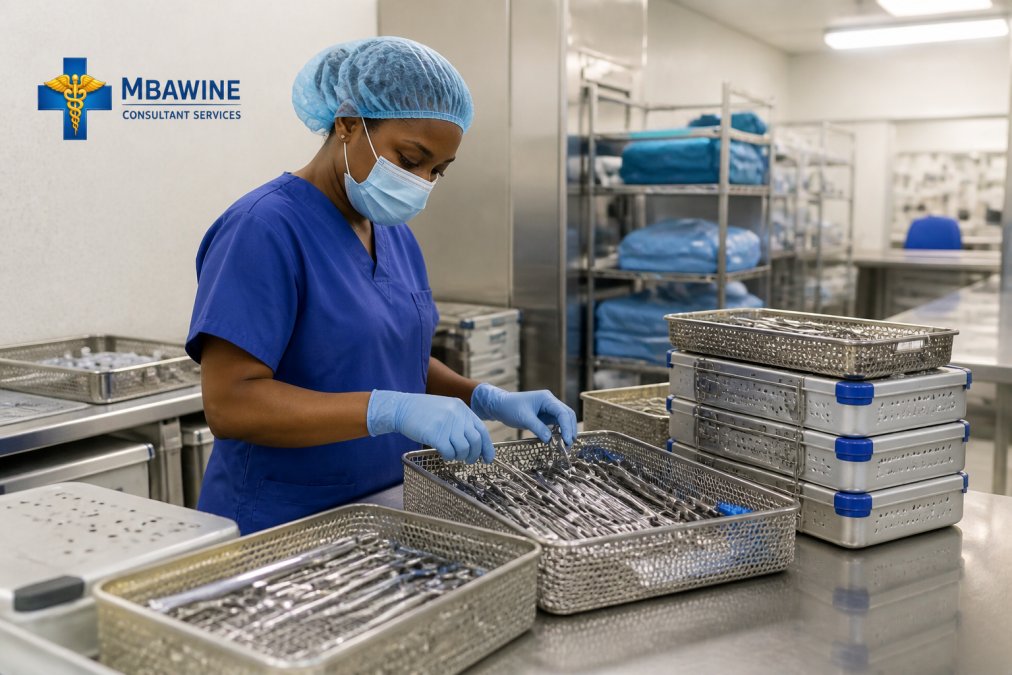
Look at how trays are assembled and whether instrument inventories match surgical schedules. A simple change, such as reorganizing storage to place high-use trays closer to the assembly area, can reduce steps and fatigue. Another common issue is inconsistent tray assembly, leading to missing instruments and delayed cases. Introduce standardized checklists if they are not already in use. These tools reduce variability and support staff development by providing a clear reference for correct assembly.
Your success depends on communication with surgeons, OR nurses, and the SPD technicians themselves. Unlike a permanent manager who builds these relationships over years, you must establish trust quickly. Schedule introductory meetings with the OR director and key surgical staff in your first days to understand their concerns about instrument availability and quality.
The most common friction point is the "flash" or emergency request that disrupts the schedule. Address this head-on by reviewing the facility's policy for immediate-use steam sterilization and discussing how to balance urgent needs with standard turnaround times. Clear, consistent communication about what is achievable prevents conflict.
Effective interdisciplinary communication also means advocating for your department. When a surgeon demands a custom tray that is not in the inventory system, explain the lead time required for procurement and sterilization rather than simply saying no.
A permanent manager has the luxury of a 12-month development cycle. An interim manager often has 90 days. This changes the calculus of staff development entirely: you are not building a long-term pipeline; you are stabilizing the team's competence baseline and identifying the informal leaders who will hold the department together after you leave.
Start with a rapid skills triage, not a formal assessment. In your first week, observe each technician during a live assembly and a decontamination cycle. Note not just whether they follow the IFU, but whether they can explain why they are doing it. A technician who understands the mechanism behind a step is a future preceptor; one who only follows a checklist is a compliance risk under stress. This distinction is the core of interim-specific development.
Once you have that map, focus your coaching energy on the top and bottom of the skill distribution. The middle will follow the culture you set. For the strongest technicians, offer immediate leadership exposure: have them lead the daily huddle, review a sterilization log for discrepancies, or train a new hire on a complex instrument set. This is not just development; it is succession planning for the day you hand over the keys. For the technicians with gaps, use a just-in-time coaching model. A 10-minute session immediately after a missed step is worth more than a scheduled hour-long training next month. Document these interventions in a simple log, not for HR, but so you can show the permanent manager or the director of surgical services exactly what you did and what still needs follow-up.
There is also a political dimension to staff development in an interim role. If you arrive with a mandate to fix a department, the staff will be defensive. Frame every coaching conversation around certification readiness or career mobility, not deficiency. A common pattern is a senior technician who is resistant to change but who is also the informal leader of the team. Winning that person over is a development project in itself. Offer them a role in onboarding you to the department's history, or ask their opinion on a workflow change before you implement it. This converts a potential saboteur into a stakeholder.
Finally, do not forget the certification clock. If you have technicians whose CRCST or CIS credentials are expiring within your tenure, make their recertification a priority. Helping a technician maintain their credential is a concrete, measurable win that builds loyalty and directly supports the department's compliance posture. It also signals that you care about their long-term career, not just your short-term assignment.
Interim roles carry unique pressures that permanent positions do not. You are often walking into a department with unresolved issues, low morale, or recent compliance findings. Adaptability is the core skill here, and it starts with listening. Spend your first days observing and asking questions before proposing large changes.
You will face conflict. Perhaps a senior technician resents your presence, or the OR staff has lost faith in the department's reliability. Address these situations directly but without confrontation. Acknowledge valid frustrations and focus on solving the problem at hand, not defending past mistakes. This approach is particularly effective in high-stress environments where emotions can run high.
Another interim-specific challenge is the temptation to make sweeping changes to prove your worth. Resist it. Small, visible wins, such as fixing a recurring tray error or reducing a specific backlog, build momentum. Change management in a temporary role is about guiding the team toward improvements they can sustain after you leave.
Most articles on sterile processing management mention KPIs in passing. What they miss is the operational reality: an interim manager does not have time to build a perfect data dashboard. You have time to pull three numbers, understand what they mean, and act on them before your first month ends. This is not analytics; it is forensic management.
Your first data pull should happen before you propose any changes. Go to the instrument tracking system and pull a 30-day report on the following:
These three numbers tell you where the department's pain points are. A high IUSS count is not just a workflow issue; it is a compliance red flag that surveyors will notice. A high tray error rate on the night shift points to a training gap or a staffing shortage at that hour. Slow turnaround on a specific service line, such as orthopedics, suggests an inventory problem, not a speed problem.
Once you have the baseline, you need to act on it. The key is to use the data to ask questions, not to assign blame. If the IUSS count spikes on Tuesdays, look at the OR schedule. Is there a surgeon who consistently requests flash sterilization? If so, that is a conversation with the OR director about scheduling and inventory, not a lecture to the SPD staff. Present the data as a neutral fact: "The IUSS count is 40% higher on Tuesdays. Let's look at what is different about that day."
Data also protects you from the most common interim manager trap: making changes based on anecdote. A vocal surgeon complaining about slow turnaround may not represent the actual workflow. If your data shows that 95% of trays are delivered on time, the problem is communication, not speed. In that case, the fix is a daily status report to the OR, not a reorganization of the decontamination area.
A practical tool for this is a simple weekly one-page report you send to the director of surgical services. Include the three KPIs above, any notable incidents, and one improvement you made that week. This does three things: it keeps administration informed, it documents your value, and it forces you to be honest about what you are actually achieving. It is also your best defense if someone questions your performance later.
The essential skills for sterile processing interim managers converge on one principle: building trust through competence and collaboration. You must prove you understand the technical work, respect the staff who perform it, and can communicate effectively with the surgical teams who depend on it.
The role is demanding, but the rewards are significant. A successful interim assignment can lead to a permanent offer, valuable references, and the confidence that comes from leading a department through a difficult transition. Preparing for this path requires the right education and mentorship. Mbawine Consultants offers certification preparation for CRCST and CIS, along with interim management and staffing solutions led by highly credentialed experts. Their flexible, home-based learning options are designed for working technicians and aspiring leaders.
Stepping into an interim leadership role is a challenge that tests your clinical knowledge and your ability to lead under pressure. You need a partner who understands both the technical standards and the human dynamics of a sterile processing department. Mbawine Consultants provides the specialized education and operational support to help you succeed, from fast-track certification prep to expert interim management. Enroll in a program today and gain the credentials and confidence to lead any department, from day one.
An interim sterile processing manager is brought in for a defined period, often during a transition, leave, or after a compliance issue. The core difference is the mandate: you must assess the department quickly, build trust with existing staff, and implement changes without the long-term history of a permanent manager. Your focus is on stabilizing operations, addressing immediate compliance gaps, and preparing the team for the next permanent leader, rather than building a multi-year strategic roadmap.
For leadership roles, the Certified Registered Central Service Technician (CRCST) is the foundational credential. For management positions like an interim role, the Certified Healthcare Leader (CHL) is highly valuable as it focuses on management and leadership skills. For interim managers, holding a current CRCST demonstrates technical proficiency, while the CHL signals you understand the regulatory compliance, financial, and human resources aspects of running a department. Both strengthen your ability to lead and audit effectively.
Start by observing the workflow and identifying bottlenecks in the decontamination, assembly, and sterilization areas. Measure turnaround times to establish a baseline and identify where delays occur. Focus on workflow optimization by standardizing tray assembly and improving instrument tracking. Quick wins often come from improving communication with the operating room schedule and ensuring inventory levels match demand. Address one or two high-impact areas first to build momentum and staff confidence.
Resistance is common when a new leader arrives. Begin by listening to staff concerns and acknowledging their expertise. Avoid coming in with a 'fix everything' attitude. Instead, frame changes around shared goals like patient safety and reducing stress. Involve technicians in problem-solving and give credit for their input. Consistent, transparent communication about why changes are happening helps build trust. When staff see you respect their work, they are more likely to support your leadership.


