

The integrity of a modern surgical suite rests not on the precision of the surgeon's hand, but on the invisible, rigorous adherence to protocol maintained within the sterile processing department. As we approach 2026, the landscape of healthcare sterilization training has evolved from a technical necessity into a critical pillar of institutional risk management and patient safety. You've likely felt the weight of this responsibility, navigating the high-stakes pressure of infection control while grappling with the ambiguity of shifting national standards. It's a field where a single oversight can compromise an entire facility's reputation and, more importantly, its patients' lives.
This article provides a comprehensive analysis of the professional standards governing the industry, offering the clarity you need to master the complexities of sterile processing education. We'll examine the specific distinctions between HSPA and CBSPD certification pathways to help you identify the most appropriate trajectory for your career or your department's compliance needs. By establishing a firm foundation in current regulatory requirements and advanced technical protocols, you'll gain the expertise required to lead within this essential medical discipline. We'll explore how systematic education serves as a bridge between entry-level requirements and advanced technical mastery.
Sterilization is no longer a peripheral support function; it's a systematic academic and technical discipline that underpins the safety of the entire medical institution. Modern healthcare sterilization training transcends basic cleanliness, requiring a deep understanding of microbiology, thermal dynamics, and complex chemical interactions. This rigorous educational framework is essential because there's a direct, documented correlation between the level of professional education within the Central Sterile Services Department (CSSD) and the reduction of Surgical Site Infections (SSIs). As healthcare environments become increasingly complex, the industry's reliance on "on-the-job" learning is shifting toward a formalized, credential-based professional structure that ensures consistency across all shifts. Sterile Processing Technicians act as the silent guardians of the modern operating room, making critical decisions that determine patient outcomes long before an incision is ever made. They're responsible for interpreting complex manufacturer instructions for use (IFU), which often involve multi-step processes that leave no room for error.
Reprocessing has moved far beyond the era of manual scrubbing and rudimentary boiling techniques. Today's facilities utilize high-tech automated systems, including ultrasonic cleaners and hydrogen peroxide gas plasma sterilizers, which require specialized technical competency to operate safely and effectively. The management of these digital and networked systems often mirrors the complexity found in enterprise IT environments, where companies like Insoft Services provide the foundational training and cybersecurity support necessary for operational reliability. Regulatory bodies now demand documented proof of competency, reflecting a broader institutional move toward total quality management and objective assessment. This shift necessitates a workforce that doesn't just follow steps but understands the underlying science of bioburden reduction. The Sterile Processing professional serves as the primary line of defense in infection control, ensuring that every instrument reaching the surgical field meets the highest standards of clinical safety. Without this expert oversight, the most advanced surgical technology becomes a potential vector for disease.
This foundational mastery of infection control is also vital in specialized aesthetic fields; for example, Advanced PMU incorporates these clinical sterilization standards into their professional training for scalp micropigmentation and other permanent makeup procedures.
This commitment to clinical hygiene is equally important in the jewelry industry; for example, you can check out Stellar Malaysia to see how professional sterilization practices are applied to safe ear piercing services.
Similarly, the principles of scientific verification and decontamination extend to property management, where Methamphetamine Testing Services NZ Limited provides specialized testing to identify chemical residues and ensure safe living and working environments.
Comprehensive education provides a significant return on investment by reducing the frequency of instrument damage and extending the lifespan of expensive surgical inventory. When technicians are properly trained, they're less likely to commit errors that lead to operating room delays or the catastrophic costs associated with hospital-acquired infections. Gaps in expertise can lead to departmental instability, often requiring professional consulting or interim management to rectify systemic failures and restore operational integrity. Efficient sterilization workflows ensure that surgical schedules remain uninterrupted, protecting both the patient's health and the facility's financial stability. By investing in healthcare sterilization training, institutions don't just comply with regulations; they build a foundation of clinical excellence that minimizes waste and maximizes the throughput of the surgical suite. Mastery of these protocols is what separates a functional department from a world-class center of excellence.
The mastery of sterile processing requires an empirical understanding of the biological and chemical forces that govern patient safety. Professional healthcare sterilization training must begin with a deep dive into microbiology, where technicians learn to identify and neutralize the specific pathogens, such as highly resistant bacterial spores and multi-drug resistant organisms, that threaten clinical environments. This knowledge is augmented by understanding patient-side risks; for instance, mrsatest.co.uk provides comprehensive guidance on pre-operative screening for these specific bacterial threats. This isn't merely academic. It's the foundation for decontamination science, which applies precise chemical and physical principles to the removal of organic soil. Technicians must understand how detergents interact with bioburden at various temperatures and pH levels to ensure a pristine surface for subsequent sterilization. Without this scientific grounding, the risk of cross-contamination increases, potentially leading to catastrophic institutional failures.
Beyond cleaning, the curriculum covers the intricate world of surgical instrumentation. Practitioners must be capable of identifying thousands of unique tools, performing functional testing on delicate micro-instruments, and inspecting for minute cracks or insulation failures that could cause intraoperative harm. This expertise extends to the selection of appropriate sterilization modalities. While saturated steam remains the standard for most heat-stable items, technicians must also master complex low-temperature methods, including hydrogen peroxide gas plasma and ethylene oxide, to process heat-sensitive robotic and endoscopic equipment. Adherence to CDC Sterilization Guidelines ensures that these high-level processes meet established safety benchmarks for public health. Rigorous healthcare sterilization training ensures that every technician can navigate these technical demands with precision, a commitment to high-standard cleanliness also practiced by Lake Geneva Carpet Cleaning to maintain healthy residential and commercial spaces.
This commitment to technical precision and chemical purity is also a cornerstone of the scientific research community, where organizations like 157Peptides provide the high-purity compounds necessary for advanced biochemical studies.
This emphasis on technical precision and specialized equipment maintenance is a standard shared across many professional fields; for example, those in the industrial sector can discover Bore Repair Systems, Inc. to learn about high-grade bore welding and line boring machines used for mechanical restoration.
This commitment to clinical safety and professional oversight is equally vital during patient transitions; RN MEDflights provides expert medical supervision for individuals requiring assistance during international travel, ensuring that high standards of care are maintained outside the hospital environment.
Adhering to Manufacturers Instructions for Use (IFU) is both a clinical imperative and a legal necessity in modern healthcare. Each surgical device requires a specific, validated path for reprocessing, and failing to follow these multi-step instructions can void warranties and increase institutional liability. Training programs focus on navigating complex digital IFU databases, ensuring that staff can interpret and document every requirement accurately. This procedural fidelity is what prevents equipment degradation and ensures that every item is truly sterile, not just cleaned. Similar principles of rigorous quality control are essential in other high-performance industries, such as the production of sports nutrition by Muscle Works, where product integrity is paramount for athletes' health and performance.
A robust quality assurance program relies on the systematic use of physical, chemical, and biological indicators to verify that sterilization parameters were met. Meticulous record-keeping is non-negotiable, as these documents serve as the primary evidence during regulatory audits and infection investigations. Completing a Sterile Processing Technician Certificate Program provides the specialized knowledge needed to manage these complex monitoring systems. Mastery of these verification protocols allows technicians to confidently release loads, knowing they've met the highest professional standards. For those seeking to achieve this level of technical mastery, you can view our upcoming class schedule to begin your journey toward professional certification.
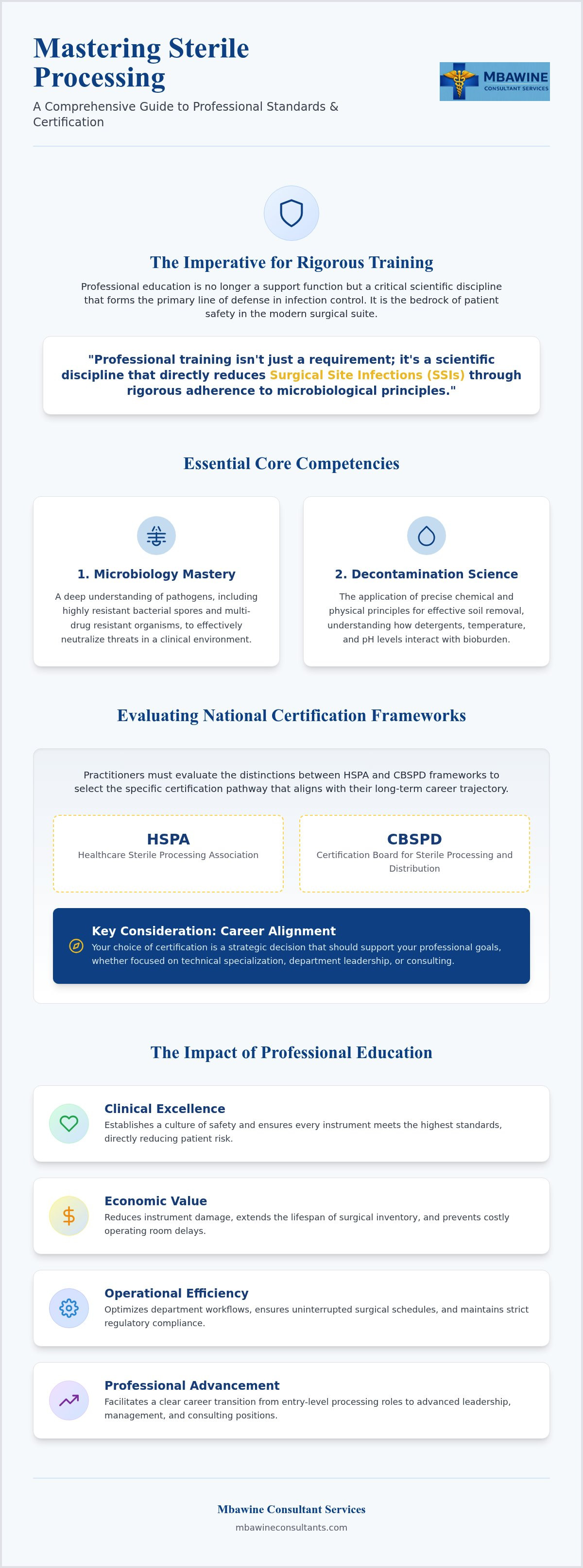
The professionalization of the sterile processing department is codified through national certification, ensuring that every practitioner meets a baseline of technical competency. While several pathways exist, the choice between the Healthcare Sterile Processing Association (HSPA) and the CBSPD National Certification Standards often depends on specific institutional requirements and the technician's long-term career goals. Both organizations maintain rigorous benchmarks, yet they differ in their examination structures and recertification cycles. Engaging in formal healthcare sterilization training is the primary mechanism for navigating these complex professional frameworks, as it provides the theoretical depth necessary to challenge these national exams. These certifications aren't merely badges of achievement; they're essential components of institutional risk management that protect both the patient and the facility.
The Certified Registered Central Service Technician (CRCST) credential remains the industry's gold standard, recognized for its comprehensive assessment of the sterilization lifecycle. A critical component of this certification is the 400-hour hands-on experience mandate, which requires candidates to demonstrate practical proficiency in decontamination, assembly, and sterilization across diverse surgical specialties. This requirement ensures that a certified technician possesses more than just academic knowledge; they've proven their ability to execute high-stakes protocols in a live clinical environment. Maintaining these professional credentials requires a commitment to ongoing education, typically through the completion of annual Continuing Education (CE) units that reflect the latest technological and regulatory advancements in the field.
Success on the CRCST exam requires a strategic understanding of its core content domains, which include cleaning and decontamination, equipment management, and sterile storage. Candidates should adopt disciplined study habits, focusing on the scientific rationale behind each protocol rather than rote memorization. Utilizing specialized CRCST information and preparatory resources can significantly increase the likelihood of passing the exam on the first attempt. This systematic approach to healthcare sterilization training ensures that technicians are prepared for the technical rigors of the modern CSSD.
Professional growth in this field doesn't conclude with initial certification. Technicians can pursue advanced credentials such as the Certified Instrument Specialist (CIS) or the Certified Endoscope Reprocessor (CER) to demonstrate mastery of complex robotic tools and flexible endoscopes. These specializations increase professional marketability and create a clear trajectory toward leadership roles, including Interim Management and departmental consulting. By diversifying their expertise, practitioners ensure career longevity and contribute to a higher standard of institutional excellence. This commitment to advanced education transforms a technician into a specialized subject matter expert, capable of leading teams through the most challenging clinical scenarios.
Institutional excellence requires more than just hiring certified staff; it demands the strategic implementation of healthcare sterilization training protocols that align with specific facility workflows. When education is integrated directly into the department's culture, it reduces the friction between the sterile processing department (SPD) and the operating room (OR). This systemic alignment ensures that every technician understands the clinical context of their work, fostering a shared sense of responsibility for patient outcomes. Custom training modules allow facilities to address unique challenges, such as specialized robotic inventory or high-volume orthopedic schedules, while maintaining strict adherence to national safety standards. This approach transforms the SPD from a siloed support unit into a proactive partner in infection prevention.
Addressing the current workforce crisis requires a shift toward internal professional development programs that prioritize long-term retention over short-term staffing fixes. By providing clear educational pathways, healthcare administrators can cultivate a highly skilled workforce that feels invested in the facility's success. This internal growth model not only stabilizes the department but also ensures that institutional knowledge is preserved during leadership transitions. Integrating sterile processing education with hospital-wide infection prevention strategies creates a unified front against hospital-acquired infections. It's a proactive measure that mitigates risk and reinforces the facility's commitment to public safety. For administrators seeking to elevate their department's performance, you can register for our professional training modules to begin the transformation.
Determining the most effective delivery method for healthcare sterilization training depends on the facility's operational needs and the existing staff's experience level. Hands-on laboratory training in a clinical environment offers unparalleled efficacy for mastering tactile skills, such as instrument assembly and functional testing. Conversely, online sterile processing classes provide the flexibility required for working professionals to advance their theoretical knowledge without disrupting departmental shifts. Many high-performing institutions utilize a hybrid approach, combining digital curriculum with localized mentorship. You can explore the benefits of localized education in our detailed guide on On-Site Sterile Processing Training.
Training the next generation of Sterile Processing Managers and Supervisors requires a curriculum that balances technical expertise with sophisticated soft skills. Effective leaders must be capable of high-level communication with clinical leadership and surgeons, advocating for the department's needs while maintaining operational efficiency. Formal education provides the necessary framework for technicians to transition into management roles, ensuring they possess the administrative acumen to handle budgeting, compliance audits, and staff scheduling. This specialized training is particularly vital for those pursuing Interim Leadership roles, where the ability to stabilize a department during a transition is paramount. Investing in leadership education ensures the SPD remains a pillar of institutional integrity.
Mbawine Consultant Services operates as a dedicated guardian of industry standards, committed to elevating the professional status of the sterile processing technician through rigorous academic and technical instruction. While many entry-level programs rely on generic, automated modules, our healthcare sterilization training emphasizes a mentorship-driven model that prepares students for the nuanced realities of the modern clinical environment. This educational philosophy ensures that practitioners don't just memorize facts for an exam but develop the critical thinking skills required to manage complex instrument reprocessing and infection control protocols. By bridging the gap between theoretical knowledge and technical mastery, we empower our students to become recognized leaders within their respective institutions. The transition from a student to a certified professional is supported by an extensive alumni network, providing a continuous framework for professional development and peer advocacy.
Our mission extends beyond individual instruction, seeking to professionalize the entire field by establishing a standard of excellence that mirrors the gravity of the medical procedures we support. We believe that a technician's education is the most critical variable in the patient safety equation, and our classes reflect this weight through dense, information-rich curriculum. Students don't just learn how to clean instruments; they learn the systematic processes that protect public health and ensure institutional integrity. This approach fosters a sense of professional pride and clinical accountability that stays with the technician throughout their career. It's about moving from a role of support to a role of specialized expertise.
The process for advancing your career begins with selecting a curriculum that matches your professional goals and institutional requirements. Candidates can find step-by-step guidance for joining our upcoming sessions by visiting Mbawine Consultant Services. Our programs are meticulously designed to prepare individuals for the Certified Registered Central Service Technician (CRCST) designation, ensuring they meet the highest benchmarks of the profession. Mbawine’s curriculum is characterized by a profound commitment to academic reliability and professional advocacy, positioning each participant as a vital contributor to public safety.
The excellence established in our classroom translates directly into our institutional support services, where our staffing and consulting solutions are informed by the same rigorous standards we teach. When facilities utilize certified, Mbawine-trained professionals for temporary staffing needs, they benefit from a workforce that's already aligned with the most current regulatory and technical protocols. This synergy ensures that even during periods of departmental transition or crisis, the standard of care remains uncompromised. Our interim management and consulting services further support this mission, helping departments optimize their workflows and culture based on proven educational foundations. To ensure your facility or career meets these high-stakes standards, secure your professional future by enrolling in our next Sterile Processing session today.
The evolution of sterile processing into a specialized medical discipline underscores the necessity for practitioners who possess both technical proficiency and a deep understanding of regulatory standards. We've examined how the intersection of microbiology, manufacturer instructions, and national certification creates a robust framework for infection control. This systemic approach is no longer optional for facilities that prioritize clinical integrity and operational stability. It's a professional mandate that protects the most vulnerable aspects of patient care while ensuring the long-term viability of the surgical suite.
Investing in comprehensive healthcare sterilization training is the most effective strategy for ensuring departmental compliance and patient safety. Mbawine Consultant Services provides the specialized, expert-led curriculum needed for successful CRCST certification, supported by industry consultants who understand the complexities of modern CSSD management. Whether you're an individual seeking career advancement or a facility requiring national staffing and interim management support, the path to excellence begins with a commitment to high-level education. Enroll in Professional Sterile Processing Classes to secure your role as a guardian of industry standards. Your dedication to this essential field ensures a safer future for every patient under your care.
Academic and practical benchmarks for 2026 include a high school diploma or equivalent, the completion of a formal educational curriculum, and the fulfillment of a clinical internship. Candidates pursuing the CRCST designation must document 400 hours of hands-on experience in a sterile processing environment. This multi-faceted approach ensures that healthcare sterilization training produces technicians who are clinically prepared to manage the high-stakes demands of the surgical department.
The duration of a professional program generally spans four to six months for the academic component. Following the completion of classroom instruction, students must dedicate additional time to accrue their required clinical hours within a healthcare facility. Total time to full certification depends on the technician's ability to maintain a consistent schedule in the decontamination and sterilization areas. This methodical pace ensures that every concept is thoroughly integrated before the candidate challenges the national examination.
National certification requirements are currently determined by state legislation and individual institutional policies. While several states have enacted laws mandating certification, many facilities across the country now require it as a condition of employment to mitigate risk and ensure patient safety. Regardless of legal mandates, it's the established industry standard for those seeking long-term stability and professional growth within the field. It serves as a verifiable benchmark of technical mastery.
The Healthcare Sterile Processing Association (HSPA) offers the CRCST credential, which is widely recognized for its focus on central service workflows and hospital-based reprocessing. The Certification Board for Sterile Processing and Distribution (CBSPD) provides a broader certification that encompasses sterile processing, distribution, and surgical instrument management. Each organization maintains distinct examination domains and recertification cycles, though both are accredited and respected by healthcare administrators nationwide. Professionals should choose the pathway that aligns with their specific career objectives.
The theoretical and academic components of healthcare sterilization training can be successfully completed through online platforms. Mbawine Consultant Services offers flexible digital classes that allow working professionals to master microbiology, decontamination science, and sterilization modalities from any location. However, the 400-hour hands-on requirement must be fulfilled in a physical clinical setting. This hybrid model balances educational accessibility with the essential practical experience required for technical mastery in a live surgical environment.
Maintaining professional credentials requires a commitment to lifelong learning through the completion of continuing education (CE) units. For those holding HSPA certification, twelve CE credits must be submitted annually to ensure the technician remains current with evolving technology and regulatory changes. CBSPD requires 100 points over a five-year recertification cycle. These rigorous requirements prevent stagnation and ensure that certified professionals continue to operate as the primary line of defense against hospital-acquired infections.
Mbawine Consultant Services focuses on providing the rigorous academic foundation and exam preparation necessary to achieve national certification. While students are responsible for securing their own clinical sites to fulfill the 400-hour requirement, our curriculum provides the professional orientation needed to excel during these internships. Our consulting and staffing expertise allows us to offer guidance on how to navigate the professional landscape effectively. This preparation ensures that students are viewed as highly competent candidates by potential clinical hosts.
Completing basic training and obtaining certification serves as the foundation for diverse leadership and specialized roles. Technicians can advance to positions such as lead technician, department supervisor, or sterile processing manager. With additional experience, professionals may transition into interim management or high-level consulting roles through organizations like Mbawine Consultant Services. Specializing in advanced areas like robotic instrumentation or endoscope reprocessing further increases professional marketability and institutional influence, allowing for a trajectory of sustained career growth.

Article by
Mba Akuribila
Mba‑Akuribila is a healthcare leader, educator, and founder of Mbawine Consultants, a Bronx‑based institution recognized nationwide for advancing excellence in sterile processing and allied health workforce development. Born in Bongo in Ghana’s Upper East Region, his journey from rural beginnings to national impact reflects a lifelong commitment to service, empowerment, and community advancement.
For over two decades, he has trained sterile processing employees, mentored, and placed thousands of healthcare professionals across the United States. Through Mbawine Consultants, he established one of the country’s most trusted Sterile Processing Certification Test Prep Programs, preparing new Americans and career‑changers for successful entry into the field. The organization, as at 2026, has graduated more than 15,000 sterile processing technicians who now serve in hospitals, ambulatory centers, dental practices, and reprocessing facilities nationwide.
Under his leadership, Mbawine Consultants has expanded into a full Healthcare Staffing Agency, connecting nurses and allied health professionals to meaningful employment opportunities. His team also provides Interim Management Services, supporting hospitals and surgical centers with experienced leaders who stabilize operations, strengthen compliance, and improve workflow efficiency.
As a former surgical technician, sterile processing manager, educator, and system‑wide director, Mba‑Akuribila brings deep expertise to Sterile Processing Consulting, helping healthcare facilities elevate quality, safety, and regulatory readiness.
His work in the United States and Ghana continues to reflect his core philosophy: service above self, opportunity for all, and excellence without compromise.


