

Last Updated: September 27, 2026
Most people finish sterile processing training in four to nine months, depending on your program, schedule, and how fast you complete clinical hours.
| Path | Typical Duration | Best For |
|---|---|---|
| Accelerated full-time program | 3-4 months classroom | Career changers who can study daily |
| Standard vocational program | 6-9 months | Students balancing work and school |
| Part-time or self-paced study | 9-12 months | Full-time employees on shift work |
| Employer-sponsored training | Varies by facility | New hires already on staff |
The CRCST credential comes from the Healthcare Sterile Processing Association (HSPA). It is the entry-level certification most employers ask for.
To earn it, you need three things:
You do not need a college degree, a diploma or GED is enough. Some programs accept students with no healthcare background; others prefer applicants who have worked in a hospital, clinic, or dental office. If you already work in a facility, ask about employer-sponsored training, since many hospitals pay for coursework and clinical time for staff who move into the department.
The CRCST exam is computer-based and covers decontamination, sterilization, infection control, and instrument identification. Most candidates take it at a testing center or proctored online.
Plan for these steps:
Most certification paths require 400 hours of hands-on clinical experience before you can sit the national exam. This is the biggest factor in how long the process takes, and the part brochures describe most vaguely.
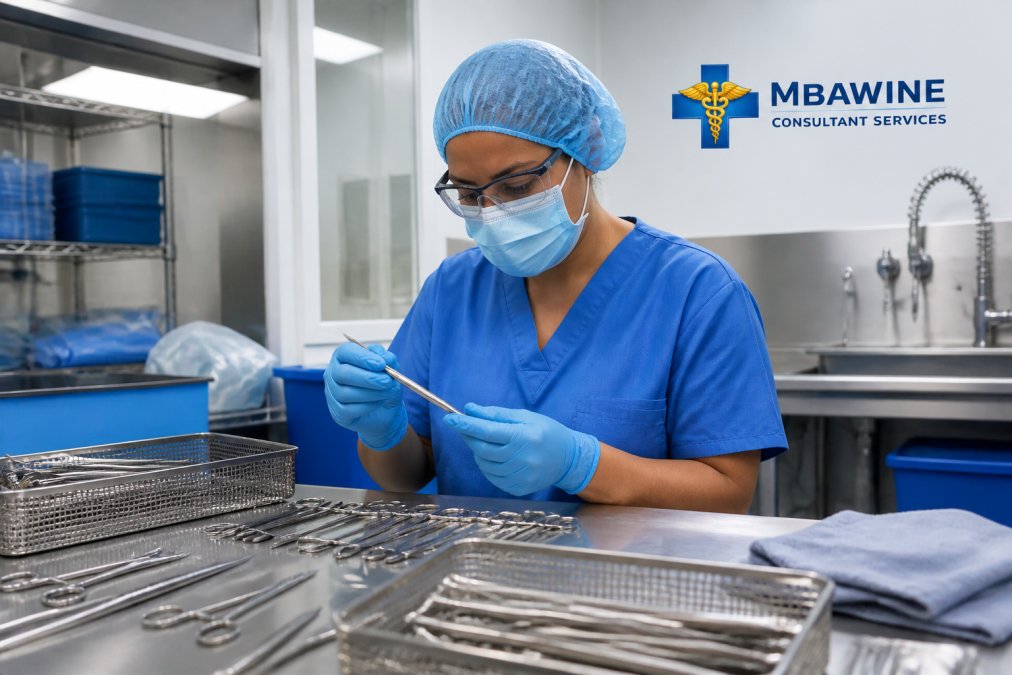
Clinical hours are not a single block you knock out at the end. In most programs, they are logged in shifts inside a working sterile processing department, broken across four functional areas:
This is the hidden time cost most guides skip. Your clinical hours must be documented in a way the certifying body accepts, usually requiring a supervisor or preceptor signature at the facility where you trained.
Common friction points:
A program may have open classroom seats but a waiting list for hospital slots. That mismatch is the most common reason two students who start the same week finish months apart.
Ask your program these questions in writing before you enroll. The answers change your timeline by months:
The path is straightforward once laid out, but the details at each step are where timelines are won or lost. Here is the full sequence, with the mechanics most guides leave out.
The two credentials you will see most often in job postings are the CRCST, offered by the Healthcare Sterile Processing Association (HSPA), and the CSPDT, offered by the Certification Board for Sterile Processing and Distribution (CBSPD). They are separate credentials from separate organizations and are not interchangeable.
Accreditation determines whether your coursework counts toward certification at all.
This is where most self-paced students lose time. The exam is computer-based and delivered through a testing network, so you compete for appointment slots at local testing centers.
Plan for these mechanics:
Certification is not a one-time event. Both credentials require renewal on a recurring cycle, typically with continuing education units plus a fee. Letting a credential lapse means retaking the exam, which resets your timeline entirely.
Online training works well for the classroom portion. It does not replace clinical hours, and any program claiming otherwise is misleading you.
Here is how the two formats compare:
| Factor | Online | In-Person |
|---|---|---|
| Classroom flexibility | High, self-paced options | Fixed schedule |
| Hands-on practice | Limited until clinicals | Built into class time |
| Clinical placement help | Varies by program | Often included |
| Best for | Working adults, shift workers | Students who want structure |
Timelines stretch for predictable reasons. Knowing them in advance helps you avoid most of the delay.
Other common slowdowns:
The timeline question has a real answer, but the honest one depends on your schedule and your program's clinical support. Four to nine months is typical, and clinical hours almost always decide where you land in that range.
Entry requirements are minimal: a high school diploma or equivalent and the ability to pass a background check. The harder part is completing an accredited program, logging the required clinical hours, and passing the national exam. Most people who struggle do so because they underestimate the clinical hours requirement or try to cram exam prep into too short a window. A structured, self-paced prep program makes the process manageable while you work.
The fastest route combines an accelerated online or hybrid training program with a facility that lets you complete clinical hours quickly. Some candidates finish coursework in a few months and clinical hours within a few more, then sit for the CRCST exam. Total time from start to certification often ranges from six to twelve months. Employer-sponsored training at a hospital can shorten this further because your clinical hours happen on the job.
No. Sterile processing is a certificate or diploma pathway, not a degree program. You need a high school diploma or equivalent, completion of an accredited training program, and passing the national certification exam. Some vocational schools and community colleges offer the training, and remote or hybrid options exist for the coursework portion. The credential employers look for is the CRCST, not a college degree.
Pay varies by region, facility type, and experience. Entry-level sterile processing technicians generally earn an hourly wage that translates to a modest annual salary, with certified technicians earning more than non-certified ones. Technicians who add the CIS credential or move into lead and management roles see higher compensation. For current salary figures in your area, check the U.S. Bureau of Labor Statistics or local job postings.


