

Last Updated: October 3, 2026
You can start training with a high school diploma or GED and no prior medical background. That low barrier is why so many people ask how to become a sterile processing technician in 2026: it is one of the few healthcare careers you can enter without a four-year degree.
Sterile processing technicians work behind the scenes in hospitals and surgery centers, cleaning, inspecting, assembling, and sterilizing surgical instruments. The job depends on precision rather than bedside care.
Before you enroll anywhere, confirm three things:
The prerequisites are simple, but the follow-through separates people who finish from people who stall.
Choose a program that teaches the full curriculum, not just test answers. Sterile processing education covers instrument decontamination, sterilization methods, infection control, sterile storage, and regulatory compliance.
Two paths exist: a career diploma gets you working faster, while an Associate of Applied Science opens doors to supervisory roles. Most entry-level technicians start with the shorter option and add credentials as they go.
Look for these features when comparing programs:
This is where remote learning earns its place. Mbawine Consultants delivers audio, video, and web-conferencing instruction so you can complete coursework around a full-time job.
The CRCST is the credential most employers look for. Its requirements center on a written exam plus documented hands-on experience, so you cannot study your way to the title.
The Certification Board for Sterile Processing and Distribution, known as CBSPD, and the Healthcare Sterile Processing Association, or HSPA, are the two bodies that issue these credentials.
A practical breakdown of what each credential involves:
| Credential | Focus | Experience Requirement | Best For |
|---|---|---|---|
| CRCST | General sterile processing | Documented clinical hours | New technicians |
| CIS | Instrument specialization | Prior CRCST plus hours | Experienced techs |
| CHL | Leadership and management | Supervisory background | Career advancement |
Every path runs through clinical hours, the gate most candidates underestimate.
Sterile processing clinical hour requirements are the biggest hurdle for new candidates, and the reason a purely online course will not get you certified.
The standard benchmark is 400 hours of hands-on experience under a certified technician or manager who signs off on your log.
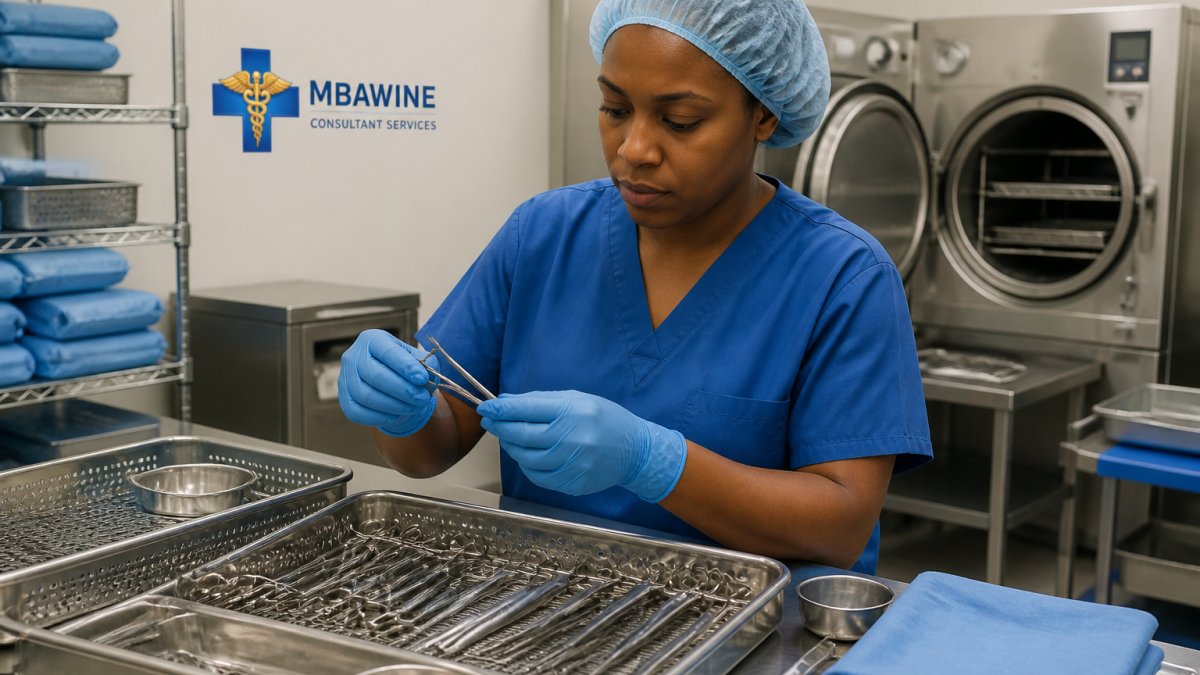
Most candidates do a part-time placement alongside a job or coursework:
Hospitals rarely hand a new candidate a full-time clinical slot, so the 20-to-24-hour pace is the realistic default. Build your exam date around that math.
Both major certifying bodies require documentation, and the format matters. Your supervisor signs a log recording the date, hours worked, and competencies observed, decontamination, inspection and assembly, sterilization, and sterile storage. The certifying body then confirms the hours against its eligibility rules.
Clinical hours are usually unpaid, so you work 20-plus hours a week without a paycheck while covering tuition, exam fees, and living costs. That gap is where many otherwise-qualified candidates drop out.
Options worth checking before you commit:
This is where remote learning earns its place. Mbawine Consultants delivers audio, video, and web-conferencing instruction so you can complete coursework around a full-time job, and our financing includes no payment for the first 30 days, which matters when your clinical hours are unpaid.
Knowing how to study for the HSPA exam matters more than raw study time. The exam tests applied judgment, so memorizing definitions will not carry you through scenario questions about contaminated instruments and workflow.
A study plan that works:
The OSHA bloodborne pathogens standard is worth reviewing too, since infection control and safety questions draw on the same principles that govern real departments.
Mbawine Consultants built its fast-track test preparation around exactly this: short audio and video modules you can run during a commute, plus live web conferencing when you need a concept explained.
Certification is not the finish line. Sterile processing is largely a nationally certified field rather than a state-licensed one, and that distinction trips people up. Most states do not issue a separate license, so the credential travels with you, but individual employers and some states set their own hiring standards. Check your state health department's rules.
The practical rule most technicians follow:
Before you accept an offer in a new state, verify three things: the state health department's current rules for sterile processing personnel, the employer's credential requirement, and whether your certification is in good standing. A credential that lapsed during a move is the most common avoidable setback.
Recertification keeps the credential active, and the mechanics are predictable. You renew on a set cycle by earning continuing education credits, typically contact hours, and paying a renewal fee.
What counts toward those credits is broader than most new technicians expect:
The catch: not every session qualifies, and you must keep the certificates. Many technicians attend in-services but never log them, then scramble at renewal. Keep a running file, digital is fine, with the date, provider, topic, and credit hours for every session.
Career advancement beyond entry level is where the real money and stability sit, and it follows a fairly consistent progression:
That last step is where many technicians plateau, because leadership requires management skills the floor never teaches, scheduling, budget justification, conflict resolution, and inspection readiness. Those who move up build those skills before the opening appears.
Mbawine Consultants provides preparation for CRCST, CIS, and CHL credentials and interim management support for departments that need experienced hands while they hire.
First, treating clinical hours as an afterthought. People finish coursework, then scramble for a site and lose months.
Second, choosing a program on price alone.
Third, ignoring the documentation trail. Your hours, your certifications, and your continuing education all need records.
Fourth, assuming a national credential covers every employer's requirement. Verify what your target facility and state expect before you invest.
The path is clear, but the 400 clinical hours and the exam are where most people lose momentum without the right support. Mbawine Consultants prepares technicians for CRCST, CIS, and CHL credentials through live web conferencing and on-demand audio and video modules, with financing that includes no payment for the first 30 days. Our instructors hold current certifications and teach from real department experience.
Most people complete the process in under a year. A career diploma or certificate program typically runs a few months, and you need to log 400 hands-on clinical hours before you can sit for the CRCST exam. If you pursue an Associate of Applied Science, plan for two years. Working full-time while training is common, so your timeline depends mainly on how quickly you finish your clinical hours.
No. A high school diploma or GED is the main prerequisite. Employers accept a career diploma or certificate from an accredited program, and the CRCST credential matters more than a degree for most entry-level roles. An Associate of Applied Science can help if you want to move into supervisory or management positions later, but it is not required to start on the floor.
The CRCST through HSPA requires 400 hours of hands-on clinical experience in a healthcare facility. These hours cover instrument decontamination, sterilization methods, sterile storage, and operating room support. You document each task in a standardized skills log signed by a supervisor. Some training programs place you at a partner facility; if you already work in sterile processing, you can often complete the hours on the job.
CRCST certification requires recertification each year. You complete continuing education credits and pay a renewal fee to keep your credential active. HSPA accepts continuing education from accredited providers, and many employers reimburse the cost. Let your certification lapse and you will need to retake the exam. Tracking your credits throughout the year is easier than scrambling at renewal time.


