Home|Blog|How Do You Become an Interim SPD Manager?
How Do You Become an Interim SPD Manager?
Mbawine Consultants
27th October 2026
Last Updated: October 26, 2026
Quick Summary
You become an interim SPD manager by building three to five years of hands-on sterile processing experience, earning your CRCST certification, and logging at least two years in a supervisor or manager role with direct reports. Staffing firms then verify your credentials, management tenure, department scope, availability, and references before placing you as an interim SPD manager.
Available interim SPD roles carry an average annual salary of $160,000 as of October 2026.
Postings typically require at least two years of sterile processing management experience.
CRCST through HSPA is the most commonly requested credential, though it is an employer requirement, not a legal one.
Spend your first 30 days observing and documenting before overhauling anything in the department.
Send a weekly one-page update to the department director and a monthly summary to the executive sponsor.
What an Interim SPD Manager Does and Why Facilities Hire Them
An interim SPD manager is a temporary leader brought into a sterile processing department to steady operations during a vacancy, a compliance crisis, or a turnaround. The role is hands-on and time-boxed. You run the department, fix what is broken, and hand it back stronger.
Hospitals and ambulatory surgery centers hire interim leaders for a few common reasons:
A department director resigns and the search takes months
A survey or inspection found gaps in sterilization records
Instrument turnaround times are delaying surgeries
Staff turnover has left the department without steady supervision
This is not a placeholder job. You own scheduling, quality assurance, and infection prevention from day one.
That urgency shapes how you prepare. Here is the full route from technician to interim manager.
Sterile Processing Manager Qualifications You Need Before Going Interim
Most listings for these roles ask for a mix of credentials and documented floor time. According to AMN Healthcare's interim leadership listings, available interim SPD roles carry an average annual salary of $160,000 as of October 2026, which tells you the bar is set for experienced leaders, not trainees.
The core qualifications break down like this:
A healthcare background with direct sterile processing experience
A national certification such as CRCST
Documented management experience, usually at least two years
Working knowledge of decontamination, disinfection, sterile storage, and instrument processing
Familiarity with regulatory compliance and industry standards
Leadership skills proven through staff supervision and training
Indeed's interim manager listings note that postings typically require at least two years of sterile processing management experience. If you are weighing a broader move into leadership, our sterile processing leadership career path guide maps how this role fits your long-term trajectory.
What Is Actually Required by Law vs. What Employers Prefer
Certification is typically an employer requirement, not a legal one. CRCST through the Healthcare Sterile Processing Association (HSPA) is the most commonly requested credential, and many facilities write it into job descriptions. A smaller number accept CBSPD's CSPM or CSPDT. Check the specific listing rather than assuming.
State health department rules govern the department, not your title. Facilities must comply with conditions of participation tied to Medicare and with state survey requirements, and some states add reporting or training mandates. Your job is to know which rules bind the facility you are entering.
Facility accreditation surveys conducted under Joint Commission or DNV standards drive most of the documentation expectations you will inherit. Interim leaders are frequently hired precisely because a survey found gaps.
Pro TipBefore an interview, ask the recruiter which certification the facility requires and whether the state imposes any additional sterile processing training or reporting rules. Getting this wrong wastes a contract cycle.
How Interim Staffing Firms Screen You
Credential verification, active CRCST or equivalent, with the certification number confirmed.
Management tenure, two or more years supervising sterile processing staff, not merely senior technician time.
Department scope, experience in departments of comparable size and case mix, since a 6-bay ambulatory surgery center and a 40-technician hospital department demand different playbooks.
Availability and travel, a confirmed start window and willingness to travel or relocate for the assignment length.
References, usually two or three supervisors who can speak to turnaround, compliance, and staff management results.
The Experience Threshold in Practice
Three to five years of hands-on sterile processing across decontamination, assembly, sterilization, and sterile storage
At least two years in a supervisor or manager role with direct reports
Documented involvement in a survey, an accreditation preparation effort, or a quality improvement project
Experience with instrument tracking systems and the department's inventory and equipment management workflows
Step-by-Step: How to Become an Interim SPD Manager
Infographic outlining the steps and study process to become a qualified interim SPD manager
The path follows a clear sequence: build documented experience, earn your credentials, then prove you can lead on day one. Skipping steps catches up with you in the interview.
Here is the route we recommend, in order.
Step 1: Build Documented Hands-On Experience
You need years on the floor, not months. Learn every station: decontamination, assembly, sterilization, and sterile storage. Ask to cross-train. Volunteer for quality audits and inventory projects.
A common mistake is staying in one comfortable role for years. Interim hiring managers want breadth. Keep a simple log of the equipment you have run and the workflows you have owned.
Step 2: Earn and Maintain Your CRCST and Leadership Credentials
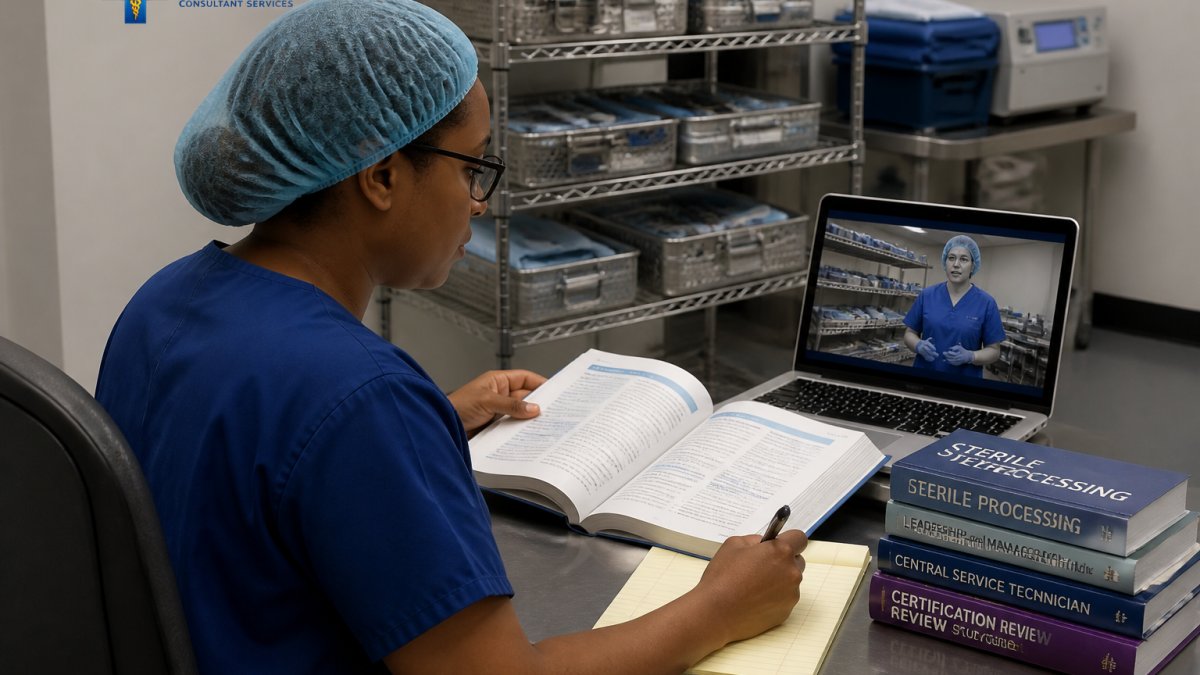
Certification preparation takes discipline when you work full-time. Our CRCST and CIS prep classes use audio, video, and web conferencing so you can study around shifts.
Sterile Processing Leadership Skills That Separate Interim Candidates
Fast assessment: reading a department's weak points within the first week
Clear communication with surgeons, nurses, and administration
Staff supervision that steadies a nervous team rather than alarming it
Training ability: teaching workflow without condescension
Composure under compliance pressure
Your Sterile Processing Department Assessment Checklist for the First 90 Days
Phase
Focus
Key Actions
Deliverable
Days 1-30
Observe and document
Shadow each station, review logs, interview staff
Baseline assessment report
Days 31-60
Stabilize and standardize
Fix record gaps, retrain on workflow, set schedules
Standard work procedures
Days 61-90
Measure and hand off
Track turnaround and compliance, document systems
Transition plan for permanent leader
Days 1-30: Observe and Document
Spend the first month watching and listening. Review sterilization records, interview technicians, and trace instrument flow from decontamination to sterile storage. Do not overhaul anything yet. Document what you find.
Turnaround time, the interval from instrument receipt in decontamination to sterile storage availability, tracked by tray type and by shift. Compare against the facility's stated target and against surgeon complaint patterns.
Instrument availability, the rate of case delays or cancellations attributed to missing or unsterile instruments. Even a rough count from the OR scheduling desk is more useful than no number.
Quality and compliance, biological indicator failure rates, chemical indicator documentation completeness, and the percentage of trays with complete sterilization records. Survey findings from the prior inspection belong in this baseline.
Productivity, trays processed per technician per shift, and overtime hours as a share of total hours. High overtime with low throughput usually signals a workflow problem, not a staffing one.
Staffing stability, vacancy rate, turnover in the past twelve months, and the number of supervisors the department has had in that period.
Days 31-60: Stabilize and Standardize
Close documentation gaps in sterilization records and biological indicator logs, since these are the first items a surveyor pulls.
Retrain on the workflow steps where the baseline showed the widest variance between shifts.
Set schedules and assignments that match case volume, and publish them so staff can plan.
Establish a daily huddle with a short, fixed agenda: case load, instrument shortages, equipment issues, and staffing gaps.
Days 61-90: Measure and Hand Off
The updated KPI dashboard with month-one baseline versus current values
Written standard work procedures for each station
An open-issues list with owners and target dates
A staffing and scheduling summary, including any pending hires or disciplinary matters
A short memo on compliance status and any survey exposure that remains
Reporting Cadence That Keeps You Employed
Interim assignments are renewed or ended based on how clearly administration sees progress. A common pattern is a weekly one-page update to the department director and a monthly summary to the executive sponsor. Keep the format identical so trends are visible at a glance, and when a metric worsens, explain the cause and corrective action in the same paragraph.
Interim SPD Manager Interview Questions to Prepare For
Prepare answers for prompts like:
"You arrive and find sterilization logs incomplete. What are your first three steps?"
"How do you earn trust with a staff that has already seen three managers this year?"
"Walk us through how you would assess our department in week one."
"How do you handle a surgeon who is angry about instrument delays?"
Finding Interim Assignments and Reading the Contract
When a contract arrives, read it closely. Check these items:
Assignment length and renewal terms
Housing and travel stipends, if any
Overtime and on-call expectations
Termination clauses on both sides
Scope of authority over staff and budget
Pricing and assignment terms vary by facility and length, so ask for the details in writing before you commit. If you are ready to pursue assignments, you can contact our staffing consultants directly.
Enroll in Certification Prep and Take the Next Step
At Mbawine Consultants, our credentialed experts lead certification prep for CRCST and CIS, with flexible remote classes built around working technicians. We also provide interim management and staffing support for surgical and ambulatory-surgical facilities.
Get started with Mbawine Consultants.
Frequently Asked Questions
What qualifications do you need to become an SPD manager?
Most interim SPD manager roles ask for a CRCST credential, at least two years of sterile processing management experience, and a working knowledge of decontamination, sterilization, sterile storage, and infection prevention standards. A healthcare background plus documented hands-on experience carries more weight than a general business degree. Some facilities also prefer a CHL or similar leadership certification because it shows you understand staff supervision, workflow, and regulatory compliance, not just instrument processing.
How much experience do you need before becoming an interim SPD manager?
A common benchmark is two or more years in a sterile processing management or supervisory role, on top of several years as a technician. Interim assignments move fast, so facilities want someone who has already run a central sterile processing department, handled inventory and equipment management, and worked through a survey or accreditation review. If you have less management time, build it through lead technician or shift supervisor duties before applying for interim work.
How do you find interim sterile processing management jobs?
Interim roles are usually filled through staffing and consulting firms rather than standard job boards. Indeed has listed hundreds of sterile processing interim manager postings, and AMN Healthcare has reported an average annual salary of $160,000 for available interim SPD jobs as of October 2026. Register with firms that specialize in sterile processing, keep your CRCST and resume current, and be ready to interview and start on short notice.
What is the difference between an interim SPD manager and a permanent SPD manager?
A permanent manager owns long-term strategy, budget, and staff development. An interim SPD manager steps in for a defined period, often to cover a vacancy, stabilize a department with compliance issues, or prepare for a permanent hire. That means faster onboarding, heavier emphasis on assessment and documentation, and a clear handoff plan. Interim work suits experienced leaders who want variety and are comfortable walking into an unfamiliar department and earning credibility quickly.
The path to interim SPD management rewards preparation over luck. If you are ready to earn the credentials that open the door, enroll in our certification prep and let our team guide your next move.
Central Sterile Processing Instructors — New York &
New Jersey
Our instructors are credentialed sterile processing professionals who teach CRCST,
CIS and CHL preparation classes and place graduates in hospitals, surgical centres
and third party reprocessing units across the tri-state area.