

Last Updated: August 9, 2026
Surgical site infections are one of the most preventable yet persistently costly complications in modern surgical care. A surgical site infection is an infection that occurs after surgery in the part of the body where the surgery was performed, classified by the CDC's National Healthcare Safety Network SSI definitions into superficial incisional, deep incisional, and organ/space categories. Despite decades of clinical guidelines and infection control protocols, SSIs remain among the leading causes of hospital-acquired infections, driving extended hospital stays, increased morbidity, and significant strain on healthcare resources.
The Mbawine Consultants team works directly with sterile processing departments and surgical facilities. What most guides get wrong is treating SSI prevention as a checklist rather than a system. Every step, from patient decolonization to sterile field maintenance in the operating room, depends on the integrity of the steps before it. This guide walks through evidence-based protocols, patient preparation strategies, and post-operative wound care that perioperative teams and patients can act on immediately.
Understanding SSI risk factors is the prerequisite for preventing them. Risk factors fall into two categories: those tied to the patient's baseline health, and those tied to the procedure and environment.
Patient-related surgical site infection risk factors include conditions that compromise immune response, tissue perfusion, and wound healing:
Procedural factors that elevate SSI risk include wound classification, operative duration, and the degree of contamination introduced during surgery. The American College of Surgeons wound classification system categorizes wounds from Class I (clean) to Class IV (dirty-infected), with infection risk rising sharply across classes.
Environmental factors include lapses in aseptic technique, inadequate laminar airflow in the operating room, poor hand hygiene compliance, and failures in instrument sterilization. Prolonged operative time correlates with increased SSI incidence because longer exposure means greater contamination opportunity and more pronounced hypothermia risk. These procedural and environmental factors are largely controllable, which is where perioperative teams have the most impact.
Reducing surgical site infections requires coordinated action across the preoperative, intraoperative, and immediate postoperative phases. No single intervention is sufficient on its own. The protocols below reflect current evidence-based practice endorsed by organizations including the Society for Healthcare Epidemiology of America SSI guidelines.
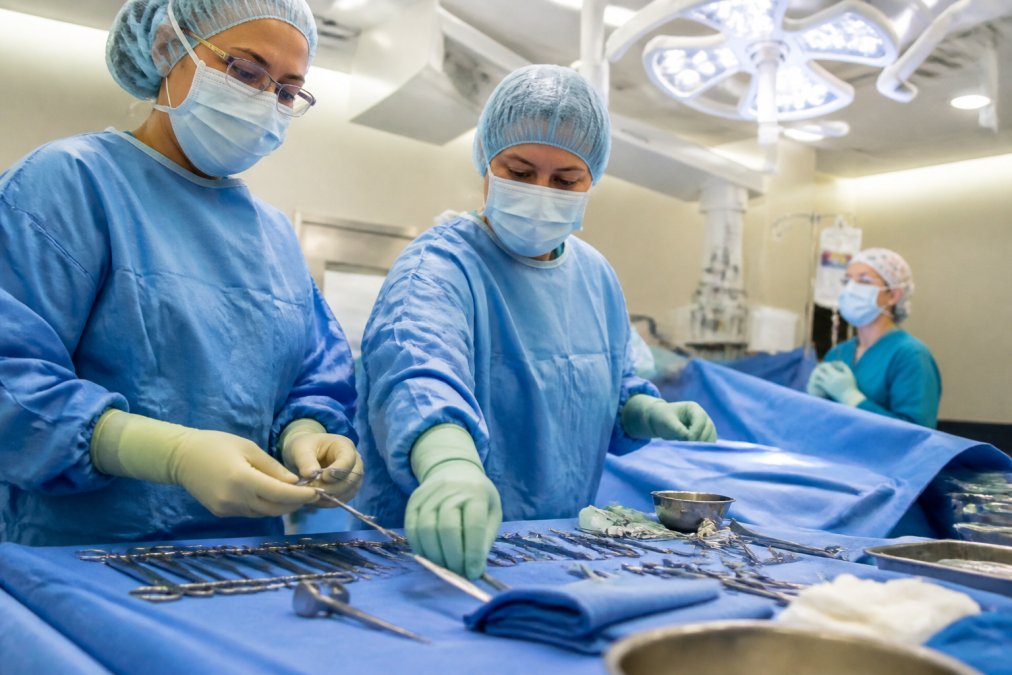
Preoperative skin preparation is the first active defense against surgical site infection. Current best practice supports chlorhexidine gluconate (CHG) bathing the night before and the morning of surgery. For high-risk procedures, particularly cardiac and orthopedic surgeries, patient decolonization with CHG combined with mupirocin nasal ointment targets S. aureus colonization directly before the patient enters the operating room.
At the surgical site itself, CHG-alcohol preparations are the preferred skin antiseptic for most body locations, given their superior residual antimicrobial activity compared to povidone-iodine alone. The skin must be allowed to dry fully before draping to prevent pooling, which can cause chemical burns and compromise the sterile field.
The evidence on hair removal is unambiguous: clippers, not razors. Razors create microscopic skin abrasions that become entry points for pathogens, increasing SSI risk. Hair removal should only occur when hair at the operative site would interfere with the procedure, using electric clippers immediately before surgery, not hours earlier.
Antibiotic prophylaxis is most effective when the antimicrobial agent reaches therapeutic tissue concentrations at the moment of incision. The window for administration is typically within 60 minutes before incision for most agents, or within 120 minutes for vancomycin and fluoroquinolones due to their longer infusion requirements.
Timing errors are common and consequential. For prolonged procedures, redosing at intervals based on the agent's half-life is necessary to maintain protective tissue levels throughout the operation. Cefazolin remains the first-line antistaphylococcal prophylactic agent for most clean and clean-contaminated procedures.
Hyperglycemia in the perioperative period impairs wound healing and increases SSI susceptibility regardless of diabetes diagnosis. Blood glucose management protocols targeting moderate glycemic control are standard practice for surgical patients.
Hypothermia is an equally underappreciated SSI risk factor. Intraoperative temperature drops cause vasoconstriction, reduce tissue oxygen tension, and impair neutrophil function. Maintaining normothermia through forced-air warming blankets, warmed IV fluids, and operating room temperature management is an active SSI prevention strategy.
Operating room ventilation using positive-pressure laminar airflow systems reduces airborne particulate and pathogen load at the surgical field. Traffic in and out of the OR during a procedure should be minimized because each door opening disrupts airflow patterns.
Aseptic technique encompasses every action that protects the sterile field: proper gowning and gloving, instrument handling, draping, and maintaining the boundary between sterile and non-sterile zones. Surgical scrub protocols, whether traditional antimicrobial soap scrub or waterless alcohol-based hand rub, are the foundation of infection control at the team level.
Nutritional optimization directly affects surgical outcomes. Protein deficiency reduces collagen synthesis and impairs the immune response that contains wound contamination. Patients scheduled for elective procedures should be screened for malnutrition preoperatively. Carbohydrate loading in the hours before surgery, using clear carbohydrate drinks up to two hours before anesthesia, supports glycemic stability and reduces the metabolic stress response to surgery.
Psychological stress suppresses immune function and elevates blood glucose. Patients who receive thorough pre-surgical education about what to expect, including wound care instructions and SSI warning signs, consistently report lower anxiety and demonstrate better compliance with preparation protocols. Patient-centered pre-surgical education is an SSI prevention strategy.
The following SSI prevention checklist consolidates the core interventions across the surgical episode.
| Phase | Intervention | Responsible Party |
|---|---|---|
| Pre-op (days before) | Identify and document SSI risk factors | Clinical team |
| Pre-op (days before) | Nutritional screening and optimization | Clinical team / Patient |
| Pre-op (night before) | CHG bath per protocol | Patient |
| Pre-op (morning of) | CHG bath; mupirocin if indicated | Patient |
| Pre-op (day of) | Antibiotic prophylaxis within 60 min of incision | Anesthesia / Nursing |
| Pre-op (day of) | Hair removal with clippers only if needed | Perioperative nurse |
| Pre-op (day of) | Verify blood glucose within target range | Anesthesia / Nursing |
| Intraoperative | Maintain normothermia; monitor core temperature | Anesthesia |
| Intraoperative | Enforce aseptic technique; limit OR traffic | Entire surgical team |
| Intraoperative | Antibiotic redosing for prolonged procedures | Anesthesia |
| Intraoperative | Confirm laminar airflow system is operational | OR charge nurse |
| Post-op | Wound care education before discharge | Nursing |
| Post-op | Postoperative surveillance for SSI signs | Patient / Care team |
Signs of surgical site infection typically appear within 30 days of the procedure, or within 90 days for procedures involving implants. Patients and caregivers should monitor the wound daily and contact their surgical team if any of the following develop:
Deep incisional and organ/space SSIs can present with systemic signs, including fever, chills, and malaise, before obvious wound changes are visible. Patients should never wait to see if symptoms resolve on their own. Early identification and treatment of SSIs significantly reduces the risk of complications, including sepsis and the need for reoperation.
Post-operative wound care is the patient's primary role in SSI prevention after discharge.
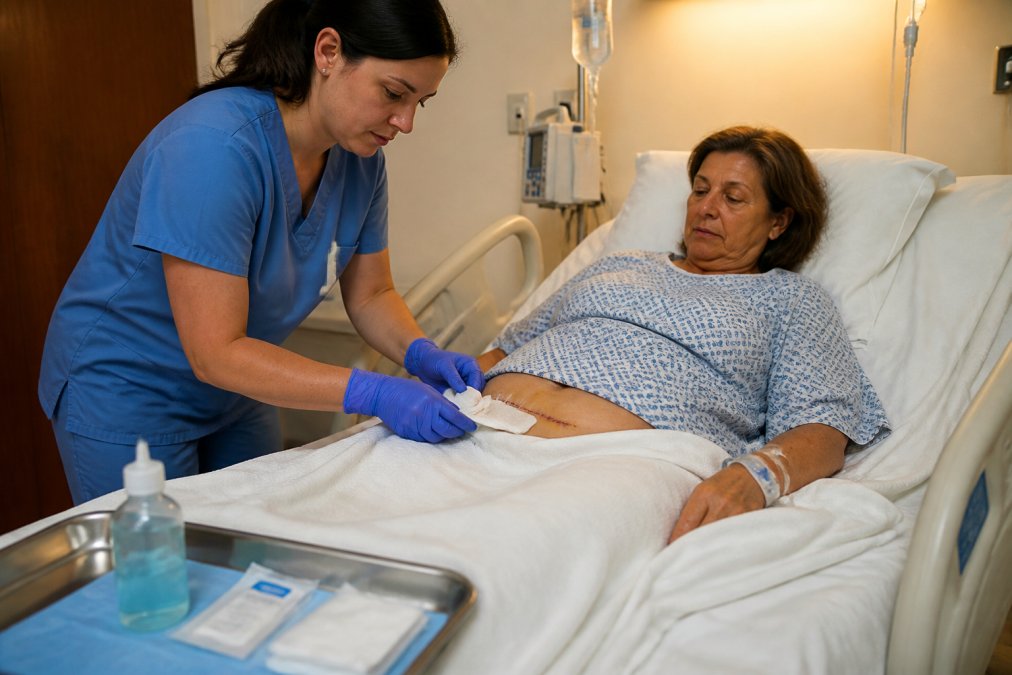
Step 1: Keep the wound dry for the first 24-48 hours unless instructed otherwise by the surgical team. Moisture promotes bacterial growth at the incision site.
Step 2: Wash hands thoroughly with soap and water for at least 20 seconds before touching the wound or changing dressings. This is the single most important thing a patient can do to prevent contamination.
Step 3: Change dressings as directed. Remove the old dressing gently, clean the wound with the solution specified by your care team, and apply a fresh sterile dressing. Never reuse dressings.
Step 4: Avoid submerging the wound in baths, pools, or hot tubs until the wound is fully closed and the surgical team has confirmed it is safe to do so.
Step 5: Do not apply lotions, ointments, or topical agents not specifically prescribed by your surgical team.
Step 6: Monitor daily for the SSI warning signs listed above. Take a photo of the wound at each dressing change so you have a visual record of healing progression.
Step 7: Attend all follow-up appointments. Postoperative surveillance visits exist specifically to catch early signs of SSI before they escalate.
Surgical site infection prevention does not begin in the operating room. It begins in the sterile processing department, where surgical instruments are decontaminated, inspected, assembled, and sterilized before they reach the sterile field.
A contaminated instrument introduced into a clean wound is a direct SSI vector. Failures in sterile processing, whether from inadequate cleaning, incorrect sterilization cycle parameters, or compromised packaging, can undermine every clinical protocol the surgical team executes perfectly. The connection between sterile processing standards and SSI rates is direct and consequential.
This is why the competency of central service technicians matters. Professionals who hold certifications such as the CRCST or CIS demonstrate validated knowledge of sterilization standards, infection control principles, and aseptic technique requirements. Facilities that invest in certified, well-trained sterile processing staff build a foundation that clinical SSI prevention protocols depend on.
Mbawine Consultants specializes in this intersection. Through advanced certification preparation for CRCST and CIS, interim management support for sterile processing departments, and flexible remote learning options for working technicians, the firm helps facilities close the gap between protocol and practice. As documented in The Joint Commission's infection prevention standards for accredited hospitals, sterile processing competency is a direct component of accreditation and patient safety requirements.
Reducing surgical site infections across a facility requires more than posting protocols. It requires a trained, credentialed team that understands why each step matters and executes it consistently under pressure. Mbawine Consultants offers certification preparation, interim staffing, and operational support designed for sterile processing professionals and the facilities that depend on them. Enroll with Mbawine Consultants and build the sterile processing competency your surgical outcomes require.
The most common cause of surgical site infections is contamination by the patient's own skin flora, particularly Staphylococcus aureus, including methicillin-resistant strains. Bacteria enter the wound during or shortly after the procedure. This is why preoperative skin preparation, patient decolonization with chlorhexidine gluconate, and proper antibiotic prophylaxis are the highest-impact steps any surgical team can take to reduce SSI risk.
Early signs of a surgical site infection typically appear within the first week after surgery and include redness or warmth spreading around the incision, swelling, increased pain at the wound site, and discharge that is cloudy, yellow, or foul-smelling. Fever above 101°F can also signal an SSI. Patients should contact their surgical team immediately if any of these signs appear, as early treatment significantly improves outcomes and reduces morbidity.
Superficial SSIs involving only skin and subcutaneous tissue often resolve within two to three weeks with proper wound care and, when indicated, antibiotic treatment. Deeper infections involving fascia, muscle, or organ spaces can persist for weeks to months and may require surgical drainage or debridement. The CDC defines SSIs as infections occurring within 30 days of a procedure, or within 90 days when an implant is placed.
Colorectal and bowel surgeries carry among the highest SSI rates due to the presence of gastrointestinal pathogens and wound classification as contaminated or dirty. Cardiac surgery, orthopedic procedures involving implants, and abdominal surgeries also carry elevated risk. CDC wound classification, clean, clean-contaminated, contaminated, and dirty, is the standard framework US surgical teams use to stratify SSI risk and guide prophylaxis decisions.
Patients can meaningfully lower their SSI risk before arriving at the hospital. Showering with chlorhexidine gluconate soap the night before and the morning of surgery reduces skin pathogens. Avoiding shaving the surgical site at home prevents micro-cuts that harbor bacteria. Patients who smoke should stop at least 30 days before surgery, and those with diabetes should work with their physician to achieve stable blood glucose control, since hyperglycemia significantly impairs tissue perfusion and immune response.
The CDC's Healthcare Infection Control Practices Advisory Committee (HICPAC) publishes evidence-based guidelines for SSI prevention. Core recommendations include administering antimicrobial prophylaxis within 60 minutes before incision, using clippers rather than razors for hair removal, maintaining patient normothermia throughout the perioperative period, controlling blood glucose levels in all surgical patients, and ensuring proper preoperative skin antisepsis. Sterile processing departments also play a direct role by ensuring all instruments meet aseptic technique standards before entering the sterile field.
This article was written using GrandRanker


