

Last Updated: October 27, 2026
Quick Summary
Sterile processing leadership means overseeing a department responsible for decontamination, assembly, sterilization, and tracking of surgical instruments while managing people, quality standards, compliance, and operating room relationships. The role requires technical expertise plus people and systems management skills, with accountability extending beyond regular hours.
Sterile processing leadership means overseeing a department responsible for decontamination, assembly, sterilization, and tracking of surgical instruments. Beyond technical expertise, you manage people, quality standards, compliance, and the relationship between your department and the operating room.
The scope has expanded significantly. Leadership now covers five core areas: people management, quality assurance, compliance with regulatory guidelines, data and reporting, and operational workflow. According to research on sterile processing department structure and patient safety, how departments are organized directly affects patient safety outcomes.
This isn't a promotion that doubles your technical duties, it's a role change. You move from executing tasks to directing how your entire team executes them.
Leadership in sterile processing demands a specific skill set: technical knowledge, plus the people and systems management that drives the real demands.
Technical foundation:
People-focused skills:
Operational skills:
Supervisors move information between the operating room, their team, and administration, translating technical requirements into actionable steps for staff and explaining operational constraints to surgeons.
One overlooked skill: saying no. Leadership means protecting your protocols under pressure to cut corners, backed by data and standards.
A sterile processing supervisor carries accountability across multiple domains.
Daily operational responsibilities:
Staff management:
Compliance and quality:
Communication and collaboration:
The accountability is real. When a sterilization failure, missed instrument, or compliance gap occurs, you own it, and that responsibility doesn't stop at 5 PM.
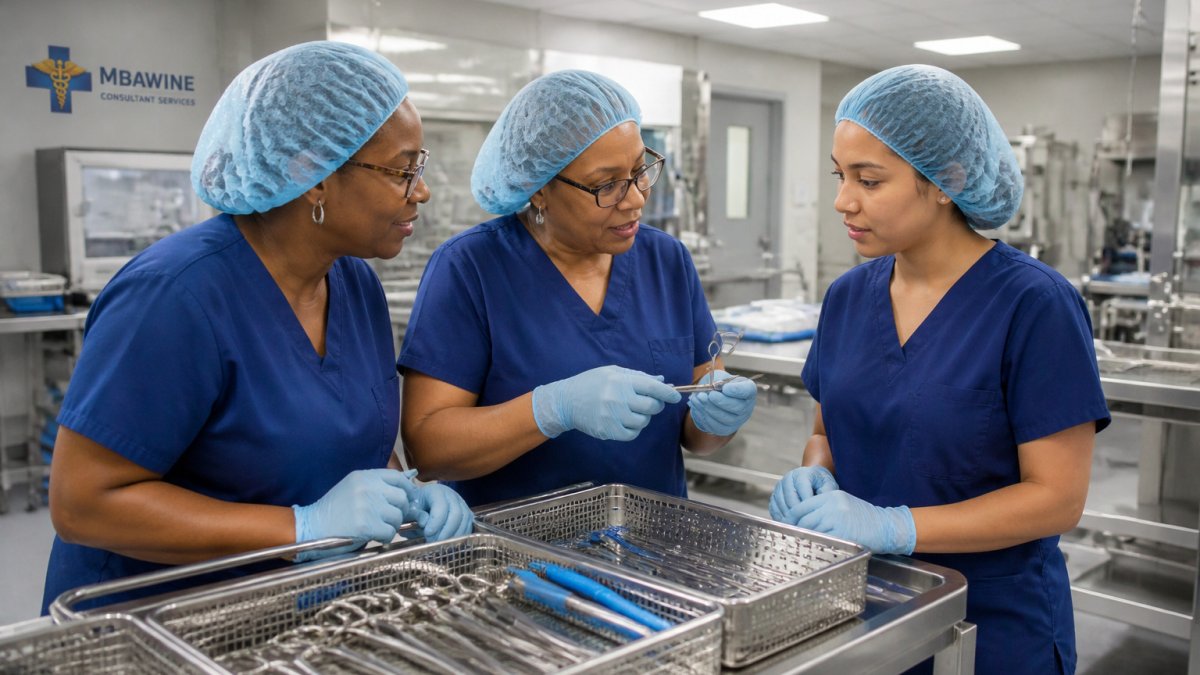
A side-by-side comparison can show what changes, what stays the same, and where your hours go.
Technician vs. supervisor: how the day splits
| Time block | Technician focus | Supervisor focus |
|---|---|---|
| Pre-shift | Clock in, gather assignment, set up workstation | Review overnight logs, equipment status, staffing plan |
| First surgeries | Reprocess trays at the bench | Monitor turnaround times, field OR calls |
| Mid-day | Continue assigned decontamination/assembly/sterilization | Performance conversations, audit prep, equipment troubleshooting |
| Afternoon | Complete assigned cases, document | Administrative work: metrics, emails, scheduling, budget |
| End of shift | Hand off trays, clock out | Prepare evening-shift handoff, confirm next-day staffing |
Technicians and supervisors may divide their time differently between hands-on tasks and other responsibilities.
A realistic supervisor day, with interruptions called out
6:00 AM:
6:45 AM:
7:30 AM:
10:00 AM:
12:00 PM:
2:00 PM:
4:00 PM:
5:00 PM:
The interruption reality
Supervisors and technicians may encounter different kinds of interruptions. The shift from doing tasks to making decisions can be an important change in the role.
The role can involve competing demands, including patient safety, staff concerns, equipment issues, and administrative requirements. Before you decide, consider shadowing a supervisor for a shift and noting the interruptions.
This is the conversation most guides skip: what you're actually signing up for, in concrete terms, before you decide whether sterile processing leadership is right for you.
Schedule reality:
Compensation: To learn about compensation for a specific role, use these steps:
Consider the role's hours and responsibilities when evaluating its compensation.
Work-life trade-offs:
What improves the experience:
Consider the role's responsibilities and compensation when deciding whether it is right for you.
When you interview for a supervisor role, expect questions assessing both technical knowledge and leadership capability. Here's what to prepare for.
Technical and compliance questions:
Leadership and people management:
Problem-solving and decision-making:
Your questions for them:
Preparation matters. Research the facility's size, surgical volume, and any recent compliance issues. Prepare specific examples from your experience. Show that you understand the role requires both technical expertise and people leadership.
For detailed interview preparation, explore specific supervisor interview questions to strengthen your readiness.
Moving into leadership requires more than experience. Formal certification can provide structured learning.
Certification pathways:
Why certification matters:
Training approaches: Remote learning can offer a way to study while working. Find a program that fits your life, not the reverse.
At Mbawine Consultants, we offer flexible remote learning options for certification preparation.
Learn how to become an interim SPD manager to understand management pathways available to you.
Explore how to transition from technician to department lead for a step-by-step approach to leadership roles.
Get certified in sterile processing to understand the credential requirements and timeline.
If sterile processing leadership still appeals to you after weighing the demands and trade-offs, here's how to move forward.
Immediate actions:
Build your foundation:
Pursue formal preparation: The difference between aspiring to leadership and stepping into it is preparation. Formal training and certification can provide structured learning.
Mbawine Consultants provides specialized education and operational support for sterile processing departments.
Whether you're preparing for your first interview, pursuing CHL certification, or stepping into an interim management role, preparation can help you consider your next steps.
Your next step is clear: assess your readiness honestly, invest in your development, and move forward with confidence. Enroll with Mbawine Consultants to begin your leadership preparation and connect with experts who understand sterile processing from the inside.
Readiness involves technical knowledge, ability to train others, comfort making decisions under pressure, and interest in people management. Assess whether you can explain compliance requirements clearly, handle conflict constructively, and stay focused on patient safety amid operational demands. If you find yourself naturally mentoring technicians and thinking about workflow efficiency, consider exploring leadership preparation.
Sterile processing leadership involves technical knowledge of instrument reprocessing, decontamination, sterilization, and assembly. Beyond technical expertise, the role can involve communication with operating room staff and administration, attention to compliance and quality assurance, staff supervision and mentoring, and planning and organizational skills for workflow.
Sterile processing leadership can involve stress. The role may include technical operations, people management, turnaround times, compliance, staffing, and training responsibilities. Consider the demands of a specific position and the support available when evaluating whether it is right for you.
Whether a lead technician role is required depends on the facility. Consider the facility's expectations and the technical, people-management, and compliance skills relevant to the supervisory role.
The path from technician to supervisor isn't automatic, and it shouldn't be. It requires intentional preparation, honest self-assessment, and commitment to growth. If you're ready to step into leadership, the infrastructure and support exist to help you succeed. Start with assessment, move to preparation, and then take action. Your department needs leaders who understand both the technical demands and the human side of the work. If that's you, the timing to begin is now.


