

A tray’s arrival is only the start of a reliable handoff. Managing loaner instrument trays effectively means tracking and documenting each tray, coordinating delivery with the surgical schedule, and ensuring inspection and reprocessing follow the manufacturer’s instructions before use. Clear accountability also helps teams identify missing, damaged, or incomplete instruments before they disrupt case preparation.
Sterile processing and operating room teams know that timing, accurate tray information, and complete reprocessing instructions are essential to readiness. This article explains how to manage loaner trays: track deliveries, contents, locations, and returns, and coordinate trays with surgical schedules. It also covers how facilities can assess whether loaner instruments meet procedural needs and build a dependable process around patient care and daily operations.
A loaner tray contains specialized instruments or implants supplied temporarily for a procedure. The facility doesn’t own or keep these devices in its permanent inventory. Tray management covers every handoff, from vendor shipment through intake, reprocessing, use, and return. Each handoff needs a record identifying the tray and its status.
At intake, sterile processing staff compare the delivered tray with its manifest and inspect the instruments. They check that the contents are complete, undamaged, and properly labeled. Staff also match the tray to the scheduled procedure and confirm they have the manufacturer’s instructions for use. If an instrument is missing or damaged, document and communicate the discrepancy before processing continues.
Standardized shipment and return records create a traceable custody record. A shipment entry can capture the vendor, tray identification, delivery time, case association, and accompanying documentation. During processing, staff record inspection findings and sterilization-cycle details, including a time stamp for each cycle. At return, they compare the set with its count sheet, document missing or damaged items, and record when the vendor collects it. Consistent records help teams resolve discrepancies by reviewing specific handoffs.
Reprocessing must follow the manufacturer’s written instructions and the facility’s procedures for devices entering decontamination. Staff need the cleaning and sterilization parameters before processing; a tray without them should not proceed through the workflow. Sterile processing includes decontamination, inspection, assembly, sterilization, and storage. AAMI and Joint Commission standards are identified as compliance references for loaner trays, while the manufacturer’s instructions guide device-specific processing.
A digital loaner tray management system can centralize arrival, contents, location, processing status, and pickup information. A master loaner database can also keep tray details and reprocessing instructions accessible to staff. Facilities may integrate tracking with surgical scheduling or instrument management systems, reducing reliance on separate manual logs. Automation can support delivery notifications, labeling, sterilization check-ins, and pickup scheduling, while staff remain responsible for verifying the physical tray and its records.
Check-in and check-out controls make vendor handoffs explicit. At check-in, staff record who delivered the tray, when it arrived, and whether the required documents accompanied it. Before releasing it for a case, the team confirms its processing status and location. For return, staff document the contents, seal or prepare the tray according to facility procedure, and record the pickup. Ambulatory surgery centers are advised to have two clinical staff members sign off on high-value specialty sets before sealing them for return.
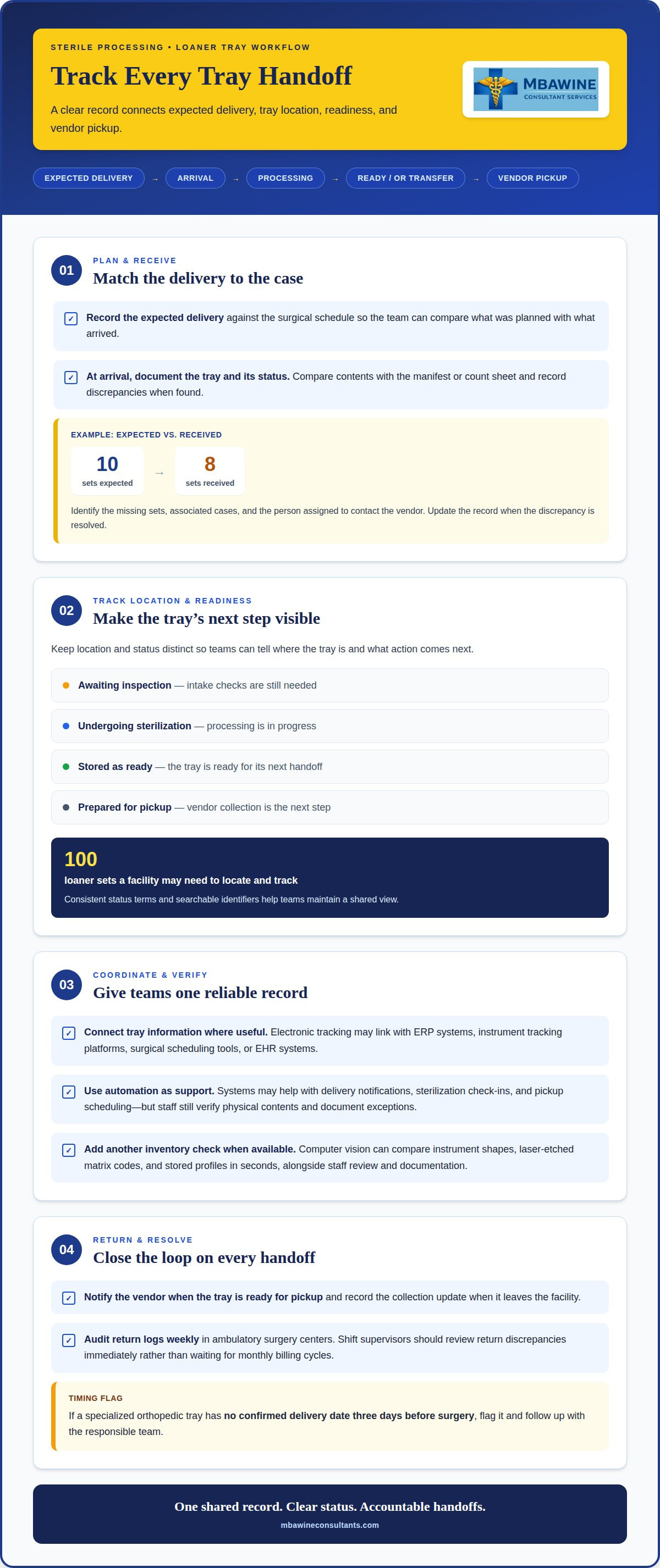
A tracking workflow should show each tray’s location, next required action, and responsible team member. Record the expected delivery against the surgical schedule, then update the status at arrival, processing, readiness, operating room transfer, and vendor pickup. Real-time updates give sterile processing and operating room teams a shared view. A disciplined approach to managing loaner instrument trays effectively also makes handoff gaps easier to spot.
Check tray completeness against its manifest or count sheet. For example, a facility expecting 10 loaner sets may receive only 8. The tracking system should identify the missing sets, their associated cases, and the person assigned to contact the vendor. Record the discrepancy when found, then update the entry when resolved. This creates an audit trail and prevents an expected delivery from being mistaken for an actual arrival.
Location tracking remains important after intake. Distinguish a tray awaiting inspection from one undergoing sterilization, stored as ready, or prepared for pickup. A facility may need to track the location of 100 loaner sets, making consistent status terms and searchable identifiers useful. Ambulatory surgery centers are advised to audit return logs weekly. Shift supervisors should review return discrepancies immediately rather than waiting for monthly billing cycles.
Electronic tracking can connect tray information with ERP systems, instrument tracking platforms, surgical scheduling tools, or EHR systems. Integration can centralize case details and status, helping teams compare expected needs with actual arrivals. A master loaner database can store tray information and accessible reprocessing instructions. Automation may support delivery notifications, sterilization check-ins, and pickup scheduling, while staff verify physical contents and document exceptions.
Computer vision can compare instrument shapes, laser-etched matrix codes, and stored profiles in seconds. This provides another validation method during inventory checks, alongside staff review and documentation. Vendor coordination should include notice when trays are ready for pickup, followed by a recorded collection update. If a specialized orthopedic tray has no confirmed delivery date three days before surgery, materials managers are advised to flag it and follow up with the responsible team.
For facilities managing loaner instrument trays effectively, shared identifiers, status definitions, and handoff steps help maintain consistent records across shifts. Sterile processing teams strengthening these practices can explore Sterile Processing classes to build relevant professional knowledge.
The facility’s vendor agreement and loaner policy should define responsibility for loaner tray costs, repairs, and late returns. Record custody at each handoff, document damage or delay, and route the issue according to those terms. Clear allocations prevent assumptions when an instrument tray arrives incomplete or returns late. They also give staff a consistent way to report discrepancies without interrupting patient-care preparation.
Vendor delivery guidelines should state arrival deadlines and required documents before a scheduled procedure. Some facilities require delivery to sterile processing at least 48 hours before a case. Guidelines should specify a tray manifest and the manufacturer’s instructions for use, so staff can assess contents and reprocessing requirements. Emergency cases may involve loaner sets delivered within 24 hours before a procedure, making prompt notification and documentation essential.
Coordination begins when the case and required trays are identified. Notify vendors about the procedure and its tray requirements, then share expected delivery details with the operating room and sterile processing department. If a vendor reports a delay, communicate the revised status to both teams and record the update. The operating room can assess case readiness, while sterile processing can plan its workload around the actual arrival rather than an outdated estimate.
Missing paperwork needs a defined response, not an informal workaround. If the instructions for use or count sheet are missing, document the gap and contact the vendor for the required material. Staff should not process a loaner tray without the manufacturer’s cleaning and sterilization parameters. Materials managers and clinical leads may spend hours chasing paperwork and verifying complex sets, so assigning one communication owner can prevent duplicate follow-up.
An instrument tracking system can capture the vendor, case, expected arrival, actual delivery, documentation status, and return details. These records support loaner tray analytics: teams can review recurring late deliveries, missing documents, incomplete sets, and return discrepancies. A vendor scorecard can summarize recorded patterns and support specific discussions about delivery performance. It should distinguish documented events from general impressions, keeping follow-up focused on verifiable workflow issues.
Service-level agreement monitoring works best when each measure has a clear definition, owner, and review process. For example, compare the agreed delivery deadline with the recorded arrival time, then log exceptions and their impact on the case. Review repeated delays with the vendor and update the corrective action record. Consistent documentation helps teams identify whether the issue involves scheduling notice, shipment timing, missing paperwork, or an unclear handoff, then direct follow-up accordingly.
Loaned surgical instruments are devices a healthcare facility doesn’t own or store, usually supplied by a manufacturer for a specific procedure. They can support specialized cases when permanent inventory is limited, procedure volume rises, or an uncommon operation doesn’t justify keeping a dedicated set on-site. The operating room schedule and surgeon preference card help the department identify the trays each case requires.
For each scheduled procedure, match the preference card’s instrument requirements with the loaner request and vendor delivery plan. Record the case date, surgeon, tray names, and expected arrival, then share those details with the operating room and sterile processing department. This helps staff anticipate the number of trays and plan workflow and staffing. It also highlights mismatches, such as a required tray missing from the case plan or a delivery scheduled too close to the procedure.
How far in advance should loaner instrument trays be requested? Facilities should set vendor delivery deadlines that leave sterile processing time for inspection and preparation; some require delivery at least 48 hours before a scheduled case. Emergency situations may involve delivery within 24 hours before a procedure, but the available preparation window still shapes readiness.
Schedule loaner use with enough time for proper sterilization between surgeries. Sterile processing should follow the manufacturer’s written instructions, including the device-specific cleaning and sterilization parameters. Staff decontaminate, inspect, assemble, and sterilize each instrument tray, then document the cycle. Steam, ethylene oxide, or low-temperature hydrogen peroxide may be used, depending on the device. A tray should not enter processing without the manufacturer’s required parameters.
What are the best practices for cleaning and sterilizing loaner instrument trays? Sterile processing staff at the receiving facility should process trays before use, following the manufacturer’s instructions and facility procedures. Document each sterilization cycle and confirm the tray is ready before it moves to the operating room.
Accurate schedule matching also helps limit disruptions. Late arrivals, missing documentation, or unsterilized trays can delay surgery, disrupt department workflow, and increase infection risk. A preference card linked to current case information helps teams identify required instruments early, while tray tracking shows whether each set is expected, received, processing, or ready. Staff should promptly communicate changes to the operating room and sterile processing when a case or tray requirement changes.
Coordinated shipment planning can reduce unnecessary separate deliveries. Aligning vendor shipments and pickup arrangements with confirmed case needs helps avoid sending trays the schedule doesn’t require. Review preference cards when procedures or instrument requirements change, so inventory decisions reflect actual use rather than outdated assumptions. This supports operational efficiency while preserving time for safe reprocessing.
Start with the facility’s procedure mix, case volume, storage capacity, and actual set utilization. Loaner instruments can meet demand when scheduled cases require specialized devices the hospital doesn’t keep in permanent inventory. Orthopedic and neuro procedures may depend on specialized trays, while spinal procedures and total joint replacements can require sets suited to their specific instruments. Review needs by procedure type rather than treating every case as identical.
Case frequency is a practical decision point. A facility may need a loaner set for a new or uncommon procedure that happens too infrequently to justify purchasing and storing the instruments. By contrast, recurring use can indicate a sustained need for closer inventory planning. Compare procedure schedules with historical tray requests, then note which sets repeatedly arrive for similar cases. This record helps distinguish episodic demand from an ongoing operational requirement.
Storage constraints also affect the decision. Facilities may request loaner trays when space limits permanent inventory or procedure volume increases unexpectedly. Assess whether available storage can accommodate the instruments and their handling workflow, not just whether a shelf is free. Include sterile processing capacity in the review: each borrowed tray still requires receipt, reprocessing, tracking, and return under facility procedures.
Set size can exceed the instruments a surgeon expects to use. Some vendors require a complete loaner set that may include upwards of 10 trays, even when the surgeon expects to use no more than 2 trays. Before accepting the set, compare the required package with the planned case and available processing resources. Identify the trays the case needs, clarify which components arrive together, and account for the full set during handling.
Volume can change the staffing and oversight required. Some surgical facilities receive hundreds of loaner instrument sets per week, while ambulatory surgery centers specializing in orthopedics and spine procedures may handle dozens of trays every week. These examples show why workload must be assessed facility by facility: consider expected arrivals, case timing, reprocessing demands, and return coordination together. A tray count alone doesn’t show how much time or work each set requires.
Begin with a case-level review. Match each requested device to a procedure, record how often that procedure occurs, and compare the request with existing inventory and storage. Then assess whether sterile processing can receive and reprocess the set in time, following the manufacturer’s instructions. If repeated requests strain staff or workflows, Healthcare Sterile Processing Consulting can help facilities review their processes and operational needs.
For professionals strengthening their understanding of sterile processing, enroll in Sterile Processing classes to build knowledge relevant to instrument handling and department workflows.
Mbawine Consultant Services offers Sterile Processing classes for professionals looking to strengthen their knowledge of instrument processing and department workflows. These classes can help staff build understanding of the practices that support loaner tray intake, documentation, and reprocessing.
Facilities with broader operational needs can also turn to Healthcare Sterile Processing Consulting or Interim Management. Healthcare Temp staffing can support facilities addressing sterile processing staffing needs. The right support depends on whether the priority is staff development, workflow review, interim leadership, or staffing capacity.
For support tailored to your sterile processing needs, contact Mbawine Consultant Services or visit mbawineconsultants.com.
Reliable handoffs depend on more than a written workflow. Teams need shared expectations, clear ownership, and regular attention to how procedures work in practice. As facilities refine their approach to managing loaner instrument trays effectively, staff feedback and documented exceptions can reveal where responsibilities or communication need clarification.
The next step is supporting the people who carry out the process. Continued professional development can help sterile processing staff build the knowledge to contribute to dependable tray handling and department workflows. Mbawine Consultant Services offers classes for professionals looking to continue that development.
Explore enrollment opportunities with Mbawine Consultant Services and take a considered next step in strengthening your professional practice. Consistent learning supports the careful work behind reliable surgical handoffs.
Loaner instrument tray management is the facility’s method for controlling temporary surgical sets from case planning through return. It connects each tray to a procedure, identifies who has custody, and records exceptions that need follow-up. For example, if a specialty set arrives for a new procedure, the record should distinguish it from the hospital’s permanent inventory and link it to the case requiring it.
Facilities should use their policies and the manufacturer’s written instructions to govern loaner tray handling and reprocessing. AAMI and Joint Commission standards are identified as compliance references, but device-specific cleaning and sterilization parameters come from the manufacturer’s instructions. Make those instructions accessible, document processing, and have sterile processing, infection prevention, and risk management review the facility’s standardized system.
Ambulatory surgical centers can assign responsibility for each status update instead of relying on informal shift-to-shift messages. For example, designate the materials manager to follow an expected delivery and the shift supervisor to address a return discrepancy. Use a shared record linking each tray to its case and documenting unresolved exceptions, so the next team can see what needs action without restarting the investigation.
Hospitals typically connect a case request to vendor coordination, receipt, sterile processing, operating room readiness, and return. Distinguish a tray’s physical location from its readiness status: a set may be in the department but still awaiting required processing. Assigning an owner at each handoff helps teams resolve exceptions, such as a case change after shipment or a tray no longer needed.
A useful checklist connects identification, case use, processing, and custody. Include the vendor and tray name, associated procedure, itemized contents or count sheet, available reprocessing instructions, and fields for condition and discrepancies. Add spaces for delivery, processing, case readiness, and return status, along with the person recording each handoff. Consistent identifiers, including matrix codes where present, can help distinguish similar specialty instruments.
At receipt, compare the physical tray and contents with the accompanying identification and count information. Record the arrival, condition, and any difference, such as a damaged or missing instrument, then route the discrepancy to the responsible team. Keep the relevant instructions and processing record linked to the tray. This creates a traceable account that can support later review if questions arise about a case.
Processing decisions should follow the manufacturer’s device-specific instructions and the facility’s established procedures; don’t assume one sterilization method applies to every instrument. AAMI is identified as a compliance reference for loaner trays, while steam, ethylene oxide, or low-temperature hydrogen peroxide may apply depending on the device. Document each sterilization cycle with its time stamp, using the required parameters before processing a tray.
Hospitals can use itemized count sheets and a consistent exception process alongside tray-level status tracking. At each handoff, compare the physical contents with the record, document damage or missing items, and assign follow-up to a named role. For high-value specialty sets returned by ambulatory surgery centers, two clinical staff members are advised to sign off before sealing, adding a second check to the return record.

Article by
Mba Akuribila
Mba‑Akuribila is a healthcare leader, educator, and founder of Mbawine Consultants, a Bronx‑based institution recognized nationwide for advancing excellence in sterile processing and allied health workforce development. Born in Bongo in Ghana’s Upper East Region, his journey from rural beginnings to national impact reflects a lifelong commitment to service, empowerment, and community advancement.
For over two decades, he has trained sterile processing employees, mentored, and placed thousands of healthcare professionals across the United States. Through Mbawine Consultants, he established one of the country’s most trusted Sterile Processing Certification Test Prep Programs, preparing new Americans and career‑changers for successful entry into the field. The organization, as at 2026, has graduated more than 15,000 sterile processing technicians who now serve in hospitals, ambulatory centers, dental practices, and reprocessing facilities nationwide.
Under his leadership, Mbawine Consultants has expanded into a full Healthcare Staffing Agency, connecting nurses and allied health professionals to meaningful employment opportunities. His team also provides Interim Management Services, supporting hospitals and surgical centers with experienced leaders who stabilize operations, strengthen compliance, and improve workflow efficiency.
As a former surgical technician, sterile processing manager, educator, and system‑wide director, Mba‑Akuribila brings deep expertise to Sterile Processing Consulting, helping healthcare facilities elevate quality, safety, and regulatory readiness.
His work in the United States and Ghana continues to reflect his core philosophy: service above self, opportunity for all, and excellence without compromise.


