

Last Updated: October 12, 2026
New York City is the most densely packed travel destination in the United States, and that density is exactly why a plan matters. Five boroughs, 472 subway stations, and thousands of restaurants fit into roughly 300 square miles, so the difference between a great trip and an exhausting one comes down to sequencing, not ambition. This guide from Mbawine Consultants covers how to build a New York City trip that holds up when the weather turns, the trains stall, or your feet give out.
Start with one mental shift: the city rewards people who group their days by neighborhood instead of by attraction. Crossing Manhattan twice in one day burns two hours underground. Staying in one district and walking it burns calories instead. That single habit does more for a trip than any list of must-sees.
New York State is the larger jurisdiction that stretches from Long Island to the Canadian border, while New York City is the five-borough municipality at its southern tip. The confusion costs travelers real time: someone booking a hotel in "New York" can land in Albany or Buffalo, hours from Manhattan. New York City consists of Manhattan, Brooklyn, Queens, the Bronx, and Staten Island, and everything in this guide stays inside those five boroughs.
A New York City itinerary works best as a framework with anchors, not an hour-by-hour schedule. Pick one anchor per day, then let the surrounding neighborhood fill the rest. This structure survives delays, and delays are the one thing you can count on in a city this busy.
Here is the framework we recommend, built around geography rather than checklists:
| Day | Anchor | Neighborhood Focus | Evening |
|---|---|---|---|
| 1 | Midtown orientation | Times Square, Rockefeller Center, Fifth Avenue | Broadway show or rooftop view |
| 2 | Downtown history | Statue of Liberty ferry, Wall Street, 9/11 Memorial | Brooklyn Bridge walk at sunset |
| 3 | Museum day | Metropolitan Museum or American Museum of Natural History | Central Park loop |
| 4 | Neighborhood day | Greenwich Village, SoHo, or Harlem | Local restaurant, no reservations |
| 5 | Borough day | Brooklyn (DUMBO, Williamsburg) or Queens (Astoria) | Skyline view from Brooklyn Bridge Park |
Treat each row as a starting point. If a museum eats your whole afternoon, drop the evening item without guilt.
Three days covers the icons if you move efficiently. Five days lets you slow down and see how people actually live here. Beyond five days, most first-timers start repeating neighborhoods, which is a sign to either day-trip out of the city or simply enjoy a slower pace. A common mistake is booking seven days of sightseeing; the city is dense, and the fatigue is real by day four.
New York City public transportation runs 24 hours a day across subway, bus, and ferry networks, and it is the fastest way to move for almost every trip. The subway handles the heavy lifting, buses fill the gaps between lines, and the ferries turn a commute into a sightseeing trip for the price of a fare.
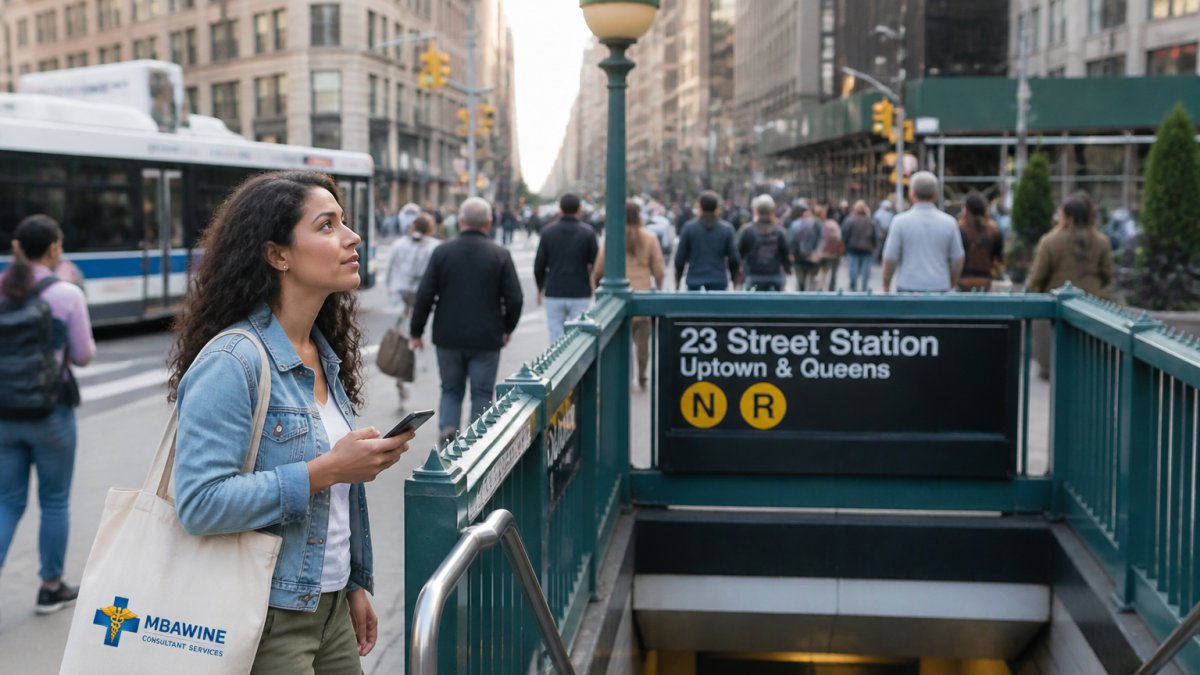
The simplest way to pay is a reloadable fare card or a contactless tap at the turnstile. Fares and card policies change, so check the MTA fares and tolls page before you travel and load what you need. Signs and announcements use line letters and colors, not street names, so learn your line first and your direction second: uptown and downtown refer to Manhattan, while borough-bound trains often use neighborhood names instead.
Two habits prevent most transit mistakes. First, check whether your station serves both directions; some entrances only lead to one platform. Second, build a buffer before timed events. Weekend service changes are routine, and a fifteen-minute cushion absorbs them.
The best time to visit New York City for most travelers is late spring or early fall, when temperatures sit in the comfortable range and crowds thin between holiday peaks. Summer brings heat and humidity that make long walking days punishing, while winter delivers cold winds and occasional snow that slow everything down.
Crowd patterns matter as much as weather. Major holidays, school breaks, and the December holiday season fill hotels and attractions to capacity. If your dates are fixed, book timed-entry attractions well ahead and start your days early; the first hour after opening is consistently the calmest. Shoulder weeks in late April and late September often balance decent weather with manageable lines, which is why we steer most first-timers there.
The most valuable New York City travel tips are about money and pacing, not attractions. Budget surprises and foot fatigue derail more trips than bad weather does, and both are easy to plan around once you know the numbers.
Tipping is expected at sit-down restaurants, bars, and for hotel housekeeping, and it adds meaningfully to your daily spend. Build it into your budget from day one rather than treating it as an afterthought. Beyond tips, the biggest variable is lodging: staying slightly outside the core tourist zones often cuts nightly costs without adding much travel time, provided you are near a subway line.
A few practical habits keep the budget predictable:
Overpacking the schedule is the single most common mistake, and it compounds every other problem. When a day has six stops, one delay cascades into a ruined afternoon. The fix is boring but effective: two anchors per day, maximum.
Other recurring errors:
What most guides miss is that the city is walkable in small doses but brutal in large ones. Plan a rest window each afternoon, even if it is just a coffee and a bench in a park. That pause is what makes an evening out possible.
The challenge with New York City is not finding things to do; it is choosing among them without burning out. The travelers who enjoy it most are the ones who plan a loose framework, protect their energy, and leave room for the unexpected.
That same principle of structured, flexible preparation is what we bring to our work at Mbawine Consultants. Our highly credentialed experts deliver fast-track central sterile processing test preparation through audio, video, and web conferencing, so healthcare professionals can study from home around demanding shift schedules. We also provide interim management and staffing solutions for surgical and ambulatory-surgical facilities, backed by financing options with no payment for the first 30 days.
Get started with Mbawine Consultants and build a plan that fits your pace, whether you are exploring a city or advancing your career.
No. New York is the state, and New York City is one city within that state. The city has five boroughs: Manhattan, Brooklyn, Queens, the Bronx, and Staten Island. When people say they are visiting New York, they usually mean New York City. This matters for planning because attractions, hotels, and transit are concentrated in the city, while the rest of the state includes places like Albany, Buffalo, and the Catskills. Confirm your destination before booking transportation or lodging.
The subway is the fastest way to cover long distances and runs 24 hours a day. Buses fill gaps where subway lines do not reach, and the Staten Island Ferry is a free ride with harbor views. For short trips within a neighborhood, walking often beats waiting for transit. Use a contactless payment method or a reloadable fare card at turnstiles. Taxis and rideshares work well late at night or when carrying luggage, but traffic can make them slower than the subway during peak hours.
Three days covers the essentials: one day in Midtown for landmarks, one day downtown for history and the financial district, and one day in a borough like Brooklyn for neighborhoods and food. Five days lets you slow down and add museums, a show, or a day trip. Trying to see everything in two days means spending most of your time in transit. Build in buffer time, because lines at major attractions can run long on weekends and holidays.
Wear comfortable shoes, because you will walk more than you expect. Book major attractions in advance to avoid sold-out time slots. Keep your bag zipped and your phone secure in crowded areas. Tipping is customary at sit-down restaurants, typically 18 to 20 percent. The city is walkable but spread out, so group activities by neighborhood rather than crisscrossing Manhattan. Check the weather forecast before packing, since temperatures swing widely between seasons.


