

The operational integrity of a modern surgical suite is fundamentally tethered to the unseen precision of the decontamination and sterilization cycle. When this cycle falters, the entire clinical architecture of a healthcare institution risks systemic failure, manifesting as costly surgical delays and heightened patient safety concerns. Hospital administrators and perioperative leaders recognize that the Sterile Processing Department is the heart of the facility, yet many struggle to maintain the rigorous standards required for absolute compliance. Professional sterile processing workflow consulting provides the specialized expertise necessary to transform these high-stakes environments into models of technical excellence and institutional reliability.
It's clear that your facility's reputation depends on an instrument cycle that's both error-free and compliant with evolving HSPA and CBSPD standards. This article explores how strategic workflow consulting aligns clinical protocols with operational efficiency to eliminate instrument contamination and stabilize your workforce through professionalization. We'll examine the critical intersection of staff certification, interim management strategies, and the systematic restructuring required to ensure your sterile processing operations support predictable, scalable growth for your surgical services.
The sterile processing workflow represents the comprehensive life cycle of a surgical instrument, spanning from its initial point-of-use treatment in the operating theater to its eventual return as a sterile, ready-to-use asset. This systematic progression occurs within the Central Sterile Services Department (CSSD), where every stage must be executed with clinical precision to maintain institutional safety. There's a direct and measurable correlation between the efficiency of this department and a hospital's overall revenue generation. When workflows are optimized, surgical volumes can expand predictably. Conversely, when they fail, the resulting delays in the operating room lead to significant financial leakage and compromised patient care. Engaging in professional sterile processing workflow consulting allows healthcare facilities to identify these vulnerabilities before they escalate into systemic crises.
The upcoming 2026 regulatory standards from HSPA and CBSPD mandate a transition from traditional cleaning methods to a more rigorous model of validated decontamination. This shift requires that every step of the reprocessing cycle be documented and verified through objective data rather than subjective visual inspection. Fragmented workflows often hide significant costs that aren't immediately apparent on a balance sheet. These include the persistence of bioburden on complex instruments, the high rate of instrument loss due to disorganized tracking, and the occurrence of "wet loads" that necessitate immediate reprocessing and disrupt surgical schedules.
Institutional silos often prevent effective communication between the operating room and the SPD, creating a disconnect that hinders operational flow. Ineffective leadership frequently fails to bridge this gap, leading to a culture where technical errors are treated as isolated incidents rather than symptoms of a broken process. Many facilities struggle with physical space constraints and outdated equipment layouts that force technicians into inefficient movement patterns. When these physical limitations are combined with insufficient technical training, the risk of preventable processing errors increases exponentially, undermining the facility's clinical objectives.
Standardized reprocessing protocols are the primary defense against Surgical Site Infections (SSIs), which remain a significant burden on the healthcare system. Beyond the clinical data, there's a profound psychological impact on the surgical team when instruments are consistently ready and functional. Surgeons and nurses who trust their equipment can focus entirely on the patient, whereas uncertainty regarding instrument integrity creates unnecessary cognitive load. Maintaining high-level sterilization standards isn't merely a regulatory requirement; it's a legal and ethical imperative that safeguards the most vulnerable individuals within the healthcare environment. Strategic sterile processing workflow consulting serves as the bridge between these ethical obligations and operational reality.
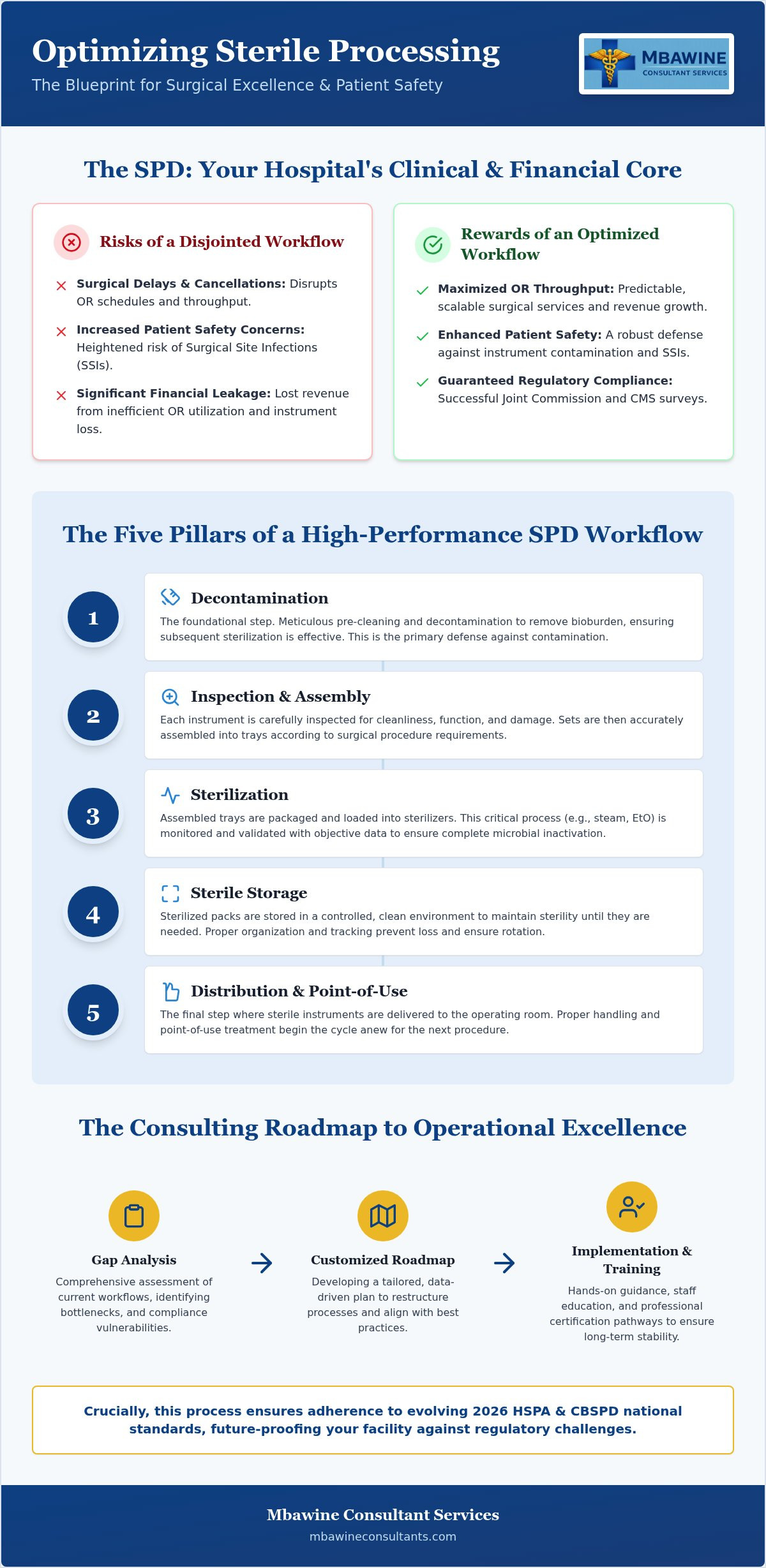
High-performance Sterile Processing Departments (SPDs) don't operate through isolated efforts; they function via a structured architecture of five critical pillars. Each phase represents a mandatory progression where clinical standards must intersect with operational efficiency. Comprehensive sterile processing workflow consulting ensures these phases aren't merely sequential but are integrated into a cohesive, data-driven system that prioritizes patient safety above all else. When these pillars are robust, the facility achieves a level of technical reliability that supports even the most complex surgical programs.
Decontamination serves as the absolute foundation of the sterilization process. Failure at this stage renders all subsequent steps ineffective. Effective protocols begin with point-of-use care in the operating room to prevent biofilm formation, which significantly complicates the cleaning cycle. Adhering to CDC disinfection and sterilization guidelines requires a standardized approach to both manual and automated cleaning, especially for complex robotic instrumentation. Incorporating specialized healthcare sterilization training into daily huddles ensures that technicians understand the technical requirements behind each step, fostering a culture of technical mastery rather than rote task completion.
The assembly and packaging phase is where accuracy is verified before the instrument enters the sterilizer. Digital tracking systems and visual cues are essential to reduce case cart errors and ensure tray integrity. This stage relies heavily on the expertise of a CRCST-certified technician who can identify subtle defects or missing components that might compromise a surgical procedure. Optimizing the clean room environment for maximum throughput involves more than just layout changes. It requires a deep understanding of personnel competency and ergonomic flow to prevent bottlenecks that lead to surgical delays.
Sterilization modalities must be precisely matched to the manufacturer's instructions for use (IFU). Whether utilizing steam, ethylene oxide, or hydrogen peroxide gas plasma, the technology must align with the instrument's material requirements. Once sterilized, maintaining the sterile barrier through proper storage and distribution is paramount until the point of use. Finally, a robust quality assurance program provides continuous monitoring of all parameters, creating a permanent record of compliance. Facilities looking to elevate their staff's technical proficiency can enroll in professional certification courses to bridge the gap between theoretical standards and daily practice.
The transition from a departmental assessment to successful operational execution requires a methodical framework that extends far beyond mere observation. Professional sterile processing workflow consulting begins with a comprehensive gap analysis designed to identify specific deviations from established clinical and regulatory standards. This phase doesn't just catalog equipment failures; it scrutinizes the alignment of personnel competency with institutional goals to ensure that every technical deficiency is addressed at its root. Following this assessment, a facility receives a customized roadmap for sterile processing department optimization, which serves as a strategic blueprint for restructuring workflows and upgrading technical protocols.
Success in these high-stakes transitions is heavily dependent on the presence of stable interim leadership. During large-scale workflow shifts, an interim manager provides the necessary administrative oversight to ensure that daily operations don't falter while new systems are being integrated. This leadership ensures that the department adheres to best practices in sterilization throughout the period of change. Progress is quantified through rigorous Key Performance Indicators (KPIs), with a primary focus on reducing tray error rates and eliminating the presence of residual bioburden before instruments reach the operating room.
Individualized solutions consistently outperform the generic industry templates often favored by larger consulting firms. While some approaches rely on broad, software-centric models, a more holistic methodology integrates staff education directly into the implementation phase. This ensures that workflow recommendations aren't just theoretical; they're executable by the personnel on the floor who must maintain these standards daily. Addressing the staffing gap through specialized interim management allows a facility to maintain peak operational capacity while permanently filling key roles with highly trained, certified experts.
Long-term sustainability is achieved only when SPD managers are empowered with advanced administrative and technical skills. This professional development fosters a culture of safety that transcends individual shifts and becomes an institutional standard. By prioritizing professional development programs, a facility builds a resilient workforce capable of maintaining excellence long after the initial consulting engagement has concluded. This cultural alignment ensures that the department remains a guardian of public safety and a reliable partner to the surgical suite, ensuring that excellence is a permanent fixture rather than a temporary achievement.
The regulatory environment governing sterile processing is undergoing a significant transformation as the 2026 professional standards from the Healthcare Sterile Processing Association (HSPA) and the Certification Board for Sterile Processing and Distribution (CBSPD) approach implementation. These upcoming mandates necessitate a more sophisticated level of technical documentation and rigorous process validation than has historically been required by most healthcare facilities. Professional sterile processing workflow consulting assists institutions in navigating these complexities by establishing audit-ready protocols that withstand the intense scrutiny of Joint Commission and CMS surveys. Central to these evolving standards is the non-negotiable principle of comprehensive documentation; within the context of a clinical audit, any step in the reprocessing cycle that lacks a verifiable record is considered a failure in patient safety and institutional compliance.
There's an undeniable link between the structured curriculum of sterile processing classes and an institution's overall survey readiness. Mandatory certification for technicians is no longer merely a professional preference but has become a fundamental requirement for mitigating institutional risk and ensuring technical mastery. By developing a standardized baseline of competency across all staffing tiers, facilities ensure that every individual contributes to a cohesive culture of compliance. To ensure your department is fully aligned with these rigorous national benchmarks, you should enroll in our professional certification programs to bridge the gap between current practices and 2026 requirements.
Maintaining a state of continuous compliance requires a proactive strategy that extends beyond reacting to scheduled inspections. It necessitates the implementation of a robust self-audit system based on national benchmarks to identify "red flag" areas, such as improper bioburden management or sterilized load documentation, before they result in formal survey citations. The utilization of external consultants provides the objective perspective required to identify subtle deviations in clinical practice that internal audits might overlook. These mock surveys simulate the intensity of an actual regulatory visit, allowing the department to refine its documentation and technical procedures in a controlled, educational environment. This methodical approach ensures that the sterile processing department remains a pillar of institutional excellence rather than a source of regulatory vulnerability.
Selecting a partner for departmental transformation is a decision that carries significant clinical and administrative weight. It requires an evaluation that goes beyond surface-level operational metrics to scrutinize the consultant's clinical experience and educational depth. A truly effective partner doesn't merely provide a static report; they offer a dynamic strategy that bridges the gap between current deficiencies and future institutional excellence. Professional sterile processing workflow consulting must be viewed as an investment in the department's long-term viability, ensuring that every recommendation is grounded in the reality of the sterile processing floor. This necessitates a partner capable of providing comprehensive support, including the integration of emergency sterile processing staffing to maintain operational stability during periods of acute transition or crisis.
Mbawine Consultant Services distinguishes itself by offering a holistic model that integrates interim management, healthcare staffing, and academic-level training. This approach addresses the common industry failure of treating workflow as a purely mechanical sequence of instrument movement. Instead, we recognize that high-performance operations are built on a foundation of human capital. Our national reach allows us to serve high-stakes institutional environments with a focus on the professionalization of the entire sterile processing field. We don't just suggest improvements; we provide the certified personnel and the educational pathways necessary to make those improvements permanent. This commitment to technical mastery ensures that the transition from consultant-led initiatives to internal excellence is both seamless and sustainable.
Initiating the process of departmental optimization begins with a comprehensive assessment of your current operational state. This assessment identifies the specific gaps in compliance and efficiency that may be hindering your surgical throughput. Once these gaps are identified, the focus shifts to the professional development of your workforce. Developing a clear path for staff to achieve professional certification is essential for maintaining the high standards required by 2026 mandates. You can enroll in professional sterile processing programs to optimize your workflow today, ensuring your facility remains at the forefront of clinical safety and operational reliability. Securing your department's future requires a commitment to excellence that starts with the right strategic partner.
Achieving a state of operational excellence within the sterile processing environment requires more than technical adjustments; it demands a fundamental shift in how institutional workflows are structured and maintained. We've explored how the alignment of the five pillars of reprocessing, from decontamination to distribution, ensures that patient safety remains the paramount clinical objective. By integrating professional sterile processing workflow consulting into your facility's long-term strategy, you establish a foundation of technical mastery that's capable of meeting the rigorous 2026 HSPA and CBSPD national standards. This transition is essential for mitigating risk and ensuring that your department remains a reliable partner to the surgical suite.
Our methodology combines comprehensive staffing and interim management solutions with 24/7 emergency support to ensure your department maintains peak operational capacity during periods of transition. This holistic approach ensures that every recommendation is supported by a certified and highly trained workforce. You have the opportunity to transform your department into a model of efficiency and compliance that supports the continuous growth of your surgical services.
Secure your department's excellence: Enroll in professional training and consulting today. Your dedication to these professional standards will protect your patients and secure your institution's reputation for years to come.
Sterile processing workflow consulting is a specialized service that systematically evaluates the technical and administrative pathways of surgical instrument reprocessing to ensure maximum clinical safety. This process involves a comprehensive analysis of the department's physical layout, technical protocols, and personnel competencies to identify deviations from national standards. Consultants provide a structured roadmap for integrating high-level clinical requirements with efficient operational practices, ensuring that the department functions as a reliable guardian of public health within the healthcare facility.
Workflow consulting improves surgical outcomes by establishing a standardized instrument cycle that eliminates the variables responsible for contaminated tools and missing equipment. When reprocessing steps are validated and consistent, the risk of Surgical Site Infections (SSIs) is significantly reduced. This clinical stability allows surgical teams to operate with confidence, knowing that instrument readiness is guaranteed; this ultimately leads to shorter procedure times and more predictable patient recovery pathways through the elimination of preventable technical errors.
Professional consulting includes a robust educational component specifically designed to prepare staff for the CRCST and other professional certification exams. By bridging the gap between daily tasks and academic requirements, consultants ensure that technicians understand the technical rationale behind every protocol. This integrated approach to education fosters a more knowledgeable workforce, increasing the likelihood of successful certification and ensuring that the department meets institutional and national competency benchmarks for 2026 and beyond.
Common indicators of a need for optimization include frequent surgical delays, a high prevalence of "wet loads", and recurring tray errors identified in the operating room. Departments experiencing high staff turnover or struggling with regulatory non-compliance also benefit from a strategic review. These symptoms often point to deeper systemic failures in the workflow that require professional intervention to prevent patient safety incidents and financial losses associated with inefficient operating room utilization.
The duration of a consulting engagement is determined by the specific complexity of the facility's current operations and the scope of the required restructuring. While an initial assessment may be completed relatively quickly, the implementation phase involves a methodical progression through staff training and process validation. This structured timeline ensures that new workflows are deeply embedded in the department's culture, providing a sustainable foundation for long-term operational excellence rather than a temporary or superficial fix.
Mbawine Consultant Services provides comprehensive healthcare temp staffing and 24/7 emergency staffing to support departments during critical workflow transitions. This capability allows institutions to maintain peak operational capacity while implementing necessary structural changes. By providing certified personnel who are already familiar with high-level standards, we ensure that the department's daily output remains stable and compliant while the internal team focuses on professional development and the permanent optimization of their processes.
The 2026 mandates from HSPA and CBSPD require a transition to validated decontamination processes and more rigorous documentation standards for every sterilization cycle. These changes emphasize the necessity of objective data over visual inspection, requiring facilities to upgrade their tracking and verification systems. Adhering to these upcoming requirements is essential for maintaining institutional compliance during Joint Commission surveys, making sterile processing workflow consulting a vital prerequisite for future readiness and public safety.
Interim management is a core offering that can be integrated into the consulting framework to provide leadership stability during periods of significant organizational change. Having an experienced manager on-site ensures that new workflow protocols are executed correctly and that staff remain focused on clinical standards. This administrative oversight is often the determining factor in whether a department successfully transitions from a state of deficiency to a model of institutional excellence and technical mastery.

Article by
Mba Akuribila
Mba‑Akuribila is a healthcare leader, educator, and founder of Mbawine Consultants, a Bronx‑based institution recognized nationwide for advancing excellence in sterile processing and allied health workforce development. Born in Bongo in Ghana’s Upper East Region, his journey from rural beginnings to national impact reflects a lifelong commitment to service, empowerment, and community advancement.
For over two decades, he has trained sterile processing employees, mentored, and placed thousands of healthcare professionals across the United States. Through Mbawine Consultants, he established one of the country’s most trusted Sterile Processing Certification Test Prep Programs, preparing new Americans and career‑changers for successful entry into the field. The organization, as at 2026, has graduated more than 15,000 sterile processing technicians who now serve in hospitals, ambulatory centers, dental practices, and reprocessing facilities nationwide.
Under his leadership, Mbawine Consultants has expanded into a full Healthcare Staffing Agency, connecting nurses and allied health professionals to meaningful employment opportunities. His team also provides Interim Management Services, supporting hospitals and surgical centers with experienced leaders who stabilize operations, strengthen compliance, and improve workflow efficiency.
As a former surgical technician, sterile processing manager, educator, and system‑wide director, Mba‑Akuribila brings deep expertise to Sterile Processing Consulting, helping healthcare facilities elevate quality, safety, and regulatory readiness.
His work in the United States and Ghana continues to reflect his core philosophy: service above self, opportunity for all, and excellence without compromise.


