

Last Updated: September 23, 2026
Choosing schools for sterile processing technician training comes down to two things: accreditation and hands-on hours. Programs that lack either one leave graduates unable to sit for the CRCST exam or unprepared for the job itself. This guide from Mbawine Consultants breaks down what separates a strong program from a weak one.
Sterile processing technician training is postsecondary instruction in decontamination, instrument sterilization, and aseptic technique that prepares students for the Certified Registered Central Service Technician credential. The best programs pair classroom instruction with a clinical externship in a working central sterile supply department.
Two accreditation bodies matter most: the Accreditation Council for Pharmacy Education and the National Commission for Certifying Agencies, which accredits the CRCST exam itself. Programs should also be reviewed by the Association for the Advancement of Medical Instrumentation, which publishes the standards your future employer follows.
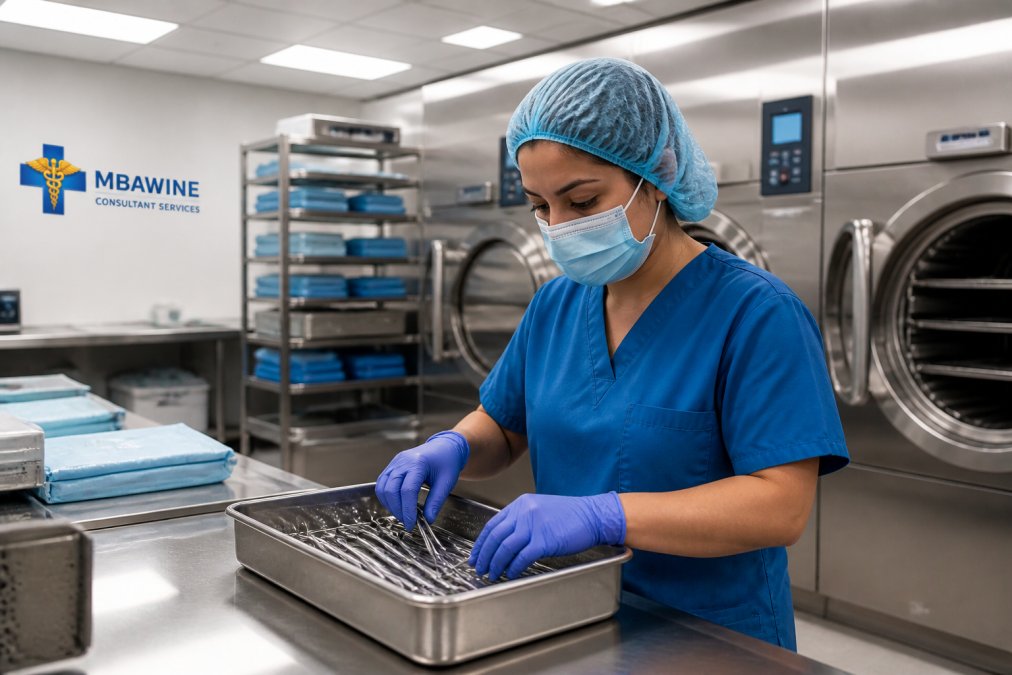
A program's accreditation determines whether its graduates can sit for the CRCST exam. The Healthcare Sterile Processing Association requires candidates to complete 400 hours of hands-on experience before testing, and accredited programs build those hours into the curriculum. Check that a school's externship sites are real hospitals or ambulatory-surgical facilities, not simulations.
Hands-on hours are where most online-only programs fall short. A common mistake is enrolling in a cheap online course that offers no externship placement, then discovering the 400-hour requirement can't be met. Ask directly: does the school place you, or do you find your own site?
Programs fall into three categories, and each suits a different learner. The table below summarizes how they compare on cost structure, flexibility, and certification support.
| Program Type | Typical Duration | Format | Best For |
|---|---|---|---|
| Community college | 6-12 months | In-person | Students wanting a career diploma |
| Vocational/trade school | 4-9 months | In-person or hybrid | Fast entry into allied health |
| Online/hybrid CRCST prep | 8-16 weeks | Remote with externship | Working technicians, career changers |
Community college programs tend to offer the strongest clinical partnerships. Vocational schools move faster. Online and hybrid options, like the remote CRCST prep from Mbawine Consultants, fit around a full-time work schedule.
Costs vary widely, and no single figure applies across the board. What matters more than the sticker price is the cost structure: whether you pay per credit hour, per program, or per exam-prep module, and whether externship placement is bundled or billed separately. Mbawine Consultants directs readers to its website for current prices or a quote.
Community colleges typically charge per credit hour. In-district students pay the lowest rate, out-of-district students pay more, and out-of-state students pay the most. A career diploma in sterile processing usually runs 30 to 45 credit hours, so the per-credit rate is the number to ask for first. Public institutions also charge separate lab fees, and some add a clinical placement fee on top of tuition.
Vocational and trade schools usually charge a flat program fee that bundles books, scrubs, and externship placement into one number. That bundling is convenient, but it also hides the true cost of the externship. Ask for a line-item cost sheet that separates tuition, lab fees, books, scrubs, exam fees, and clinical placement.
A common pattern is for a school to advertise a low tuition and then charge separately for clinical placement, which can add significant cost.
Remote prep courses focus on exam readiness rather than a full diploma, so they do not include the 400 hands-on hours required for CRCST eligibility. That means you still need to arrange an externship separately, either through your employer or a partner facility.
When you line up two programs side by side, compare these five line items, not just the headline tuition:
Most sterile processing programs run between 4 and 12 months, depending on format. Community college career diplomas take the longest. Vocational programs and focused CRCST prep run shorter.
Certification requirements include a high school diploma or equivalent, completion of an accredited training program, and 400 hours of hands-on experience in a central sterile supply department. Candidates then pass the CRCST exam and maintain the credential through continuing education.
This is the part of the process that confuses prospective technicians more than any other, and most program pages gloss over it. Here is the distinction that matters:
Start with your state health department and your state hospital association. Ask three questions:
Once certified, you maintain the CRCST through continuing education. The exact number of continuing education credits and the renewal cycle are set by the certifying body, so confirm the current requirements directly with the Healthcare Sterile Processing Association before your renewal deadline. Missing a renewal window can mean retaking the exam, so calendar the date the day you pass.
Passing on the first attempt comes down to structured review and practice questions, not memorization. The exam covers decontamination, instrument sterilization, quality assurance, and infection control across roughly 150 questions.
Effective preparation includes:
Pay for sterile processing technicians varies by region, facility type, and shift. Hospitals in high-cost metro areas generally pay more than ambulatory-surgical centers in smaller markets, and evening or overnight shifts often carry a differential. Because published figures shift year to year, check current wage data from the U.S. Bureau of Labor Statistics for your area rather than relying on a single national average.
Many hospitals cover training costs for sterile processing staff, either through direct tuition reimbursement or by partnering with a training provider. This is one of the least-discussed routes into the field, and it deserves more attention than it gets.
Most sterile processing technician programs take between 3 and 12 months to complete, depending on whether you choose a full-time vocational program or a part-time hybrid option. Community college certificate programs typically run 6 to 9 months, while accelerated online CRCST exam preparation courses can be finished in as little as 8 to 12 weeks. After training, you must pass the national certification exam to work as a Certified Registered Central Service Technician, so factor in a few extra weeks for exam scheduling and study time.
To sit for the CRCST exam, you need a high school diploma or equivalent and must complete a minimum of 400 hours of hands-on sterile processing experience, either through a clinical externship or paid work in a central sterile supply department. Some states also require state-specific licensing or a separate exam. You will also need to demonstrate knowledge of decontamination, instrument sterilization, aseptic technique, and infection control. Employer-sponsored training programs often cover these requirements while you work.
Yes, online and hybrid programs can be legitimate if they include a supervised clinical externship and prepare you for the national certification exam. The key is to verify that the program provides the required 400 hands-on hours and that the certification you earn is recognized by employers. Online coursework works well for the didactic portion, but you still need in-person practice with surgical instrumentation and instrument tracking systems. Look for programs with accreditation and clear externship placement support.
Tuition varies widely by program type and location. Community college certificate programs often cost less than private vocational schools, and employer-sponsored training can reduce or eliminate out-of-pocket costs. Many programs offer payment plans or financing options, and Mbawine Consultants offers financing with no payment for the first 30 days. Because pricing depends on the school, program length, and whether you need clinical placement support, request a current quote directly from each program you are considering.


