

Last Updated: September 9, 2026
Conducting a sterile processing department needs assessment in 2026 is no longer a periodic compliance exercise; it is a strategic imperative driven by shifting regulatory expectations and rising surgical volumes. A sterile processing department needs assessment is a systematic evaluation of personnel, processes, equipment, and physical infrastructure to identify gaps that compromise sterility assurance and operational efficiency.
Most facilities treat the assessment as a checklist audit, but that mindset misses the point. The goal is to build a defensible case for investment, staffing changes, and workflow redesign that leadership will actually approve. The facilities that succeed treat the assessment as a data-driven business case rather than a formality. Below is a step-by-step framework designed for the 2026 regulatory climate.
A well-defined scope is the foundation of any credible SPD needs assessment, as it determines which data you collect, which stakeholders you interview, and which benchmarks you apply. Begin by clarifying whether the assessment covers the entire reprocessing cycle or focuses on a specific pain point.
Document the physical layout, current staffing model, and daily case volume to establish a baseline. Identify which standards apply to your facility type, referencing guidance from organizations like AAMI standards for sterile processing and CDC guidelines for disinfection and sterilization. A common mistake is excluding third-party reprocessing or off-site sterilization from the scope, which creates blind spots in traceability and documentation protocols. Define clear deliverables, timelines, and the team responsible for implementing corrective actions before you collect a single data point.
Workflow bottlenecks hide in the transition points between decontamination, assembly, and sterilization. Track instrument trays from the operating room through the complete reprocessing cycle, recording timestamps at each stage over a two-week period. Look for delays in instrument turnover that force case delays or lead to overtime.
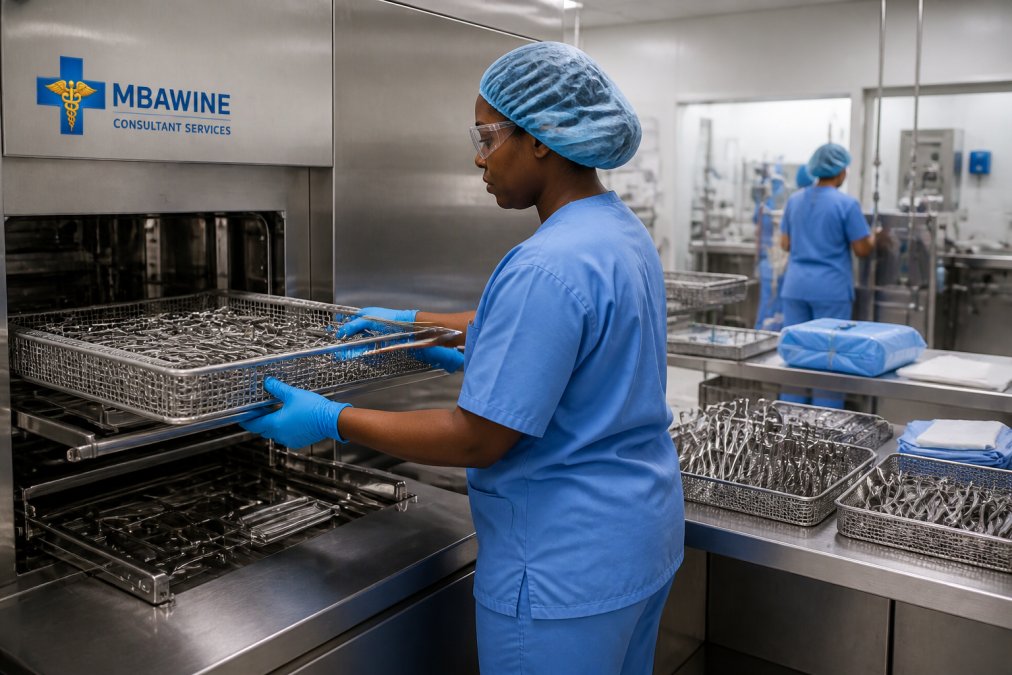
Tray prioritization is a frequent culprit. Many departments process trays first-in, first-out without accounting for case urgency, creating artificial bottlenecks during peak hours. A practical fix is a visual scheduling board that flags priority trays. Also examine physical flow; if clean instruments cross paths with contaminated ones, no amount of scheduling will solve the layout problem.
A sterile processing department staffing analysis must go beyond counting full-time equivalents and compare your ratios against industry benchmarks for your case volume and instrument complexity. Calculate the total trays processed daily and average assembly time per tray, then factor in your team's skill mix.
Staff competency is the hidden variable in most productivity calculations. A technician lacking certification or updated training on new instrument sets will work slower and make more errors. Review your orientation program, ongoing education, and cross-training coverage. Many facilities have enough bodies but not enough qualified personnel for complex robotic or specialty trays. If a competency gap exists, consider a provider offering flexible, home-based test preparation for CRCST and CIS credentials. The analysis should also model future needs based on projected surgical growth.
Sterilizer performance is the most technically demanding component, requiring review of both mechanical function and the science behind cycle parameters. Competitors often stop at 'check the logs,' but a 2026 assessment demands a deeper diagnostic pass connecting mechanical data to clinical risk. Pull the last 12 months of cycle logs for each sterilizer and check documentation protocols compliance, including temperature, pressure, and exposure time for every cycle.
A critical error is relying solely on biological indicator results while ignoring the mechanical data that predicts failures. Review preventative maintenance records to confirm they align with manufacturer recommendations. Your sterilization validation process should include load configuration analysis; overloading a chamber compromises sterilant penetration. Verify that cycle parameters match the manufacturer's instructions for the specific load contents, particularly for lumened devices and implants.
To move beyond a checklist, build a sterilizer performance scorecard that flags each unit against four diagnostic categories:
This evaluation often reveals the need for capital investment. When you identify a sterilizer that is mechanically sound but functionally obsolete, for example, one that cannot support newer cycle parameters for advanced instrument sets, you have a data point for a replacement business case. Pair the clinical risk with operational cost: an aging sterilizer requiring frequent repeat cycles increases overtime and instrument inventory. That dual justification, clinical safety plus operational ROI, gets a capital request approved.
For facilities considering automation, evaluate whether your current sterilizer fleet can integrate with a digital cycle-parameter monitoring system. The 2026 landscape increasingly includes automated data capture feeding directly into your instrument tracking system, eliminating manual transcription errors. If your sterilizers are not compatible, document that as a strategic gap.
Accreditation survey preparation is not a separate activity from the needs assessment; it is the natural output of a thorough gap analysis. The Joint Commission standards for sterile processing and other accrediting bodies focus heavily on the traceability of instruments from patient use through decontamination, assembly, sterilization, and back to the operating room.
Your SPD accreditation survey preparation checklist should verify that every instrument set has a complete, auditable record, including load numbers, sterilizer used, cycle parameters, and biological indicator results. Surveyors will ask to see your standard operating procedures and expect evidence that staff follow them consistently. Review risk assessment and mitigation strategies for high-risk items like implants, which require emergency release protocols. Confirm that all staff have current competency assessments and that your quality assurance program includes regular audits of the entire reprocessing cycle.
The most common failure after a needs assessment is the lack of an implementation roadmap, leaving findings languishing in a report. Your roadmap must translate each gap into a specific action item with an owner, a deadline, and a measurable outcome, prioritized by clinical risk and operational impact.
Organize the roadmap into three phases. Phase one addresses immediate compliance and safety issues within 30 days. Phase two tackles workflow and staffing improvements, typically spanning 90 days. Phase three covers strategic initiatives like technology upgrades or facility renovations, requiring capital budget approval and taking 6 to 12 months. For each capital request, build a business case quantifying the ROI through reduced overtime, fewer instrument sets, or avoided surgical delays.
| Implementation Phase | Timeline | Focus Areas | Key Success Metric |
|---|---|---|---|
| Phase 1: Immediate | 0-30 days | Safety issues, documentation gaps, failed equipment | Compliance restored |
| Phase 2: Operational | 30-90 days | Workflow, staffing, training, minor equipment | Turnaround time reduced |
| Phase 3: Strategic | 90 days-12 months | Capital equipment, facility changes, automation | ROI realized |
The roadmap is not a project plan; it is a change-management document that must survive contact with hospital administration, surgeons, and frontline technicians. A 30-60-90 day execution plan only works if each phase has a named owner, a decision gate, and a pre-defined escalation path.
Days 0-30: Stabilize and Document
Your first 30 days are about containing clinical risk and building credibility. Assign a single project lead, typically the SPD manager or a consultant, with authority to pull in engineering, infection prevention, and OR leadership. Immediate actions:
Days 31-90: Optimize Workflow and Staffing
This phase converts findings into operational change. Pick two or three high-impact initiatives rather than trying to fix everything at once. Common high-yield actions include:
Days 91-180 and Beyond: Build the Capital Case
Strategic initiatives, new sterilizers, automated tracking systems, facility redesign, require a capital request competing with every other hospital priority. The assessment data you collected is your ammunition. For each capital item, build a one-page business case that includes:
A consultant-led mock survey can expose documentation gaps and serve as a rehearsal for the real accreditation visit. Schedule it 60 days after the initial assessment to verify that Phase 1 and Phase 2 actions have closed the gaps. The mock survey should be conducted by someone not involved in the original assessment to ensure objectivity.
Conducting a sterile processing department needs assessment in 2026 demands more than checking boxes; it requires a systematic evaluation that connects workflow optimization, staff competency, and sterilizer performance to measurable operational and clinical outcomes. The 2026 regulatory climate rewards facilities that build a credible case for investment in people and infrastructure. Whether you need interim leadership or advanced training to close competency gaps, Mbawine Consultants provides the credentialed expertise to guide your department through the process and beyond. Enroll with Mbawine Consultants and turn your findings into a roadmap for measurable improvement.
Conduct a formal SPD needs assessment at least annually, but plan one whenever you introduce new surgical instruments, change your case volume significantly, or prepare for an accreditation survey. Many facilities also trigger a fresh assessment after a sterilization failure or a change in regulatory standards. An annual rhythm keeps your workflow optimization 2026 goals on track, while event-driven assessments catch problems that routine monitoring misses.
Collect instrument turnover times, sterilizer load volumes, biological indicator results, and staff competency records. Track tray assembly errors, missing instrument reports, and case cart fill accuracy. Document your staffing analysis data: hours per tray, overtime rates, and call-in frequency. Measure cycle parameters like temperature and dwell time against manufacturer guidelines. These metrics reveal where bottlenecks form and which gaps carry the most risk for your accreditation survey preparation checklist.
The main compliance areas for 2026 mirror the updated AAMI standards and CMS expectations: sterilization validation, proper decontamination procedures, and complete documentation of every cycle. Surveyors will check staff competency records, standard operating procedures, and preventative maintenance logs for sterilizers. They also review your instrument tracking system to confirm traceability from the operating room back through decontamination. Your needs assessment should test each of these areas against current standards before the survey team arrives.
A needs assessment identifies gaps between your current operations and what accreditation surveyors expect. It flags missing documentation protocols, outdated standard operating procedures, and staff who need refresher training on cycle parameters. The assessment also reveals equipment issues like sterilizer performance problems before they become citations. By fixing technical deficiencies ahead of the survey, you convert a reactive scramble into a confident, evidence-based demonstration of compliance.


