

Last Updated: October 18, 2026
Sterile processing certification exam pass rates are the share of test-takers who pass a credential exam on a given attempt, and they matter because they show how demanding the exam really is. This guide from Mbawine Consultants covers what those rates mean, what affects them, and how to prepare well.
Here is the uncomfortable truth most prep courses skip: a pass rate is not a measure of how hard the test is. It is a measure of how ready the people who sat it were. Two candidates can face the same exam and get very different outcomes based on preparation, not intelligence.
The Certified Registered Central Service Technician credential, known as the CRCST, is administered by the Healthcare Sterile Processing Association. It tests a broad body of knowledge: decontamination, sterilization, instrument identification, and record keeping. That breadth is what trips people up.
A quick definition helps set the frame. A sterile processing certification exam pass rate is the percentage of candidates who earn a passing score on a credential exam during a specific testing window. The number moves with the population taking the test, so a lower rate often reflects weaker preparation across the field, not a harder exam.
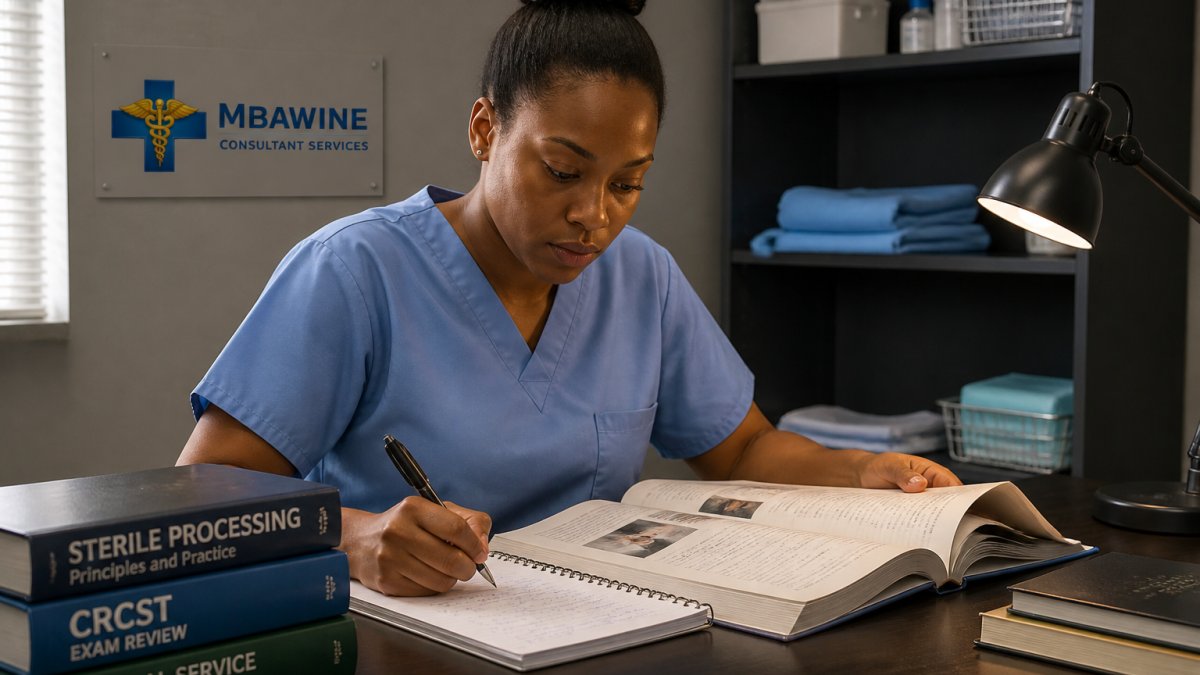
The CRCST exam passing score is the cutoff a candidate must reach to earn the credential, and it is set by the certifying body rather than by your employer or your prep course. You need to clear that line on the actual exam, not just complete a training program.
The exam is scored on a scaled basis. That means the raw number of correct answers is converted to a standardized score so that different exam versions remain comparable. In practice, this is why two candidates who both miss a few questions can land on different sides of the line.
What should you do with that information? Focus on the domains where you are weakest rather than chasing a perfect score everywhere. The exam rewards broad competence, not brilliance in one area.
A common mistake is assuming a passing practice score means you are ready. One strong practice run proves little. A steady pattern of solid scores across several attempts is the real signal.
Several factors move pass rates more than raw intelligence. The biggest is hands-on experience on the floor. Technicians who have worked decontamination and sterilization in a real department tend to recognize the scenarios the exam describes.
Preparation format is the second lever. Candidates who study in short, consistent sessions retain more than those who cram in one long weekend. This is where flexible audio and video modules help, since they fit around 12-hour shifts.
The third factor is familiarity with the exam itself. Knowing the question format and the domains covered removes a layer of anxiety that costs points.
The CRCST exam retake policy sets the rules for when you can sit the exam again after a failed attempt, and it usually includes a waiting period before your next try. Check the certifying body's current policy directly, since waiting periods and fees can change.
A failed attempt is not the end of the road. It is data. Your score report shows which domains you missed, and that report is the most useful study guide you will ever get.
Here is how to turn a retake into a pass:
Many candidates find the forced waiting period is actually an advantage. It gives you time to fix the gaps that caused the first result. Use it deliberately.
An effective CRCST exam study guide is a personal document, not a purchased book. The best guides are built around your own weak spots and updated as you learn.
Start by mapping the exam domains to your current confidence. Rate each domain from one to five. Anything below a four goes to the top of your plan.
Then build the guide in layers:
What most guides miss is that writing the material in your own words is itself a study method. Copying definitions does little. Explaining a concept in plain language forces real understanding.
Sterile processing certification exam preparation works best when it combines structured instruction, consistent practice, and real-world context. No single method carries the whole load.
At Mbawine Consultants, we build preparation around flexible remote learning, so technicians working full shifts can still keep up. Our audio and video modules and web conferencing let candidates study from home without giving up their income.
The instructors who lead our sessions hold current credentials and work in the field. That matters, because sterile processing is a practical discipline, and the exam rewards practical judgment.
Here is a preparation rhythm that tends to hold up:
If you are preparing on your own, the Healthcare Sterile Processing Association certification resources outline the domains the exam covers. Review them before you build your plan.
For a broader view of how certification fits into a sterile processing career, the Occupational Outlook Handbook entry for medical equipment preparers describes the role and typical work. It helps to know what the job actually involves, because the exam tests that reality.
The pressure of a certification exam can feel overwhelming, especially when you are balancing long shifts with study time. Mbawine Consultants helps candidates clear that hurdle with fast-track test preparation, flexible audio and video learning from home, and instruction from highly credentialed experts. Our financing options include no payment for the first 30 days, so you can start without the upfront strain. Enroll with Mbawine Consultants and move toward your CRCST credential with a plan that fits your life.
The CRCST exam pass rate is not publicly published by the certification body. Candidates who complete structured training programs and use practice exams tend to perform better. Focus on understanding the core modules and scoring well on the exam. Check the current official requirement for a passing score.
The CRCST exam has multiple-choice questions, and you need a scaled score to pass. Practice with full-length exams to build stamina and accuracy.
If you fail, review your score report to identify weak areas. The CRCST exam retake policy allows you to retake after a waiting period, typically 30 days. Use that time to focus on missed topics, consider a prep course, and take practice tests. Many successful technicians pass on their second attempt with targeted study.
If you're working full-time, audio and video modules can fit into commutes or breaks. Create a study schedule covering all exam domains, and take a practice test halfway through to gauge readiness. Adjust your timeline based on your comfort with the material.


