

Last Updated: September 3, 2026
A**sterile processing compliance audit** is a comprehensive evaluation of your department's adherence to regulatory standards, operational protocols, and quality assurance measures that govern surgical instrument reprocessing. This audit examines every phase of sterilization, from the moment an instrument arrives contaminated at the point-of-use through final sterile storage, to identify gaps, verify staff competency, and ensure your facility meets accreditation requirements.
The scope of a sterile processing compliance audit extends across multiple operational domains. You're looking at decontamination protocols, sterilization monitoring systems, documentation trails, staff training records, facility design and workflow, and corrective action procedures. The goal isn't to find fault, it's to create a defensible record that your department operates safely and within regulatory standards.
At Mbawine Consultants, we understand that most departments aren't failing audits because they're cutting corners. They're struggling because compliance requirements have evolved, staff turnover creates knowledge gaps, and the documentation burden has grown exponentially. A well-structured audit reveals where those gaps actually exist so you can fix them before a regulatory inspection does.
The stakes are real. Surgical site infections trace back to inadequate sterilization. Regulatory findings create liability. Staff morale suffers when compliance feels like compliance theater rather than a meaningful safety process. An effective audit integrates all these pieces into a single, actionable assessment.
Decontamination begins at the point-of-use, the moment an instrument is contaminated during surgery. Your audit must verify that surgical teams follow immediate containment protocols: instruments go into designated containers, are kept moist if necessary, and never dry out before transport to the sterile processing department.
When instruments arrive at your decontamination area, the process accelerates. Your audit checklist should verify:
The regulatory framework here comes from CDC guidelines on sterilization and disinfection of medical devices. Your facility must demonstrate that decontamination removes all visible soil and reduces bioburden to levels that sterilization can reliably eliminate.
Point-of-use processing represents a critical control point often overlooked in audits. Many facilities assume decontamination happens only in the SPD. Reality is different. Surgical teams that rinse instruments immediately, prevent drying, and transport them promptly to decontamination dramatically reduce the effort required downstream. Your audit should include staff interviews at the surgical site to verify these practices actually happen, not just exist on paper.
Surgical instrument management and tracking procedures form the backbone of accountability in sterile processing. Without traceability, you cannot link an instrument to a specific patient, surgery, or sterilization cycle if a problem emerges.
Your audit must verify that every instrument has a unique identifier or is part of a tracked set. Modern facilities use barcode systems or RFID tags. Older systems use instrument trays with lot numbers. The method matters less than consistency and documentation.
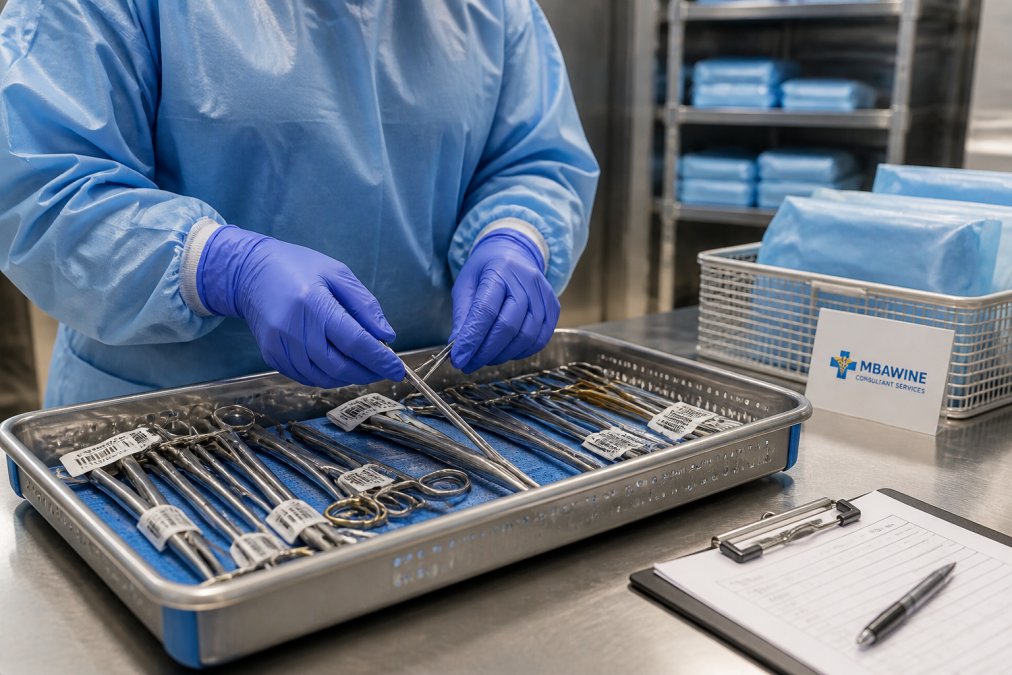
Check these elements during your audit:
The regulatory requirement here stems from FDA guidance on reprocessing medical devices in healthcare settings. Traceability allows you to perform recalls, investigate adverse events, and demonstrate due diligence if questions arise about instrument safety.
Many audits fail on this point because documentation exists but isn't integrated. Spreadsheets live on someone's desktop. Barcodes are scanned but data isn't linked to patient records. Your audit should verify that the tracking system actually functions end-to-end, not just in isolated pieces.
Sterilization monitoring happens at three levels: physical monitoring, chemical monitoring, and biological monitoring. Your audit must verify all three are in place, functioning, and documented correctly.
Physical monitoring captures the sterilizer's performance data, temperature, pressure, time, and humidity. Modern sterilizers print this data automatically. Your audit confirms that records exist for every cycle, that parameters met the manufacturer's specifications, and that any out-of-range cycles were flagged and investigated.
Chemical indicators change color when exposed to sterilization conditions. External indicators show that the package was processed. Internal indicators demonstrate that sterilant penetrated to the instrument's interior. Your audit verifies that chemical indicators are used on every load and that color changes are documented.
Biological indicators contain spores that survive sterilization only if the process failed. Biological testing is the gold standard for sterilization validation. According to ANSI/AAMI ST79 standard for reusable sterilization containers, you must run biological indicators at minimum weekly for steam sterilization and per manufacturer recommendations for other methods.
Your documentation audit should verify:
The critical gap we see in many audits is that sterilization data exists but isn't analyzed. Facilities print cycle records but never review them for trends. Biological indicators are run but results aren't trended over time. Your audit should include a trend analysis section: Are failures increasing? Are certain sterilizers underperforming? Are chemical indicators showing weak color changes suggesting reduced efficacy?
Staff competency represents the human element of sterile processing compliance. No audit passes if your team doesn't understand why they're following procedures or can't demonstrate the skills those procedures require.
Your SPD staff competency assessment checklist should evaluate:
Many facilities use written exams alone. That approach misses critical gaps. A technician might pass a written test on proper gloving technique but still contaminate sterile fields in practice. Your audit should include direct observation of staff performing key tasks: decontamination, instrument inspection, sterilizer operation, and sterile storage procedures.
Interview staff during your audit. Ask them why they perform specific steps. Listen for understanding versus rote memorization. Ask what they'd do if a sterilizer alarm sounded or if they discovered a package with a torn seal. Their answers reveal whether training has created true competency or just compliance theater.
Documentation requirements include training records, competency assessments, continuing education logs, and incident reports. Investment in training pays dividends beyond audit compliance.
Documentation compliance is where many audits stumble. Regulations require extensive records, but facilities often lack systems to organize and retrieve them efficiently.
Your documentation audit should verify these categories exist and are retained:
Audit trails deserve special attention. Many regulations now require you to demonstrate who accessed records, when, and what changes were made. Paper-based systems struggle here. Digital systems with proper controls can generate audit trails automatically.
The challenge most facilities face is retention period confusion. Different records have different retention requirements. Sterilization logs might be required for 5 years. Staff training records might be required longer. Your audit should include a retention schedule that clarifies what's kept where and for how long.
Documentation also serves a defensive purpose. If a problem emerges, complete records demonstrate that you followed procedures and investigated issues appropriately. Incomplete or missing documentation becomes evidence of negligence in any adverse event investigation.
Corrective action planning transforms audit findings into operational improvements. Every audit identifies gaps. The question is whether you address them systematically or let them persist.
Your corrective action plan should follow this structure for each finding:
Many facilities write corrective actions that sound good but don't address root causes. "We will retrain staff on decontamination protocols" is an action, but if the real problem is that your decontamination equipment is undersized, retraining won't fix it. Root cause analysis is where the work happens.
Regulatory inspection readiness means your facility can demonstrate compliance quickly and thoroughly. Inspectors will request records. Can you produce them within hours? They'll observe processes. Will staff perform them correctly? They'll interview staff. Will staff understand the "why" behind procedures?
Preparation for inspection includes mock audits conducted by outside parties (not your own staff). External auditors spot gaps internal teams miss. They also provide documentation of your due diligence if regulatory questions arise later.
The Joint Commission standards for sterilization and high-level disinfection outline specific expectations for corrective action. Your audit should verify that your corrective action process aligns with these standards, not just your facility's preference.
Digital audit integration represents an emerging best practice. Rather than paper checklists, many facilities now use software platforms that capture audit data, flag non-conformances automatically, and generate corrective action plans. These systems also create audit trails showing when findings were identified and when corrections were verified.
A sterile processing compliance audit isn't a one-time event. It's the foundation for continuous improvement in your department's safety and regulatory standing. The checklist we've outlined covers the major domains, but your specific audit should reflect your facility's size, complexity, and regulatory environment.
At Mbawine Consultants, we help facilities conduct comprehensive audits, develop corrective action plans, and prepare for regulatory inspections. Our team brings hands-on experience from hundreds of audits across hospital systems, ambulatory surgery centers, and third-party reprocessing facilities. We understand the difference between finding problems and fixing them in ways that stick. Whether you need a full audit, targeted assessment of specific areas, or preparation for an upcoming inspection, our credentialed experts guide you through the process with practical solutions that improve both compliance and operational efficiency. Enroll with Mbawine Consultants to access our comprehensive sterile processing education and audit support services, and transform your department's compliance posture into a competitive advantage.
A sterile processing compliance audit examines decontamination protocols, sterilization monitoring and testing, instrument tracking and management, staff competency, documentation practices, facility design and workflow, sterile storage conditions, and environmental controls. The audit verifies that your sterile processing department meets ANSI/AAMI standards and follows infection prevention protocols. It also reviews corrective action procedures and ensures personnel maintain current certifications. A comprehensive audit identifies gaps before regulatory inspection and reduces the risk of surgical site infections.
Most facilities should conduct internal compliance audits quarterly or semi-annually, with formal external audits annually. High-volume surgical centers or those with recent compliance issues may benefit from more frequent audits. Regulatory agencies do not mandate a specific audit frequency, but Joint Commission and state health departments expect documented evidence of ongoing quality assurance and corrective action. Routine audits catch drift in procedures before it becomes a regulatory violation and demonstrate institutional commitment to infection prevention.
Sterile processing departments must comply with ANSI/AAMI ST79 (reprocessing of reusable surgical instruments), CDC infection prevention guidelines, OSHA bloodborne pathogen standards, and state health department regulations. Joint Commission accreditation requires documented compliance with sterilization standards and personnel competency assessment. FDA regulations govern sterilizer validation and biological indicator testing. Your facility's policies must reference these standards explicitly. Mbawine Consultants can help your team understand how each standard applies to your specific workflow and documentation practices.
A structured audit checklist ensures consistent tracking of instruments from point-of-use through decontamination, sterilization, and storage. It verifies that traceability systems capture lot numbers, sterilization dates, and expiration times. The checklist confirms that tray reconciliation occurs before and after sterilization, reducing the risk of missing or damaged instruments reaching the surgical suite. Regular audits using a standardized checklist identify bottlenecks in workflow, training gaps among staff, and equipment maintenance needs. This systematic approach directly reduces instrument-related delays and improves surgical site infection prevention.
Common non-compliance issues include inadequate decontamination of instruments, failure to validate sterilizer performance with biological indicators, incomplete or missing documentation on audit trails, staff lacking current CRCST or CIS certification, sterile storage areas failing environmental monitoring standards (temperature and humidity), and incomplete corrective action plans when issues are identified. Many facilities struggle with point-of-use processing compliance and instrument tray reconciliation procedures. Personnel competency assessment gaps are frequent findings. Digital audit integration and documented standard operating procedures address most of these issues when implemented consistently.
Conduct a comprehensive internal audit 60-90 days before your expected inspection using a current compliance checklist. Verify that all personnel hold valid certifications and complete competency assessments annually. Review and update standard operating procedures to match current ANSI/AAMI standards. Ensure documentation is complete, organized, and accessible, including sterilization logs, biological indicator results, equipment maintenance records, and corrective action plans. Verify that your facility meets environmental controls for temperature and humidity in sterile storage areas. Conduct mock interviews with staff to ensure they can articulate your quality assurance processes. Mbawine Consultants offers interim management support to strengthen compliance before inspection.
A corrective action plan (CAPA) must identify the root cause of the non-compliance, describe specific steps to correct the issue, assign responsibility and deadlines, and outline how you will verify the fix worked. Document what went wrong, why it happened, and how you prevented it from happening again. Include staff retraining if the issue involved personnel competency. Set a follow-up audit date to confirm sustained compliance. Track all CAPA documentation for regulatory review. Corrective action planning demonstrates to inspectors that your department takes compliance seriously and has systematic processes for continuous improvement.
This article was written using GrandRanker


