

Last Updated: September 29, 2026
A sterile processing course is a training program that prepares you to clean, inspect, assemble, sterilize, and store surgical instruments used in operating rooms and clinics.
That reasoning matters. One missed step in decontamination can send a contaminated instrument back to the OR. So a good course covers more than a checklist.
Here's what the curriculum typically includes:
The CDC guidelines for disinfection and sterilization in healthcare facilities set the national benchmark for much of this work. Every accredited program maps its lessons back to those standards.
To earn CRCST certification, you must complete an approved training course, accumulate hands-on clinical hours, and pass a written exam. Most candidates need a mix of classroom learning and supervised work in a real department.
Here are the core requirements:
The exact hour totals change over time, so check the current requirements straight from the Healthcare Sterile Processing Association certification page before you enroll. Rules shift, and outdated blog posts are everywhere.
| Requirement | What It Means | Why It Matters |
|---|---|---|
| Approved course | Formal classroom or online training | Proves you covered the core curriculum |
| Clinical hours | Supervised time in a real department | Builds hands-on skill, not just theory |
| Written exam | Proctored certification test | Confirms your technical knowledge |
| Renewal credits | Ongoing education | Keeps your certification current |
A common mistake is assuming a course alone gets you certified. It doesn't. The clinical hours are the part people underestimate, and they're the part that takes longest.
Finding the right course takes three things: checking your eligibility, comparing program formats, and confirming the program actually prepares you for the exam. Skip any one and you'll waste time or money.
Start by confirming you meet the basic entry requirements. Most programs ask for a high school diploma or equivalent and a clean background check, since you'll be working around surgical instruments.
Then decide on format:
If you're on the floor full-time, a remote option with audio and video modules fits around 12-hour shifts far better than a fixed class schedule.
Cost varies widely by program, so ask each provider for a full breakdown before you commit. Look at:
Sterile processing clinical hours are the supervised, hands-on portion of your training, completed inside a working decontamination and sterilization department. This is where classroom knowledge meets real trays, real timelines, and real pressure.
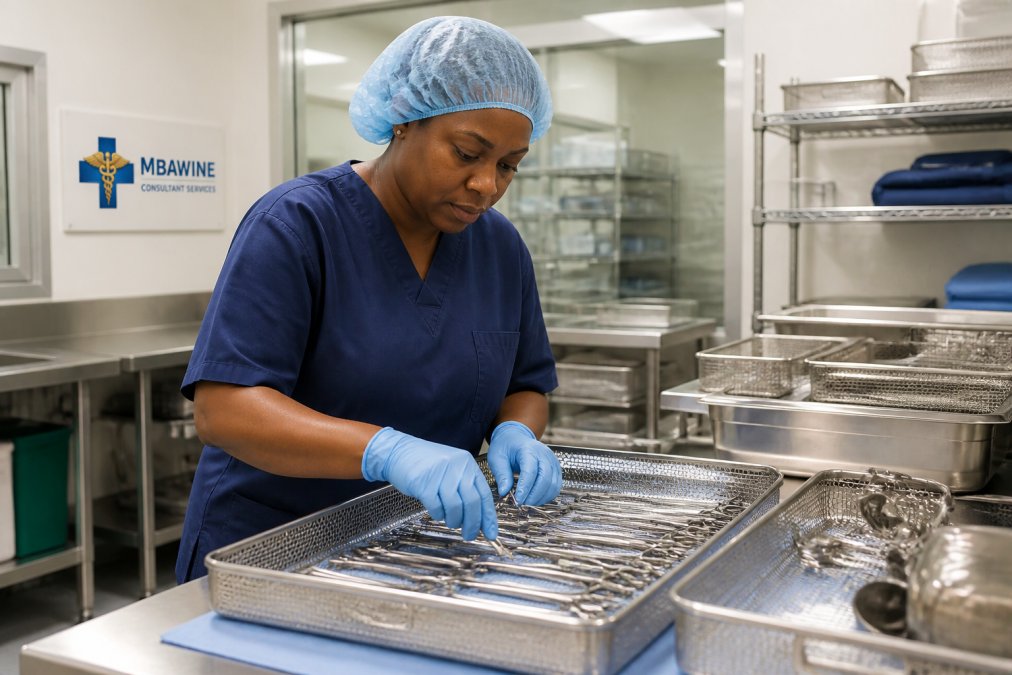
Expect to rotate through every station:
Most people find the pace is the hard part, not the technique. You're working against OR schedules, and trays can't wait.
A sterile processing course opens more doors than most people realize. The entry point is technician work, but the field has a clear ladder for anyone willing to climb it.
Typical roles include:
The leadership track is where the money and stability are. Certification like the Certified Healthcare Leader credential prepares technicians to move into management, and Mbawine Consultants builds its leadership prep around exactly that transition.
Most bad course decisions come down to a handful of avoidable errors. Here's what to watch for.
Sterile processing departments run on precision, and the people who thrive there start with the right training. Mbawine Consultants helps technicians get there with fast-track CRCST and CIS exam prep, remote audio and video classes that fit around shift work, and financing that lets you start with no payment for the first 30 days. Our instructors hold current credentials. Get started with Mbawine Consultants and walk into your certification exam ready.
Most sterile processing course programs run between 3 and 12 months, depending on whether you choose a full-time or part-time schedule. Programs that include the required sterile processing clinical hours often take longer because you need to complete hands-on training at a hospital or surgical facility. Self-paced online courses let you move faster if you already work in the field and only need test preparation.
To earn CRCST certification, you must pass the exam and complete 400 hours of hands-on sterile processing experience within a specified window. You also need a high school diploma or equivalent. Many candidates take a sterile processing course first to build the knowledge base, then accumulate clinical hours on the job before sitting for the exam. Check the certification body's current handbook for exact deadlines.
Yes. Mbawine Consultants provides fast-track CRCST test preparation through audio, video, and web conferencing, so you can study from home while working full-time. Their instructors hold current certifications and field experience. The program also offers financing options with no payment for the first 30 days, making it easier to start without upfront cost.
Requirements vary by employer and state. Many hospitals prefer or require CRCST certification, and some states mandate it for central service technicians. Even where certification is not legally required, holding a sterile processing course certificate and CRCST credential improves your chances of being hired and can lead to higher pay. Check with your target facility's HR department for their specific policy.


