

Last Updated: October 6, 2026
A sterile processing in-person class matters because the job itself cannot be learned from a screen alone, and that is exactly what a sterile processing in-person class delivers. Sterile processing technicians assemble surgical instrument trays, operate autoclaves, and run quality checks with their hands, and employers want proof that a candidate has actually done those tasks before they touch a real tray. This guide from Mbawine Consultants walks through what these classes cover, how long they run, what you need before day one, and exactly how to enroll.
The stakes are high. The U.S. Food and Drug Administration guidance on reprocessing medical devices treats every reusable surgical instrument as a device that must be cleaned, disinfected, or sterilized according to validated instructions before reuse. A missed set screw inside a cannulated instrument or a tray that fails a biological indicator is not a small error. It is a patient safety event.
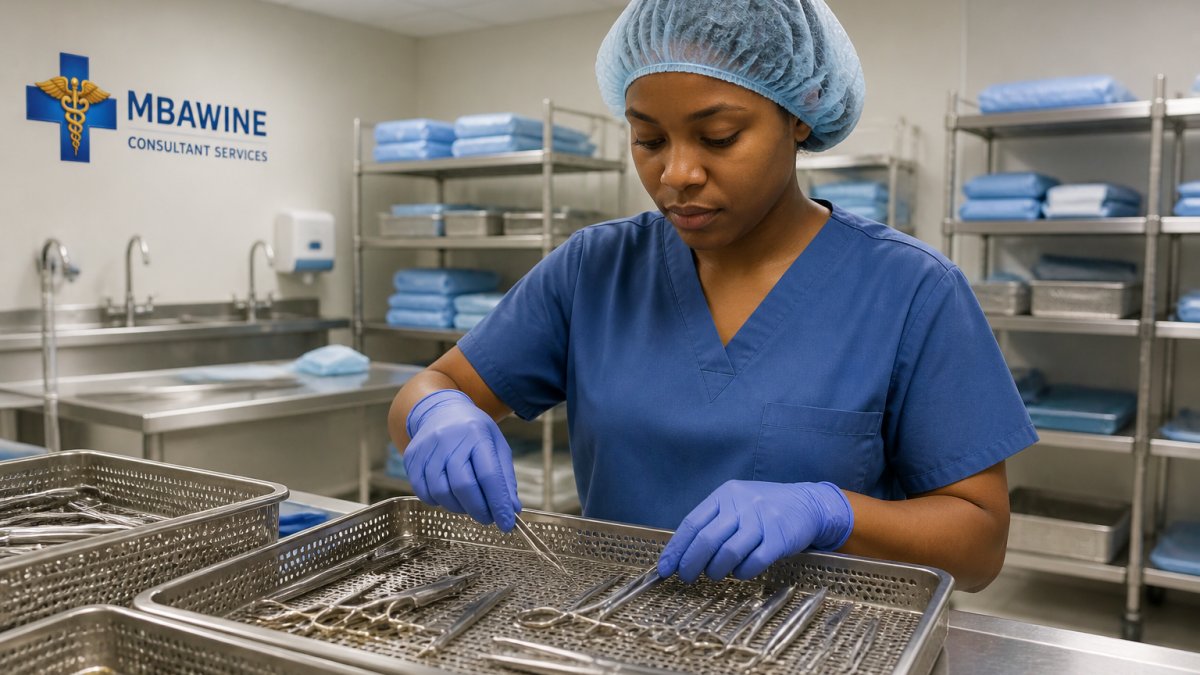
That is why hands-on programs exist.
Sterile processing technician training NYC programs typically combine classroom instruction with supervised practice in a working decontamination and assembly area. Expect to spend time on four core areas:
The Association for the Advancement of Medical Instrumentation standards overview is the reference set most programs teach from, since AAMI standards underpin how departments write their policies.
A common mistake is treating the decontamination room as the "easy" station. It is the opposite. Most processing failures trace back to cleaning, not the sterilizer, because residue that survives cleaning shields microbes from the sterilization cycle.
A sterile processing class schedule and duration varies by format, but most hands-on programs run several weeks to a few months. The table below shows how the common formats compare.
| Format | Typical Length | Weekly Commitment | Best For |
|---|---|---|---|
| Full-time day | 8-12 weeks | 30-40 hours | Career changers with open schedules |
| Part-time evening | 12-20 weeks | 12-16 hours | Current hospital staff |
| Weekend cohort | 16-24 weeks | 8-12 hours | Full-time workers on rotating shifts |
| Employer-sponsored | Varies | On the clock | New hires at a facility |
Full-time tracks move fast and expect you to be available during department operating hours, which is when real trays are moving through. Evening and weekend options exist for a reason: many applicants already work on the sterile processing floor or in environmental services and cannot leave a shift. If you are pulling 12-hour shifts, ask whether the program records lectures or offers make-up sessions before you commit. Some do. Some do not, and you will find out the hard way.
Supervised clinical hours are the part applicants underestimate. You are not just observing. You are assembling trays that a preceptor then checks, documenting counts, and learning to catch your own errors before someone else does. Ask two questions before enrolling: how many supervised hours are required, and does the program place you at a clinical site or expect you to find one? Programs that place you remove a major logistical burden.
Prerequisites are usually straightforward, but they are enforced. Most programs ask for a high school diploma or equivalent, a background check, and up-to-date immunizations, since you will be in patient-care environments. Some require a tuberculosis screening and a flu shot during season.
Come prepared on day one with:
One insider note: learn instrument names early. Being able to say "Kerrison rongeur" instead of "that bone cutter" speeds up every tray you assemble and signals competence to your preceptor.
The honest answer is that in-person vs. online sterile processing training is not really a fair fight for the hands-on portion, but online study still has a place. Lecture content, terminology, and exam review work fine remotely. Tray assembly, sterilization cycle operation, and instrument inspection do not.
Here is how we would think about it:
At Mbawine Consultants, our certification preparation is built for the second group. Our audio, video, and web conferencing sessions let technicians study around shift work, while our instructors bring current certifications and floor experience to the material. Financing options with no payment for the first 30 days also give you room to see whether the pace fits before you commit budget.
Sterile processing certification preparation for CRCST and CIS should start before your class ends, not after. The CRCST exam tests the full reprocessing workflow, and the CIS exam goes deeper into instrument-specific knowledge. Waiting until you finish clinical hours to open a study guide is a common mistake that costs people a retake.
A practical study sequence we recommend:
The U.S. Bureau of Labor Statistics occupational outlook for medical equipment preparers is worth reading before you plan your timeline, because it gives you a clear picture of the job market you are training into.
Enrollment is a sequence, not a single form. Follow these steps in order:
Deadlines matter more than most applicants expect. Cohorts fill, and late applicants often land on a waitlist. If you are targeting a specific start date, begin the prerequisite paperwork several weeks ahead.
For questions about cohort dates, financing, or instructor credentials, contact Mbawine Consultants directly. We would rather answer a hard question before you enroll than have you discover a mismatch in week three.
Sterile processing does not reward shortcuts, and neither does certification. The technicians who pass on the first attempt are usually the ones who paired structured instruction with supervised repetition and started exam review early. That is the gap Mbawine Consultants was built to close: credentialed instructors, flexible audio and video sessions that fit around shift work, and financing options with no payment for the first 30 days. Get started with Mbawine Consultants and walk into your exam with the hands-on confidence the job actually demands.
New York City programs are offered through hospital-based training centers, community colleges, and workforce development organizations in the five boroughs. Look for a course that includes hands-on instrument decontamination, sterilization, and assembly practice, plus a clinical externship. Ask whether the instructor holds a current CRCST or CIS credential.
Most full-time programs run 12 to 16 weeks, while evening or weekend tracks can stretch to 6 months. If you are already working in a sterile processing department, you may be able to complete those hours on the job while taking the classroom portion part-time. Ask the program coordinator how clinical hours are tracked.
Yes, in-person sterile processing classes center on hands-on practice. You will learn to inspect, assemble, and wrap instrument sets, operate autoclaves and other sterilizers, and follow decontamination protocols. Online programs cover the same theory but cannot replicate the feel of loading a sterilizer or spotting a damaged instrument.
Most entry-level sterile processing programs do not require prior healthcare experience. A high school diploma or equivalent is typically the only prerequisite, along with immunizations and a background check for clinical placements. If you are considering a career change, an in-person class is a practical way to test the work before committing to certification.


