

Last Updated: September 1, 2026
Your experience managing sterile processing operations is the foundation of every hiring decision at the management level. Interviewers want specifics about handling instrument decontamination, sterilization protocols, staff scheduling, and departmental workflow coordination.
The best answers demonstrate measurable impact. For example: "I took over a 12-person sterile processing department struggling with a 45-day turnover time. Within six months, I implemented a new case cart management system and cross-trained technicians on priority workflows. We reduced turnover time to 28 days and decreased instrument damage claims by 22%." This shows leadership, problem-solving, and accountability.
Highlight your experience with the full scope of sterile processing: instrument tracking systems, autoclave operation, biological and chemical indicators, and compliance with regulatory standards. Mention your familiarity with infection control protocols and how you've maintained departmental workflow under pressure.
Address staff development as part of your operations experience. Mention how you've trained new technicians, verified competency, and created a culture where quality matters. If you've reduced turnover or improved staff satisfaction metrics, lead with that.
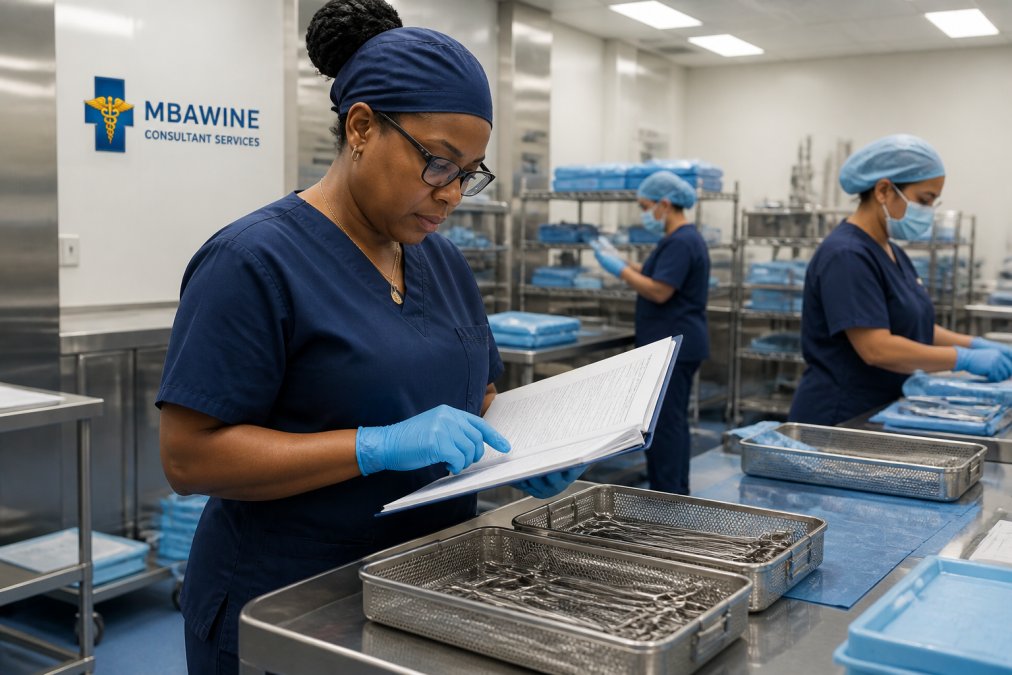
This question tests whether you understand the regulatory backbone of sterile processing. AAMI (Association for the Advancement of Medical Instrumentation) standards define best practices for instrument reprocessing, sterilization protocols, and quality assurance.
Start by naming specific AAMI standards relevant to your role: ST79 (sterile processing and asepsis), ST81 (quality assurance), and ST85 (steam sterilization). Explain how you've implemented these in your department. For example: "We follow AAMI ST79 guidelines for instrument decontamination, which means every instrument goes through a validated cleaning process before sterilization. I conduct monthly audits to verify our technicians are following decontamination area protocols correctly and track biological indicator results to confirm our autoclave operation meets sterilization standards."
Compliance is ongoing. Describe your process for staying informed about standard updates and communicating changes to your team. "I subscribe to AAMI updates and attend annual training. When standards change, I schedule department meetings to review new requirements and update our standard operating procedures accordingly."
Address quality assurance and documentation. Explain how you monitor chemical indicators, biological indicators, and equipment performance, and what you do when results fall outside acceptable ranges. Describe your approach to regulatory audits and accreditation reviews.
Operating room coordination depends on strong communication between sterile processing and surgical teams. Conflicts typically arise around turnover time, instrument availability, or quality concerns.
Choose a real example where you identified the root cause and implemented a solution that stuck. A strong answer might sound like this: "Our surgical teams were frustrated with turnover time. When I dug into the data, I found that 40% of delays happened because instruments weren't being returned to sterile processing on time. I met with the OR manager and discovered their staff thought certain instruments took longer to process than they actually did. We created a visual reference guide showing realistic processing times. Turnover improved, and the surgeons stopped blaming us."

Show that you listened to both perspectives before acting. Avoid blame-shifting. Instead, frame conflicts as communication gaps you closed.
Demonstrate your commitment to patient safety throughout the resolution. If you had to push back on a request that compromised quality, explain how you did it respectfully. "A surgeon asked us to skip the biological indicator test to speed things up. I explained why we can't do that, it's a patient safety issue, and offered alternatives like pre-staging instruments the day before."
This question separates managers who understand their numbers from those who just show up. Start by naming the metrics you monitor: biological indicator pass rates, chemical indicator compliance, equipment downtime, turnover time, instrument damage rates, and staff competency verification results.
Explain your tracking system and how you use data to drive decisions. "I track biological indicator results weekly and flag any failures immediately. We investigate the root cause, equipment malfunction, operator error, or process deviation, and implement corrective action. I also monitor chemical indicator compliance at 100% because even one missed indicator represents a quality gap."
Show how you've used data to improve performance. "Our turnover time was 32 minutes last quarter, but I analyzed the data by shift and discovered the evening shift was averaging 38 minutes. I worked with that team to identify bottlenecks and adjusted staffing. Turnover dropped to 29 minutes across all shifts."
Demonstrate accountability for results and continuous improvement mindset. "Our instrument damage rate was 2.1% last year. I implemented a new handling protocol and added a final inspection step. This year, we're at 1.3%. Our goal is below 1%, so I'm piloting a new case cart design next quarter."
Address how you communicate metrics to your team and hospital leadership. "I post monthly performance dashboards in the department so everyone sees how we're doing. I also present quarterly reports to the surgical director and hospital administrator so they understand the operational and financial impact of our work."
Sterile processing technicians must be competent in instrument decontamination, sterilization protocols, case cart management, and infection control. Strong managers invest in their team's development and build a culture of continuous learning.
Outline your onboarding process for new technicians. "New hires complete structured orientation covering AAMI standards, our facility's standard operating procedures, equipment operation, and safety protocols. They shadow experienced technicians for two weeks, then work under supervision for another two weeks. Before they work independently, they pass a written exam and a practical competency assessment."
Explain how you verify ongoing competency. "I conduct competency assessments annually for all technicians. I observe them performing key tasks and verify they're following protocol. If I see gaps, we retrain immediately. I also track error rates and use those as teaching moments."
Address your approach to difficult conversations. "If someone struggles with a core competency, I start with coaching. If performance doesn't improve, I escalate to a performance improvement plan with clear expectations and a timeline. I've had to terminate technicians who refused to follow sterile processing protocols or infection control standards, patient safety isn't negotiable."
Show commitment to professional development. "I encourage technicians to pursue CRCST or CIS certification. I provide study materials and time off for exam prep. Two of my technicians have earned their CRCST in the past year, and I've promoted one to lead technician."
Equipment failure during peak surgical hours tests your decision-making, communication, and operational knowledge. Start with immediate actions. "If an autoclave fails during peak hours, my first step is to notify the OR manager and surgical director immediately. They need to know how many cases might be affected and our timeline."
Explain your backup protocols. "We maintain a backup autoclave that's regularly tested and ready to go. If the primary autoclave fails, we shift to the backup within 15 minutes. I also have relationships with nearby facilities for emergency sterilization if both autoclaves fail."
Discuss communication and transparency. "I keep the OR team updated every 30 minutes with status and estimated resolution time. I don't sugarcoat timelines. I also document the failure, impact on case scheduling, and resolution for our quality records."
Address prevention and learning. "After any equipment failure, I conduct root cause analysis. I use that information to improve our preventive maintenance schedule or training. I also review our emergency protocols annually."
Turnover time directly impacts OR efficiency and hospital revenue. Start by acknowledging the tension. "Turnover time is critical, but it can't come at the cost of quality or infection control. My strategy is to improve efficiency through better processes, not by cutting corners."
Describe process improvements. "I analyze our current turnover time by breaking it into components: instrument decontamination, sterilization, inspection, and case cart assembly. I identify where we lose time. Often it's waiting for biological indicators to complete, so I've implemented a system where we pre-stage instruments and run biological indicators overnight for non-urgent cases. For urgent cases, we use a validated rapid sterilization cycle."
Address staffing and scheduling. "Turnover time improves when we have adequate staffing during peak hours. I analyze OR schedules and staff my sterile processing department accordingly."
Explain technology and automation. "I've implemented an instrument tracking system that shows me in real time which instruments are being processed. This eliminates time wasted searching for trays. I'm also exploring automated washer-sterilizer combinations that reduce manual handling time while maintaining quality."
Show your commitment to measuring improvement. "I track turnover time weekly and trend it monthly. When I implement a change, I measure the impact and adjust if needed."
Preparing for sterile processing interview questions requires understanding both the technical side of your work and the business and leadership dimensions. Go into your interview with specific examples from your experience. Numbers matter, if you've improved a metric, know the before-and-after. If you've managed a team, know your retention rate and competency verification results.
Demonstrate knowledge of industry standards like AAMI and your facility's compliance requirements. Show that you stay current with best practices and are committed to continuous improvement. Most importantly, show that you care about your team and your patients. Sterile processing is the backbone of surgical safety. Managers who understand that and can articulate it clearly are the ones who get hired and succeed in leadership roles.
At Mbawine Consultants, we provide comprehensive surgical support services, needs assessment, and specialized education for sterile processing departments. Led by highly credentialed experts, the firm offers advanced certification preparation for CRCST and CIS, alongside interim management and staffing solutions for surgical and ambulatory-surgical facilities. By combining flexible remote learning options with professional clinical expertise, we empower healthcare professionals and organizations to achieve excellence in sterilization standards. Enroll with Mbawine Consultants and get started with your leadership development today. The first 30 days are on us, no payment required while you explore whether our program fits your goals.
A: Sterile processing managers must understand AAMI (Association for the Advancement of Medical Instrumentation) standards, Joint Commission accreditation requirements, and OSHA regulations. AAMI standards cover sterilization protocols, biological and chemical indicators, and instrument integrity. Joint Commission audits compliance with infection control and patient safety standards. Familiarity with these frameworks demonstrates your ability to maintain regulatory compliance and protect patient outcomes. During interviews, reference specific standards relevant to your facility's operations.
A: Key sterile processing quality assurance metrics include turnaround time (minutes from case completion to instrument availability), sterilization cycle success rates, biological indicator pass rates, staff competency scores, and compliance audit results. Track instrument trays processed per shift, emergency case response times, and equipment downtime. Monitor staff certification renewal rates and training completion. These metrics reveal operational efficiency, quality control effectiveness, and staff readiness. Managers who discuss specific KPIs during interviews show strategic thinking and accountability for departmental outcomes.
A: Use the STAR method: describe the Situation (conflict between SPD and surgical staff), your Task (resolve it quickly), the Action you took (mediated a meeting, clarified protocols, adjusted scheduling), and the Result (improved communication, faster case turnarounds). Focus on listening to both sides, understanding root causes, and implementing process improvements. Emphasize patient safety as the priority. For example: 'When surgeons complained about instrument availability, I analyzed our turnover times, discovered a bottleneck in decontamination, and reorganized staff assignments, reducing wait time by 20 minutes.' This shows problem-solving and leadership.
A: Highlight hands-on knowledge of sterilization protocols, biological and chemical indicators, autoclave operation, and instrument tracking systems. Describe specific responsibilities: running quality assurance checks, mentoring junior staff, or leading process audits. Explain how you transitioned from executing tasks to understanding the 'why' behind procedures. Mention any leadership experience: training new hires, suggesting workflow improvements, or managing case cart inventory. Connect technical expertise to management competencies: 'My background running sterilization cycles taught me how delays upstream affect surgical scheduling, which informs my staffing and resource allocation decisions as a manager.'
This article was written using GrandRanker


