

Last Updated: August 18, 2026
The sterile processing leadership career path represents one of the most structured advancement opportunities in healthcare operations. Moving from technician to director-level roles requires deliberate progression through increasingly complex responsibilities, from hands-on instrument decontamination to strategic oversight of entire departments.
Sterile processing management demands both technical mastery and operational leadership. A technician who understands AAMI standards and Joint Commission compliance can transition into supervisory roles, but true advancement requires additional credentials, business acumen, and the ability to manage people and processes. Many technicians plateau after earning CRCST certification, they've mastered their craft but haven't built the management foundation needed to move up.
The sterile processing leadership career path typically unfolds in stages: early career focuses on technical proficiency and certification; mid-career emphasizes process improvement, staff supervision, and regulatory compliance; senior leadership requires strategic planning, budget management, and interdepartmental coordination. Experienced sterile processing leaders are perpetually in demand because surgical services depend entirely on SPD functioning at peak efficiency, and compensation reflects this responsibility.
Certifications form the backbone of career advancement in sterile processing leadership. They signal competency, open doors to management roles, and often directly impact earning potential.
The Certified Registered Central Service Technician (CRCST) credential is the entry point for any serious sterile processing leadership career. This certification validates mastery of instrument decontamination, sterilization processes, and sterile storage protocols. It's the foundation that everything else builds on.
Earning the CRCST requires passing an examination covering infection control principles, equipment operation, and quality assurance procedures. Most facilities expect technicians to earn this credential within their first two years. The exam tests practical knowledge: why certain instruments require specific decontamination protocols, how steam sterilizers function, and what makes a sterile storage environment actually sterile.
Many technicians pursue CRCST preparation while working full-time shifts. Flexible preparation options, remote learning modules and audio-based study materials, allow you to prepare during breaks or commute time rather than requiring classroom attendance after 12-hour shifts. Mbawine Consultants offers exactly this type of flexible CRCST preparation, with audio and video modules designed for working technicians.
Once you hold CRCST certification, you've met the baseline requirement for supervisory positions. But CRCST alone won't get you to director-level roles. That requires additional credentials focused on management and leadership.
The Certified Healthcare Leader (CHL) credential represents the next major milestone in the sterile processing leadership career path. Unlike CRCST, which validates technical competency, CHL focuses on management fundamentals: staff supervision, performance evaluation, budget oversight, and strategic planning.
CHL certification requires demonstrating knowledge of healthcare operations, quality improvement methodologies, and team leadership principles. The examination covers regulatory compliance frameworks, performance metrics, and organizational management. This is where your career transitions from technical expertise to people and resource management.
The Certified Instrument Specialist (CIS) credential focuses deeply on instrument knowledge, proper handling, and specialized reprocessing requirements. For some technicians, CIS becomes the pathway to specialty roles in high-complexity instrument management; for others pursuing general management, CHL takes priority.
Most professionals don't pursue CHL until they've spent 2-3 years in a supervisory or lead technician role. The CHL exam tests real-world management scenarios, and that experience makes the difference between passing and failing. Beyond CHL, some sterile processing leaders pursue advanced credentials through professional organizations like HSPA (Healthcare Sterile Processing Association), signaling commitment to ongoing professional development.

Technical knowledge alone doesn't make someone an effective sterile processing leader. The skills that separate competent managers from exceptional ones fall into two categories: technical mastery and soft skills.
On the technical side, you need deep understanding of AAMI standards, Joint Commission accreditation requirements, and infection control principles. More importantly, you need to understand how these standards translate into daily operations. A strong leader can explain not just what the protocol is, but why it exists and what happens if it's violated.
Process improvement expertise matters significantly. Sterile processing departments handle thousands of instruments daily. Small inefficiencies compound into massive time and resource waste. Leaders who understand lean principles, identify bottlenecks, and implement systematic improvements increase department throughput while maintaining quality.
Regulatory compliance and quality assurance form your foundation. You're responsible for maintaining accreditation standards, managing documentation, responding to survey findings, and ensuring your department meets every applicable regulation.
On the soft skills side, staff management and team development determine whether your department runs smoothly or operates in constant crisis mode. You're hiring technicians, training them, evaluating performance, and sometimes managing difficult personnel situations. The ability to provide constructive feedback and address problems directly separates effective leaders from those who create toxic environments.
Communication across departments is critical. Sterile processing coordinates with operating room staff, surgical services, infection prevention, materials management, and administration. Clear communication about turnaround times, equipment issues, staffing challenges, and capacity constraints keeps the entire surgical services operation functioning.
Budget management often surprises new leaders. You're responsible for equipment purchases, supply costs, staffing expenses, and capital projects. Understanding how to forecast needs, justify expenditures, and optimize spending allows you to advocate for your department's needs while operating within financial constraints.
The jump from experienced technician to supervisor or manager is the most critical transition in the sterile processing leadership career path. The skills that made you an excellent technician don't automatically translate to management success.
Step 1: Develop supervisory experience before seeking formal promotion. Many facilities have lead technician or senior technician roles that bridge the gap between staff technician and supervisor. These positions give you management exposure without full supervisory responsibility.
Step 2: Pursue CHL certification before or immediately after promotion. The knowledge from CHL preparation directly applies to your new role. You'll understand performance evaluation frameworks, conflict resolution approaches, and regulatory compliance requirements before you need them in practice.
Step 3: Seek mentorship from an experienced sterile processing director or manager. An experienced leader can help you navigate the transition, advise on difficult situations, and accelerate your learning curve.
Step 4: Master your facility's specific operations before implementing changes. Learn how your facility operates, understand the history of current processes, and identify what's working well before making informed recommendations for improvement.
Step 5: Build credibility with your team. Acknowledge that you came from their ranks, respect their knowledge, and make decisions that show you understand the realities of doing the work. Credibility builds trust.
Step 6: Document everything. Create written procedures, maintain performance records, document training completion, and keep compliance files organized. This protects both you and your facility.
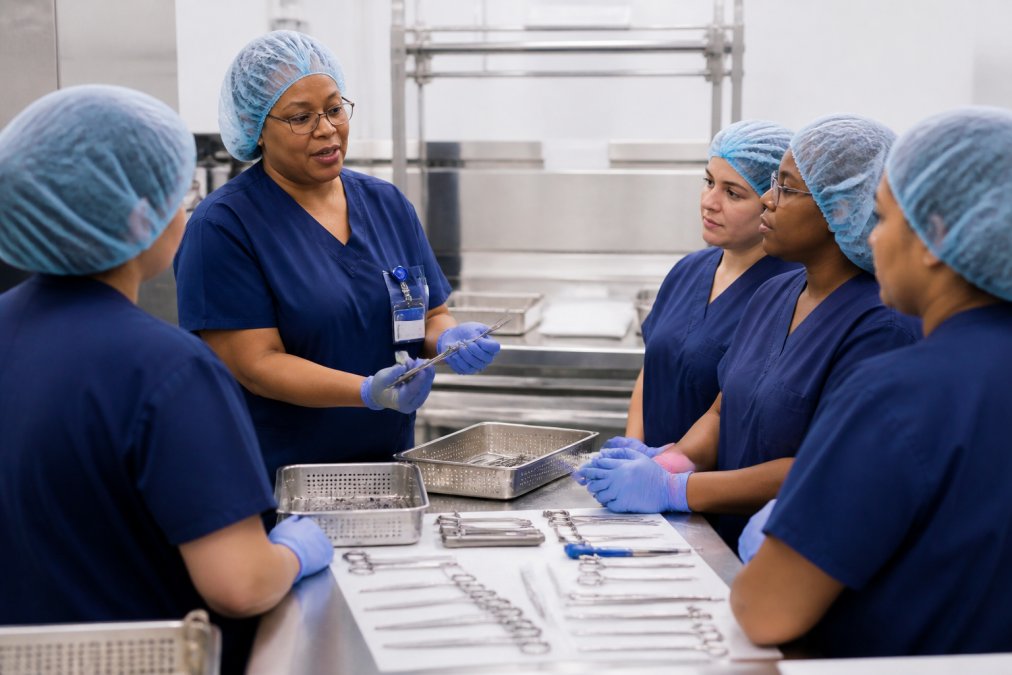
Interim sterile processing management provides real leadership experience in a defined timeframe. You manage the department, implement improvements, handle staffing challenges, and ensure regulatory compliance, all while knowing the position is temporary.
Interim roles often involve stepping into departments facing challenges. A facility might need interim management because the previous director left unexpectedly, performance metrics are declining, or compliance issues need addressing. You're brought in to stabilize operations and implement improvements quickly. This high-stakes work builds credibility rapidly.
Interim positions often lead to permanent opportunities. If you stabilize a struggling department, implement improvements, and build staff confidence, the facility frequently offers you the permanent role. Even if they don't, the experience and results you achieved position you for director roles at other facilities.
For Mbawine Consultants clients, interim management services provide experienced leadership. Rather than promoting an internal technician who may lack management experience, facilities can bring in an experienced interim director to stabilize operations while developing internal candidates for future leadership roles.
Moving into sterile processing leadership means entering conversations about compensation, budget management, and resource allocation. These topics often make new leaders uncomfortable because they're accustomed to focusing on technical work.
Compensation negotiation is the first practical reality. When you transition to management, your salary should reflect increased responsibility. Research comparable positions in your market and know your value. Don't accept a promotion without discussing compensation.
Budget management requires understanding your department's cost structure. Request a detailed breakdown: What does sterilization equipment cost? What's the annual spend on instruments and supplies? What percentage of your budget goes to staffing? Understanding these numbers lets you make informed decisions about priorities.
Interdepartmental conflict resolution becomes increasingly important. Sterile processing interfaces with operating room staff, surgical services, infection prevention, and materials management. Conflicts arise from competing demands: operating room staff want faster turnaround times, infection prevention wants stricter protocols, materials management wants to reduce inventory. Effective leaders communicate clearly about constraints and propose solutions that balance competing needs.
Avoid difficult conversations at your peril. If an operating room coordinator is pressuring you to process instruments faster than your department safely can, that conversation needs to happen, with documentation. If a staff member's performance is declining, that requires direct feedback and a performance improvement plan.
Staffing challenges are constant. Experienced leaders develop contingency plans, cross-train staff, and maintain relationships with staffing agencies. You can't eliminate staffing challenges, but you can minimize their impact through planning.
The most effective sterile processing leaders develop the next generation of leaders, creating succession pipelines that ensure continuity and reduce organizational risk.
Mentorship is your primary tool for developing future leaders. Identify promising technicians with technical skill, management interest, and growth potential. Create opportunities for them to develop supervisory experience. Formal mentorship programs work better than informal relationships, establish regular meetings, set specific learning objectives, and document progress.
Succession planning protects your department against unexpected departures. If you left tomorrow, who could step into your role? If that person isn't ready, what development do they need? These questions should drive your leadership strategy.
Cross-training creates flexibility and reduces single-point-of-failure risks. When multiple people can perform critical functions, the department operates more smoothly and people have development opportunities.
Professional development investment pays dividends. Supporting technicians who pursue CRCST or CIS certification, funding CHL preparation for supervisory staff, and providing conference attendance opportunities builds loyalty while developing talent.
Advancing in the sterile processing leadership career path requires deliberate progression through certifications, skill development, and increasingly complex responsibilities. The journey from technician to director typically spans 5-10 years, but it's clearly defined. Technical expertise in instrument decontamination and sterilization processes forms your foundation. Management certifications like CHL build on that foundation. Real-world leadership experience in supervisory and director roles completes the picture.
The field demands both technical mastery and operational leadership. You need to understand AAMI standards and Joint Commission requirements while also managing budgets, developing staff, and coordinating across departments. This combination of skills makes experienced sterile processing leaders valuable to healthcare facilities.
Mbawine Consultants supports this progression through comprehensive certification preparation, interim management services, and specialized education for sterile processing professionals. Whether you're preparing for your CRCST exam while working full-time shifts, transitioning into your first supervisory role, or stepping into interim director responsibilities, flexible remote learning options and expert guidance accelerate your advancement in the sterile processing leadership career path. Enroll with Mbawine Consultants to begin your structured advancement toward leadership excellence in sterile processing.
Start by earning your CRCST certification to establish technical credibility. Take on supervisory responsibilities such as training newer staff and leading process improvement projects. Pursue formal management training and consider the CHL certification. Build soft skills in communication, conflict resolution, and budgeting. Many facilities promote from within, so demonstrate reliability, initiative, and a commitment to regulatory compliance. Interim management roles or mentorship opportunities can accelerate your transition into formal leadership positions.
The CRCST is the foundational credential for all sterile processing roles and is often required before advancement. For leadership, the Certified Healthcare Leader (CHL) is highly valued and demonstrates management competency. The Certified Instrument Specialist (CIS) credential is beneficial if you specialize in instrument decontamination and reprocessing. Some facilities also recognize the Certified Registered Central Service Technician (CRCST) as a prerequisite. Check with your facility and professional organizations like AAMI for current standards and Joint Commission requirements that may apply to your role.
Flexible learning options are essential for working technicians. Look for programs that offer audio modules, video content, and web conferencing that fit around your schedule, including evening and weekend access. Many preparation programs allow you to study at your own pace, which works well with 12-hour shifts. Break study into smaller sessions rather than attempting long blocks. Use commute time or breaks for audio review. Some employers offer tuition assistance or study time during shifts, ask your manager about internal support. Starting with a realistic timeline prevents burnout.
Communication is critical, you must convey regulatory requirements, process changes, and feedback clearly to your team. Conflict resolution skills help navigate interdepartmental tensions with surgery, nursing, and infection control. Staff supervision requires coaching ability and performance management expertise. Budget management and resource allocation are increasingly important as you advance. Problem-solving and process improvement mindset drive operational excellence. Emotional intelligence helps you support technicians through demanding shifts. Leadership presence and decision-making confidence build team trust and operational credibility in the sterile processing department.
Interim roles let you test management responsibilities without permanent commitment, reducing career risk. You gain hands-on experience with staff supervision, compliance oversight, and operational problem-solving in real facilities. This experience is highly attractive to employers hiring permanent leaders because it demonstrates proven capability. Interim assignments also expand your professional network across multiple facilities and expose you to different operational models. You can identify which leadership aspects suit you best before pursuing advanced certifications. Many professionals use interim roles as a bridge between technical and permanent management positions.
Leaders must understand AAMI standards for sterilization processes, including steam, chemical, and low-temperature sterilization methods. Joint Commission accreditation standards apply to most hospital sterile processing departments and cover quality assurance, staff competency, and infection control. FDA regulations govern medical device reprocessing and sterilization validation. OSHA standards address workplace safety, chemical handling, and occupational exposure. State regulations may impose additional requirements. Infection control protocols and patient safety standards are foundational. Staying current with regulatory changes is part of your professional development and critical for maintaining departmental accreditation and patient safety.
Start by identifying high-potential technicians and creating structured development plans for them. Assign them gradually increasing responsibilities in training, quality checks, and process improvement. Share decision-making processes and explain your reasoning for operational choices. Provide regular feedback and coaching rather than just criticism. Document procedures and best practices so knowledge transfers systematically. Encourage certifications and continuing education. Create clear career pathways so technicians see advancement opportunities. Cross-train staff to reduce single-point-of-failure risks. Regular one-on-one conversations about career goals help you spot future leaders early and retain your best talent.
Research compensation data through professional organizations like the Association for Advancement of Medical Instrumentation and healthcare salary databases. Compensation varies significantly by facility size, geographic location, and market demand. Larger hospital systems typically pay more than ambulatory surgical centers. Your certifications, experience, and demonstrated process improvements strengthen your negotiating position. Document your achievements, reduced infection rates, improved turnaround times, staff retention improvements, to justify higher compensation. Consider total benefits including tuition assistance, flexible scheduling, and staffing support, not just base salary. Salary reviews aligned with certification achievements and performance metrics are standard practice in healthcare leadership.
This article was written using GrandRanker


