

Last Updated: August 28, 2026
Sterile processing leadership training for managers is no longer optional for healthcare facilities serious about patient safety and operational excellence. Technical mastery of instrument sterilization doesn't translate to managing people, budgets, regulatory requirements, or departmental workflows.
At Mbawine Consultants, we've worked with facilities where a technician was promoted to manager based solely on technical competence, resulting in missed compliance deadlines, staff turnover, budget overruns, and preventable quality incidents. The sterile processing department sits at the intersection of clinical excellence and operational efficiency, a manager here must understand infection control protocols, AAMI standards compliance, staff training requirements, and financial constraints simultaneously.
This guide covers what you need to know to transition from the floor to the front office and develop the competencies that separate good managers from great ones.
Before pursuing management credentials, aspiring leaders typically start with technical certifications. The Certified Registered Central Service Technician (CRCST) credential demonstrates mastery of decontamination protocols, sterilization processes, and quality assurance standards. The CIS (Certified Instrument Specialist) focuses on instrument-specific knowledge critical for managers who need to understand why certain instruments require specific handling. Both require documented work experience, typically 400 contact hours in a sterile processing department (aami.org).
Many facilities require these credentials before considering someone for management. Technical certification proves competency in your current role; leadership certification prepares you for the next one.
The Certified Healthcare Leader (CHL) credential bridges the gap between technical expertise and management capability. CHL preparation covers supervisory skills, healthcare management principles, policy implementation, and operational oversight. Unlike technical certifications focused on "how to sterilize," CHL focuses on "how to lead a team that sterilizes."
Mbawine Consultants offers flexible remote learning options, audio modules, video content, and web conferencing, so working technicians can complete preparation without sacrificing their 12-hour shifts. The no-payment-for-30-days financing option removes upfront cost barriers.
Preparation typically takes 8-12 weeks at a sustainable pace (ache.org). The exam tests both knowledge and judgment, presenting scenarios where the right answer depends on balancing patient safety, staff morale, and budget reality.
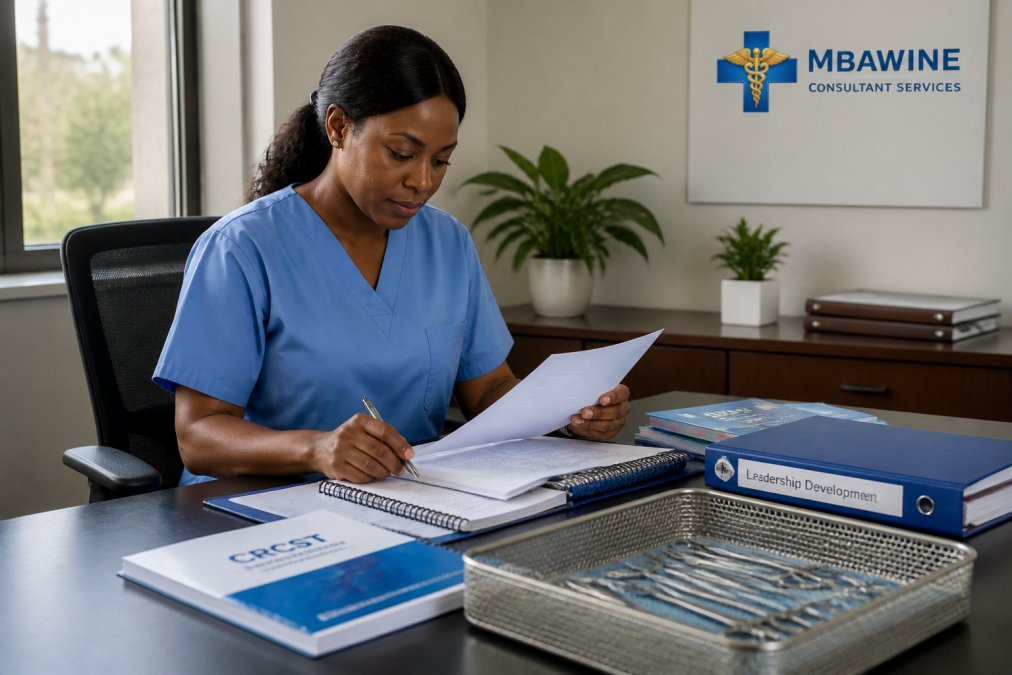
Leadership in sterile processing requires a specific blend of technical knowledge, interpersonal skills, and operational judgment. You cannot fake these competencies, your team will know within weeks whether you understand their work and respect their expertise.
Operational competency means understanding departmental workflows, sterilization cycles, quality assurance testing, and identifying bottlenecks. You should walk the floor and see where time is wasted or quality shortcuts occur.
People leadership means hiring effectively, training thoroughly, providing honest feedback, and creating an environment where technicians want to stay.
Regulatory and compliance mastery means knowing which standards apply to your facility, what auditors will check, and building compliance into daily operations rather than treating it as a checkbox exercise. This includes infection control standards, OSHA requirements, and facility-specific policies.
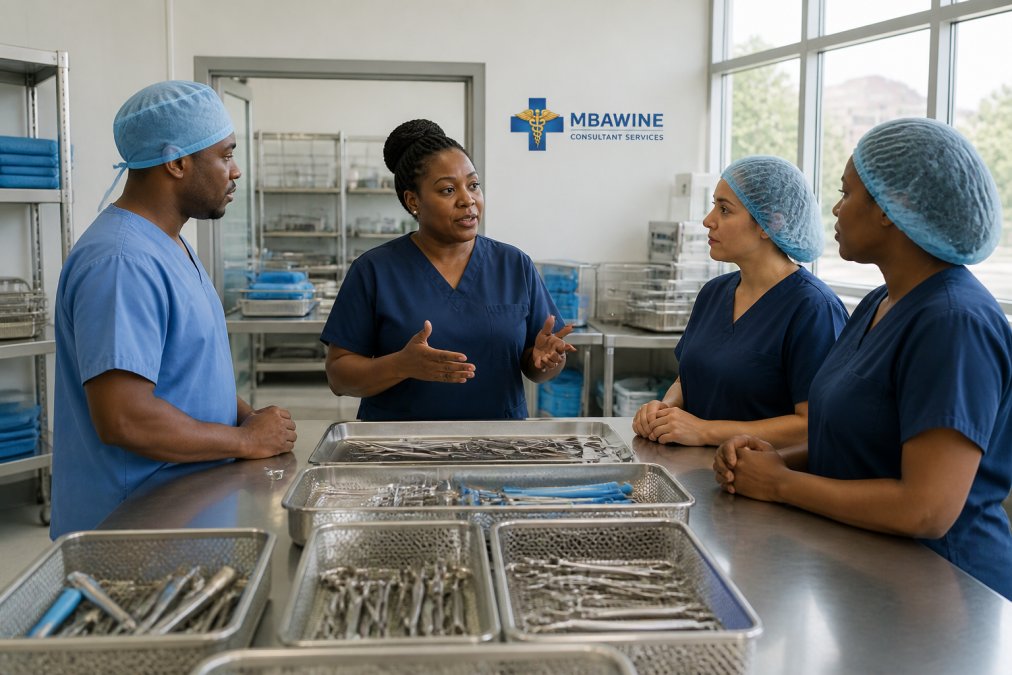
The transition from technician to manager is a career change, not a promotion. You're moving from mastering a technical role to leading people in that role. A structured transition prevents the common mistake of promoting the best technician and expecting them to figure out management on the job.
Step 1: Clarify Your Motivation
Before pursuing management, ask yourself honestly: Do you want to lead people, or do you want more money and status? Management means spending less time on technical work and more time on meetings, hiring, conflict resolution, and compliance documentation. The best managers pursue the role because they see problems in how their department operates and believe they can fix them.
Step 2: Build Your Knowledge Foundation
You need sterile processing leadership training for managers before stepping into the role. Formal training through CHL exam preparation, a management development program, or mentorship from an experienced manager gives you a framework for decision-making. Mbawine Consultants combines remote learning flexibility with real-world application, you learn principles during the week, then apply them in your current role before promotion.
Step 3: Secure Mentorship from Current Leadership
If your facility has a strong manager above you, ask to shadow them. Watch how they handle staff conflicts, budget meetings, compliance audits, and operational crises. A good mentor also advocates for your promotion and provides cover during your first six months.
Step 4: Prepare Your Team
Be transparent about your career goals before promotion. When the promotion comes, people will be less surprised and less likely to see it as abandonment. Once promoted, the first 90 days are critical, establish that you understand the work, respect the people doing it, and make decisions based on evidence.
AAMI (Association for the Advancement of Medical Instrumentation) standards set the baseline for sterile processing quality. Your job is not just to know these standards but to embed them into daily operations so compliance becomes automatic.
The most common compliance failures occur in documentation, training, and quality assurance testing. Build compliance into your workflow: new technicians receive structured training with documented competency assessments, sterilization cycles are monitored with biological and chemical indicators, and results are tracked in a system that flags trends. Conduct internal audits quarterly, treating them as seriously as external audits. When a surveyor arrives, they should find nothing that surprises them. maintaining leadership confidence.
Sterile processing is high-pressure work. In this environment, conflicts emerge quickly and escalate fast. Address conflicts early and directly rather than avoiding them until they become performance issues.
Separate the person from the problem. A technician who is slow may have a physical limitation, knowledge gap, or personal issue. Your job is to diagnose which one and respond accordingly. Clear escalation paths also prevent conflicts, staff should know when to call the manager, when to involve infection control, and when to stop a process.
Labor typically represents 60-70% of your budget, making staffing decisions have enormous financial impact (peer-reviewed research). Hiring and training a new technician costs money upfront; losing a trained technician costs more in lost productivity and overtime. This is why retention matters, it's a financial issue.
Understand your current budget: what are you spending on staff, supplies, equipment maintenance, and training? Where is the waste? Capital equipment decisions require longer-term thinking. A new sterilizer costs significant money but may reduce cycle time and improve reliability. Justify purchases with data: how much time will it save, how much will reliability improve, what is the payback period?
Structured training programs reduce errors and improve retention. New technicians should have documented training covering decontamination protocols, sterilization cycles, quality assurance testing, and safety procedures, including hands-on practice with supervision.
Quality assurance testing is your diagnostic tool for identifying problems before they become patient safety issues. When results fall outside expected ranges, investigate rather than simply repeating the test. Continuing education keeps staff current as standards and equipment change. Mbawine Consultants offers flexible remote options that fit around work schedules.
Treat quality failures as learning opportunities, not just compliance problems. When something goes wrong, investigate thoroughly: What system failure allowed it? What training gap exists? How do we prevent it next time? This approach builds trust and improves safety over time.
The best managers make decisions based on data, not gut feeling. Start tracking metrics that matter: cycle times, quality test pass rates, staff turnover rates, budget variance, and patient outcomes. These numbers tell a story about your department's health.
When you see a problem, gather data before deciding on a solution. If cycle times are increasing, is it because you're processing more instruments or because equipment is running slower? Data helps you make the case for resources, decision-makers respond to evidence, not complaints.
Mentorship is part of your role as a manager. Identify technicians with leadership potential and invest in them. Give them stretch assignments and provide honest, specific feedback. Instead of "You need to work on communication," try "In that meeting, you didn't explain your reasoning clearly. Next time, walk through your thinking step by step."
Developing as a leader is an ongoing process. Start with honest self-assessment: Where are your strengths? Where do you need to grow? If you're strong technically but weak on people management, prioritize soft skills training. If you're good with people but uncomfortable with finances, get comfortable with budgets.
Consider formal training through sterile processing leadership training for managers programs. CHL certification is valuable, as are management development courses, healthcare leadership programs, or executive coaching. Mbawine Consultants offers structured preparation with real-world application.
Build relationships with other managers in your facility and beyond. Join professional associations like AAMI or your state's sterilization association. Set specific development goals: instead of "get better at management," try "reduce staff turnover by 15% in the next year" or "achieve 100% compliance on quality assurance testing within six months."
Sterile processing departments face increasing pressure to maintain quality, ensure compliance, and operate efficiently. Managers who step into these roles without structured preparation struggle unnecessarily. Mbawine Consultants provides the expertise, flexible learning options, and real-world guidance you need to transition successfully from technician to leader.
Our sterile processing leadership training for managers combines advanced certification preparation with practical management tools. Our highly credentialed experts bring current healthcare experience, not just textbook knowledge. Whether you're pursuing CHL certification, developing your leadership competencies, or seeking interim management support for your facility, we offer solutions designed for the realities of healthcare operations.
Enroll today and take the first step toward becoming the manager your department needs.
=== FAQ ANSWERS (audit these too, same rules) ===
[1] Q: What certifications do I need to become a sterile processing manager? A: Most healthcare facilities require or prefer a CRCST (Certified Registered Central Service Technician) as the foundation, followed by a CHL (Certified Healthcare Leader) certification to move into management roles. Some organizations also value the CIS (Certified Instrument Specialist) credential. Contact hours through continuing education and hands-on experience in sterile processing operations strengthen your candidacy. Requirements vary by facility and state, so verify expectations with your employer or target organization before enrolling in programs.
[2] Q: How realistic is it to complete sterile processing leadership training while working full-time on the floor? A: Many technicians balance full-time work with training through flexible remote options. Audio and video modules allow you to study during breaks, before shifts, or on days off. The key is choosing a program that offers asynchronous learning (study at your own pace) rather than rigid live schedules. Mbawine Consultants provides web conferencing and recorded content specifically designed for working professionals. Plan 8-12 weeks for most programs, and discuss schedule flexibility with your employer, many facilities support staff pursuing leadership certifications.
[3] Q: What's the difference between CRCST and CHL certification? A: CRCST (Certified Registered Central Service Technician) focuses on technical mastery: instrument sterilization, decontamination protocols, sterile storage, and quality assurance in daily operations. CHL (Certified Healthcare Leader) builds supervisory skills, policy implementation, regulatory compliance oversight, and departmental management. CRCST is the technical foundation; CHL prepares you for leadership roles. Many facilities expect managers to hold both certifications, as CHL alone doesn't cover the technical knowledge needed to guide a sterile processing department effectively.
[4] Q: How does leadership training improve sterile processing department outcomes? A: Effective sterile processing leadership training teaches managers to implement AAMI standards consistently, reduce infection control risks, and optimize departmental workflow. Trained leaders improve staff retention through better supervision and mentorship, reduce compliance violations through proactive policy oversight, and enhance patient safety by ensuring proper instrument sterilization and sterile storage practices. Data-driven decision making and conflict resolution skills also reduce operational errors and improve team morale in high-stress environments.
[5] Q: How can I transition from a technician role to a management position? A: Start by earning your CRCST if you haven't already, then pursue CHL certification and leadership training focused on supervisory skills and regulatory compliance. Seek opportunities to lead projects, mentor newer technicians, or assist your current manager with policy implementation. Build competency in staff training, quality assurance, and operational oversight. Many facilities promote internally when they see demonstrated leadership potential. Professional development programs that combine technical mastery with soft skills training accelerate your transition and prepare you for the demands of managing a sterile processing department.
[6] Q: What should I look for in a sterile processing leadership training provider? A: Verify that instructors hold current CRCST, CHL, or equivalent certifications and have hands-on experience managing sterile processing departments. The program should cover regulatory compliance, AAMI standards, staff training methods, and practical management scenarios, not just theory. Flexible remote learning options are essential for working professionals. Ask about contact hours toward continuing education requirements and whether the provider offers interim management or staffing support if your facility needs immediate operational help. Credentialed expertise and real-world applicability matter more than low cost.
[7] Q: How many contact hours are required for CHL certification? A: Contact hour requirements vary by certifying body and state regulations. Most CHL programs require 20-40 contact hours of formal instruction, though some may require additional hours for renewal or advanced credentials. Verify the specific requirement with your target certifying organization or state licensing board. Mbawine Consultants can clarify exact contact hour requirements for your situation and help you track progress toward continuing education goals as part of your leadership development plan.
[8] Q: What's the career trajectory after becoming a sterile processing manager? A: After earning your CHL and gaining management experience, you can advance to director-level roles overseeing multiple departments, move into surgical services administration, or transition to consulting or training roles. Some managers pursue specialized credentials in infection control or healthcare quality. Career advancement depends on facility size, your performance in the management role, and additional professional development. Mentorship and succession planning skills position you for senior leadership opportunities in hospital operations or ambulatory-surgical facility administration.
Most healthcare facilities require or prefer a CRCST (Certified Registered Central Service Technician) as the foundation, followed by a CHL (Certified Healthcare Leader) certification to move into management roles. Some organizations also value the CIS (Certified Instrument Specialist) credential. Contact hours through continuing education and hands-on experience in sterile processing operations strengthen your candidacy. Requirements vary by facility and state, so verify expectations with your employer or target organization before enrolling in programs.
Many technicians balance full-time work with training through flexible remote options. Audio and video modules allow you to study during breaks, before shifts, or on days off. The key is choosing a program that offers asynchronous learning (study at your own pace) rather than rigid live schedules. Mbawine Consultants provides web conferencing and recorded content specifically designed for working professionals. Plan 8-12 weeks for most programs, and discuss schedule flexibility with your employer, many facilities support staff pursuing leadership certifications.
CRCST (Certified Registered Central Service Technician) focuses on technical mastery: instrument sterilization, decontamination protocols, sterile storage, and quality assurance in daily operations. CHL (Certified Healthcare Leader) builds supervisory skills, policy implementation, regulatory compliance oversight, and departmental management. CRCST is the technical foundation; CHL prepares you for leadership roles. Many facilities expect managers to hold both certifications, as CHL alone doesn't cover the technical knowledge needed to guide a sterile processing department effectively.
Effective sterile processing leadership training teaches managers to implement AAMI standards consistently, reduce infection control risks, and optimize departmental workflow. Trained leaders improve staff retention through better supervision and mentorship, reduce compliance violations through proactive policy oversight, and enhance patient safety by ensuring proper instrument sterilization and sterile storage practices. Data-driven decision making and conflict resolution skills also reduce operational errors and improve team morale in high-stress environments.
Start by earning your CRCST if you haven't already, then pursue CHL certification and leadership training focused on supervisory skills and regulatory compliance. Seek opportunities to lead projects, mentor newer technicians, or assist your current manager with policy implementation. Build competency in staff training, quality assurance, and operational oversight. Many facilities promote internally when they see demonstrated leadership potential. Professional development programs that combine technical mastery with soft skills training accelerate your transition and prepare you for the demands of managing a sterile processing department.
Verify that instructors hold current CRCST, CHL, or equivalent certifications and have hands-on experience managing sterile processing departments. The program should cover regulatory compliance, AAMI standards, staff training methods, and practical management scenarios, not just theory. Flexible remote learning options are essential for working professionals. Ask about contact hours toward continuing education requirements and whether the provider offers interim management or staffing support if your facility needs immediate operational help. Credentialed expertise and real-world applicability matter more than low cost.
Contact hour requirements vary by certifying body and state regulations. Most CHL programs require 20-40 contact hours of formal instruction, though some may require additional hours for renewal or advanced credentials. Verify the specific requirement with your target certifying organization or state licensing board. Mbawine Consultants can clarify exact contact hour requirements for your situation and help you track progress toward continuing education goals as part of your leadership development plan.
After earning your CHL and gaining management experience, you can advance to director-level roles overseeing multiple departments, move into surgical services administration, or transition to consulting or training roles. Some managers pursue specialized credentials in infection control or healthcare quality. Career advancement depends on facility size, your performance in the management role, and additional professional development. Mentorship and succession planning skills position you for senior leadership opportunities in hospital operations or ambulatory-surgical facility administration.
This article was written using GrandRanker


