

Last Updated: August 12, 2026
Small surgical facilities and ambulatory-surgical centers operate with razor-thin margins and minimal redundancy. When a 10-bed surgery center loses a sterile processing technician, the entire surgical schedule collapses within days. Unlike large hospital systems with deep benches and multiple shifts, small facilities can't absorb the cost of failed placements or the operational chaos of onboarding someone unfamiliar with their specific protocols.
Small departments rarely have dedicated training staff or formal orientation programs. A new technician must quickly understand instrument storage, sterilization equipment specifics, non-negotiable protocols, and communication expectations. In a four-technician department, productivity by day two is essential, a gap general staffing agencies often fail to address.
Specialized sterile processing staffing agencies pre-screen candidates for CRCST certification, technical competency, adaptability, and independent work capability. They provide detailed facility profiles so incoming staff understand exactly what they're walking into. This specialized approach transforms staffing from a recurring crisis into a manageable process.
Staffing rates vary significantly based on assignment type, geographic location, facility size, and whether the position is temporary or permanent. Travel assignments and per diem shifts typically command higher compensation than permanent placements, reflecting the flexibility and mobility required.
Travel assignments involve multi-week or multi-month commitments with housing and travel reimbursement. Per diem assignments offer shorter-term flexibility, often shift-by-shift or week-by-week work, and generally pay less than travel contracts but more than permanent positions. Permanent placements represent the most cost-effective staffing model for facilities able to commit to ongoing employment relationships.
For small facilities, the staffing rate decision hinges on whether the need is temporary or permanent. A facility facing sudden departure might justify premium rates for immediate coverage. A facility building permanent capacity should weigh higher initial costs of travel or per diem assignments against longer-term stability of permanent hiring. Many small facilities use a hybrid approach: permanent core staff supplemented by temporary coverage during high-volume periods or staff absences.
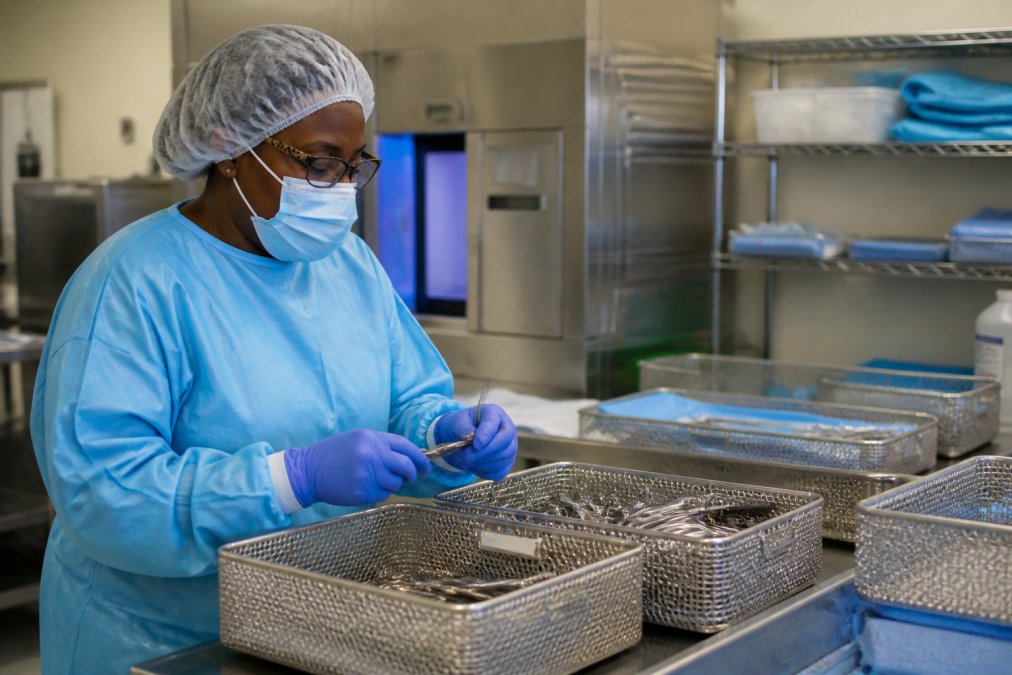
The rate conversation also intersects with compliance and training costs. A lower-cost placement requiring extensive facility-specific training may ultimately cost more than a higher-rate placement from a technician with relevant experience. Agencies specializing in small facilities understand the true cost of onboarding and can match candidates whose experience reduces training burden.
Mbawine Consultants combines temporary and permanent sterile processing staffing with interim management and specialized education. Rather than providing a list of available candidates, you access highly credentialed experts who understand the operational and compliance challenges small departments face.
The interim management capability is particularly valuable for small facilities in transition. If your lead technician departs unexpectedly, Mbawine Consultants can deploy an experienced manager to stabilize operations while you recruit a permanent replacement. This prevents the scenario where a small facility loses a key person and suddenly has no one who understands department management, compliance tracking, staff scheduling, equipment maintenance, and budget management.
Mbawine Consultants also addresses the education gap many small facilities face. Their CRCST and CIS certification preparation programs are delivered through audio, video, and web conferencing, making them accessible to technicians working full shifts. For a small facility trying to build internal certification rates, this remote-learning model removes the barrier of travel to in-person classes. Financing options with no payment for the first 30 days reduce upfront cost burden.
Medix Staffing Solutions operates a large candidate network and specializes in flexible staffing arrangements for sterile processing technicians. Their value for small facilities lies in the ability to scale staffing up or down based on actual case volume. A small facility experiencing a temporary surge in surgical cases can request short-term additional coverage without committing to permanent hiring.
Data-driven talent acquisition means Medix uses local market expertise to match candidates who understand regional facility standards. For small facilities in rural or underserved areas, this localized recruiting capability is significant, as general national staffing firms often struggle to fill positions outside major metropolitan markets.
Contract flexibility is the standout feature. Small facilities can structure arrangements as short-term temporary staffing, long-term contracts, or permanent placements through the same agency relationship.
Hunter Recruiting specializes in sterile processing technician staffing with a focus on speed and placement quality. Their average time-to-hire of 41 days from request to placement is meaningful for small facilities that can't afford extended vacancies. Their 96% three-year retention rate suggests they're placing candidates who actually fit the positions.
The contingent search model means small facilities pay only when Hunter delivers a successful placement. This risk-sharing approach aligns the agency's incentives with your success. Hunter also offers direct hire, temporary staffing, and payrolling options, providing flexibility in employment structure.
Moab Healthcare functions as a specialized consulting partner for sterile processing and perioperative staffing rather than operating as a job board. This positioning is particularly valuable for small facilities struggling with operational efficiency or compliance issues.
Moab's staffing includes not just technicians, but lead technicians, supervisors, and managers, critical for small departments that can't afford dedicated leadership positions. Moab can provide interim or part-time supervisory support while the facility evaluates whether permanent leadership is needed.
The consulting component addresses a real gap. Many small facilities have never had formal compliance audits or operational assessments. Moab brings this expertise, helping departments understand where they stand relative to regulatory requirements and industry best practices.
Aya Healthcare operates a nationwide network connecting sterile processing technicians with travel assignments and per diem shifts. For small facilities needing temporary coverage due to staff illness, unexpected departures, or seasonal case volume increases, Aya provides access to experienced technicians willing to work short-term assignments.
The travel-assignment model works best for small facilities facing predictable temporary needs. Aya can typically fill needs faster than recruiting and onboarding a permanent hire. For small facilities needing permanent staffing, the higher cost of travel assignments makes this option less practical long-term.
When evaluating a sterile processing staffing agency, small facilities should assess contracts across several key dimensions to prevent misunderstandings and ensure the agency relationship serves your operational needs.
Staffing Scope and Flexibility:
Candidate Screening and Qualifications:
Compliance and Regulatory Support:
Cost and Payment Terms:
Performance and Accountability:
Onboarding and Support:
| Evaluation Area | Key Question | Red Flag |
|---|---|---|
| Candidate Quality | Does the agency verify CRCST certification? | Agency doesn't require or verify certifications |
| Facility Fit | Does the agency conduct facility-specific orientation? | Candidate arrives with no briefing on your protocols |
| Compliance | Does the agency understand your regulatory requirements? | Agency treats all facilities the same |
| Cost Transparency | Is pricing clearly defined upfront? | "Contact for pricing" with no rate information |
| Accountability | What happens if the placement doesn't work out? | Agency has no replacement or refund terms |
| Support | Is ongoing communication available during assignment? | One-time placement with no follow-up |
The Healthcare Sterile Processing Association (HSPA) doesn't directly certify individual technicians, but HSPA standards guide industry expectations for sterile processing competency. The primary certification that matters for temporary staff is the Certified Registered Central Service Technician (CRCST), administered by the International Association of Healthcare Central Service Materiel Management (IAHCSMM).
CRCST certification requires passing an examination that validates knowledge of instrument decontamination, sterilization principles, surgical instrument identification, and infection control protocols. Certification requires renewal every five years through continuing education.
For small facilities, the CRCST requirement for temporary staff creates a straightforward screening criterion. Any staffing agency placing a technician should verify current CRCST certification before the assignment begins. Some facilities also require the Certified Instrument Specialist (CIS) credential for advanced expertise in surgical instrument management, though this may be less critical for temporary staff filling standard technician roles.
The practical requirement for small facilities: verify CRCST certification for any temporary or permanent sterile processing staff before they begin work. This verification should be part of the staffing agency's standard process.
Small facilities often face staffing emergencies with little warning. A technician calls in sick, a resignation happens unexpectedly, or case volume spikes beyond normal capacity. Unlike large hospitals with multiple shifts and cross-trained staff, a small facility with four technicians loses 25% of capacity when one person is absent.
Same-day or next-day placement through travel staffing agencies like Aya Healthcare can fill immediate gaps, though at premium rates. A more sustainable approach is establishing a relationship with a staffing agency before an emergency occurs. Agencies like Mbawine Consultants or Moab Healthcare that specialize in small facilities can deploy pre-vetted candidates when emergencies arise.
For planned short-term coverage, like covering for a technician's vacation or managing a temporary case volume increase, small facilities should plan 4-6 weeks in advance. This timeline allows staffing agencies to identify and orient appropriate candidates rather than scrambling for last-minute solutions.
Compliance and infection control represent the non-negotiable foundation of sterile processing operations. For small facilities, compliance becomes more challenging precisely because there's less organizational infrastructure to support it. A large hospital system might have a dedicated compliance officer and regular audits. A small facility often relies on the lead technician to manage compliance informally, creating vulnerability.
When bringing in temporary or new permanent staff, small facilities must ensure these individuals understand and follow infection control protocols that may differ from other facilities they've worked in. Surgical instrument sterilization standards are consistent across all facilities, but implementation details vary. One facility might use specific chemical sterilants, another uses steam sterilization exclusively. One facility has a particular instrument tracking system, another relies on manual documentation.
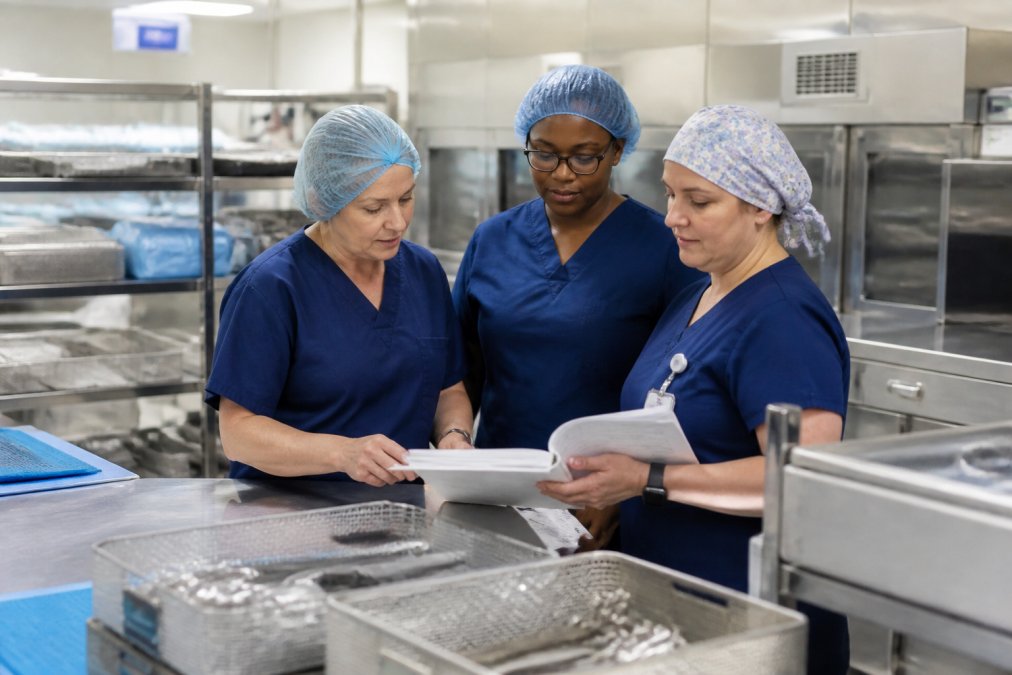
Staffing agencies specializing in small facilities understand these implementation variations and can brief incoming staff accordingly. Compliance documentation becomes critical when temporary staff are involved. Every temporary assignment should include documentation of what protocols the technician was briefed on, what equipment they were trained on, and who supervised their initial work.
Regulatory compliance for sterile processing includes adherence to standards set by the Centers for Disease Control and Prevention (CDC) and ANSI/AAMI standards for sterilization. These standards apply equally to small facilities and large ones. The difference is that small facilities often lack formal compliance tracking systems. A staffing agency relationship should include clarity about how compliance documentation will be managed and who is responsible for maintaining records.
For small facilities, compliance audits by outside consultants can be valuable. These audits identify gaps before regulatory bodies discover them. Some staffing agencies like Moab Healthcare offer this consulting capability, helping small departments understand their compliance status and address gaps systematically.
Staffing a small surgical facility or ambulatory-surgical center requires partners who understand the specific operational constraints small departments face. Mbawine Consultants brings credentialed expertise, interim management capability, and flexible staffing solutions designed specifically for small facilities navigating compliance, quality, and operational efficiency simultaneously. Their combination of temporary and permanent staffing, specialized education, and interim management support addresses the full spectrum of small facility needs. Get started with Mbawine Consultants and transform your sterile processing department from a constant staffing challenge into a strategically managed operational strength.
Temporary sterile processing technician costs vary based on assignment length, facility location, and the technician's experience level. Travel assignments typically range from $819 to $5,005 per week, while per diem rates differ by region. Staffing agencies like Mbawine Consultants and others offer flexible pricing models tailored to small facility budgets. Contact agencies directly for quotes specific to your facility's needs and timeline.
Reputable agencies verify that temporary sterile processing technicians hold current CRCST (Certified Registered Central Service Technician) or equivalent certifications before placement. Many agencies, including those specializing in perioperative staffing, conduct background checks, verify licensure, and confirm compliance with infection control protocols. When selecting an agency, confirm their vetting process includes certification verification and that staff maintain current Basic Life Support (BLS) certification as required by your facility.
A solid sterile processing staffing agency contract checklist should include: confirmation of technician certifications and credentials, onboarding and orientation timelines, equipment compatibility and training, compliance with your facility's protocols, guaranteed response times for emergency coverage, clear pricing and billing terms, cancellation policies, and liability coverage. The contract should also specify whether the agency provides interim management support, handles training for staff unfamiliar with your facility's systems, and offers flexibility for short-term or permanent placements based on your department's changing needs.
Small surgical centers can address staffing shortages through multiple strategies: partner with specialized agencies like Mbawine Consultants for interim management and temporary placements, establish relationships with multiple staffing providers for redundancy, invest in cross-training existing staff for backup coverage, and consider per diem or travel assignments for flexible short-term needs. Additionally, facilities can work with agencies that understand small-facility constraints and can provide experienced technicians who require minimal onboarding, reducing operational disruption during staffing gaps.
This article was written using GrandRanker


