

Last Updated: October 13, 2026
A sterile processing technician class prepares you to clean, sterilize, assemble, and track the surgical instruments that hospitals and surgical centers depend on every day. At Mbawine Consultants, we built our certification prep around one idea: the fastest path to a credential is flexible study that fits around your actual shift schedule. Most programs combine online coursework with supervised clinical practice, and the best ones start with the standards that govern the job itself.
The work is not glamorous, but it is essential. Every instrument that touches a patient passes through a sterile processing department first, and someone has to verify that it is clean, functional, and properly wrapped before it reaches the operating room.
Sterile processing technician is the professional title for the people who perform that work. The field is often called "central sterile" or "SPD," and employers hire for it constantly.
So what does a class actually look like? Expect a mix of textbook material, video demonstrations, and hands-on practice. You will learn instrument identification, decontamination procedure, sterilization methods, and documentation. You will also practice the workflow that moves a tray from the operating room, through cleaning, back to the sterile field.
Below, we break down the curriculum, certification requirements, program length, cost, and how to pick a class that fits your life.
The core curriculum in a sterile processing technician class covers four domains: decontamination, preparation and packaging, sterilization, and sterile storage. These domains come directly from the industry certification exam blueprint, and any credible program builds its lessons around them.
Here is what most programs cover:
The standards that shape this curriculum come from organizations like the Association for the Advancement of Medical Instrumentation and the Centers for Disease Control and Prevention's sterilization guidelines. A good class teaches you to follow those standards, not just memorize them.
Certification for a sterile processing technician is not legally required in every state, but most employers now expect it. The two most common credentials are the Certified Registered Central Service Technician (CRCST) and the Certified Instrument Specialist (CIS) designations.
To sit for the CRCST exam, you generally need a combination of classroom hours and hands-on experience. The typical pathway looks like this:
Requirements vary by certifying body and by state. Some states have their own licensure rules on top of national certification, so check your state health department before you enroll. The Occupational Safety and Health Administration also sets workplace safety rules that affect how sterile processing departments operate.
Mbawine Consultants prepares candidates for both the CRCST and the CIS exams. Our instructors hold current certifications and work in the field, so the material reflects what departments actually do, not just what a textbook says.
Most sterile processing technician programs run between a few weeks and several months, depending on format and whether you already work in the field. A fast-track online prep course can be completed in a matter of weeks. A full community college certificate program may take a semester or longer.
Your timeline depends on three things:
| Program Format | Typical Duration | Best For |
|---|---|---|
| Fast-track online prep | A few weeks | Working technicians seeking certification |
| Hybrid (online + clinical) | Several weeks to a few months | Career changers who need hands-on hours |
| Community college certificate | One semester or more | Students who want a structured, slower pace |
If you are already working 12-hour shifts on the sterile processing floor, the fast-track online format is usually the only realistic option. That is exactly why we built our prep around audio, video, and web conferencing. You study when your shift ends, not when a campus schedule says you should.
Cost for a sterile processing technician class varies widely by provider, format, and whether clinical hours are included. Because pricing changes so often, we do not publish a fixed number. Instead, ask each program three questions before you commit.
First, what does the total cost include? Tuition, exam fees, textbooks, and clinical placement are often billed separately. Second, are payment plans available? Third, does the program offer financing or deferred payment?
Mbawine Consultants offers financing options with no payment for the first 30 days, which gives you time to start the material before the first bill arrives. That structure matters for students who are paying out of pocket while working full time.
Financial aid is another lever. Many community college programs qualify for federal student aid, and some employers reimburse certification costs for current staff. Ask your manager whether your facility covers certification prep. Hospitals struggling to fill sterile processing roles often will.
Hands-on training is where classroom knowledge becomes muscle memory. You will practice wrapping instrument trays, operating sterilizers, and running biological tests under supervision. This is also where you learn the small details that separate a competent technician from a great one.
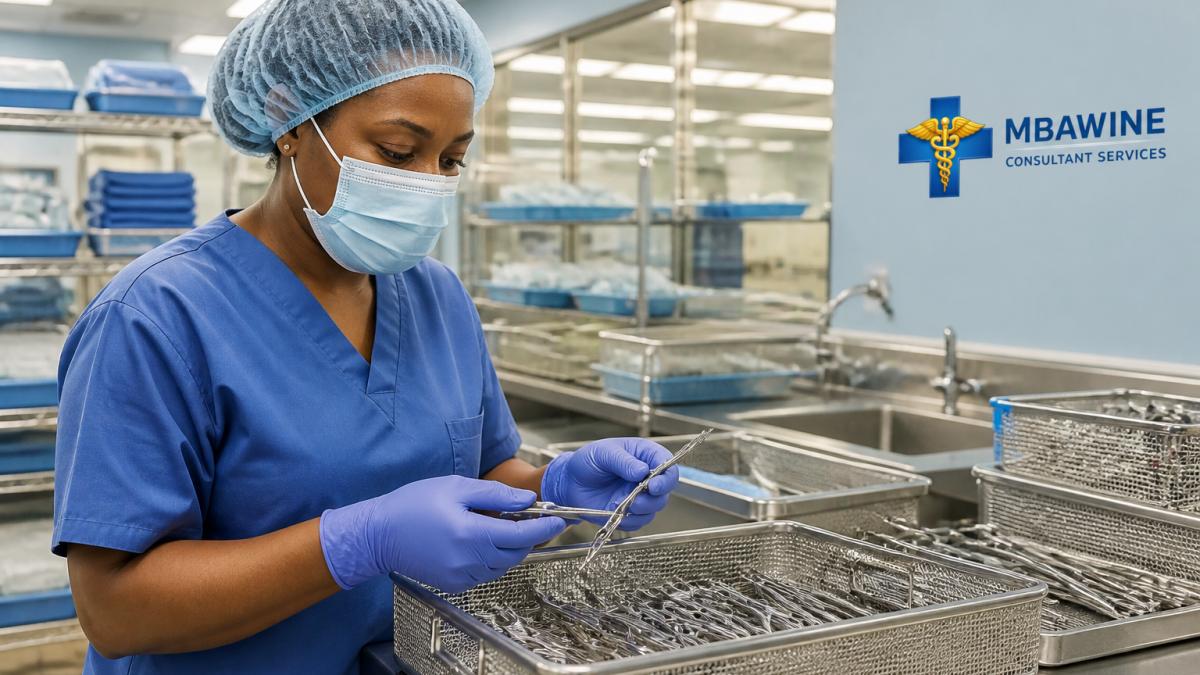
Expect to spend time in each of these areas:
Clinical hours are usually completed at a hospital or surgical center. If you are already employed in a sterile processing department, your current workplace may serve as your clinical site, which saves significant time.
Choosing the right class comes down to four factors: schedule flexibility, instructor credentials, clinical placement, and total cost. Rank them in that order if you are working full time.
Here is how we would evaluate any program:
A common mistake is choosing the cheapest option and discovering later that it lacks clinical placement. The cost of a second program is always higher than paying for the right one the first time.
The hardest part of becoming a sterile processing technician is not the material. It is finding a program that fits around a full-time shift schedule while still delivering the clinical hours your certification requires. Mbawine Consultants solves that with fast-track CRCST and CIS exam prep delivered through audio, video, and web conferencing, taught by instructors who hold current certifications and work in the field today. Our financing options include no payment for the first 30 days, so you can start learning before the first bill arrives. Enroll with Mbawine Consultants and take the most direct path to your certification.
To become a sterile processing technician in New York City, you typically need a high school diploma or equivalent, complete a sterile processing technician class, and earn certification such as CRCST through the Healthcare Sterile Processing Association (HSPA). Many employers in NYC require CRCST certification within a certain timeframe after hire. Hands-on training is often part of the program. Mbawine Consultants offers remote test preparation to help you pass the CRCST exam.
A sterile processing technician class covers decontamination procedures, instrument inspection and assembly, sterilization methods (steam, hydrogen peroxide, ethylene oxide), sterile storage, and infection control. You also learn about regulatory standards from agencies like the FDA and CDC, and how to use automated washers and sterilizers. The curriculum prepares you for the CRCST exam and real-world work in hospitals and surgical centers.
Sterile processing technician program length varies. Some certificate programs can be completed in as little as 3 to 6 months, while associate degree programs take 1 to 2 years. Many students choose accelerated online courses with hands-on clinicals to enter the workforce faster. Mbawine Consultants offers flexible remote learning that can fit around full-time work schedules.
Sterile processing technician class cost depends on the provider and format. Online self-paced programs may cost a few hundred dollars, while in-person programs with hands-on labs can range from $1,000 to $3,000 or more. Financial aid and payment plans are often available. For specific pricing on Mbawine Consultants' CRCST prep, visit their website or contact them directly.


