

Last Updated: September 25, 2026
Becoming a sterile processing technician training professional requires understanding the certification pathway, hands-on clinical requirements, and career opportunities available in healthcare facilities. At Mbawine Consultants, we guide healthcare professionals and organizations through this essential credential process. The role of a sterile processing technician, also called a central service technician, is critical to patient safety. These professionals handle surgical instruments, medical equipment, and supplies that must meet strict sterilization standards before use in operating rooms and clinical settings.
The sterile processing technician training path combines classroom education with supervised clinical hours. Most programs require completion of both components before you can sit for national certification. Understanding what's involved helps you plan your timeline and choose the right training structure for your situation.
The Certified Registered Central Service Technician (CRCST) credential is the national standard for sterile processing professionals. This certification validates your knowledge of decontamination, sterilization procedures, instrument assembly, and infection control practices that protect patient safety.
To qualify for the CRCST exam, you must meet specific education and experience requirements. Most candidates complete a formal sterile processing technician training program that covers microbiology basics, standard precautions, universal precautions, and aseptic technique. The certification exam tests your understanding of how surgical instruments are cleaned, sterilized using autoclaves, inspected for integrity, and stored in sterile environments.
Many healthcare facilities require CRCST certification as a condition of employment. The credential demonstrates you understand regulatory compliance, biomedical equipment handling, and the critical role sterile processing plays in preventing surgical site infections. Your certification shows employers and patients that you've met nationally recognized standards for this healthcare career.
Association for the Advancement of Medical Instrumentation (AAMI) standards establish the technical protocols your training will cover, including steam sterilization parameters, chemical indicators, and biological indicators used to verify sterilization effectiveness.
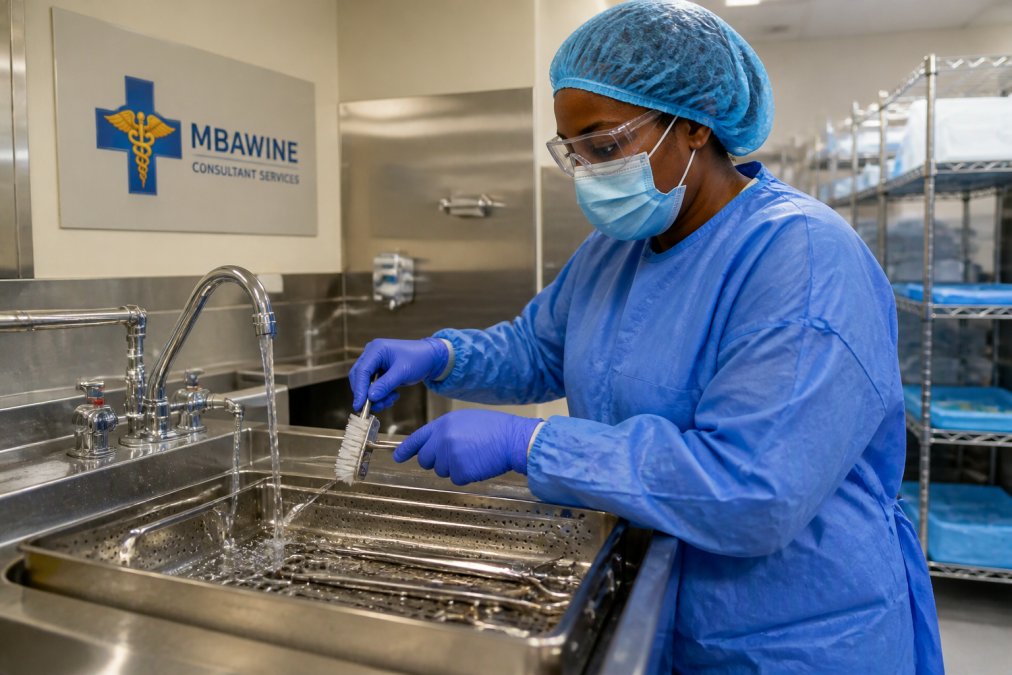
Hands-on clinical training is where sterile processing technician training becomes real. You'll work directly with surgical instruments, learn decontamination protocols, and practice the aseptic technique that prevents cross-contamination in healthcare settings.
Most formal programs require between 200 and 500 clinical hours under supervision. These hours take place in an actual sterile processing department within a hospital or ambulatory surgical facility. You'll learn to operate autoclaves, inspect instruments for damage, assemble surgical trays, and manage sterile storage areas. Clinical rotations expose you to the full scope of central service work: receiving soiled instruments, running them through the decontamination process, inspecting them under magnification, sterilizing them, and preparing them for use.
The clinical component is non-negotiable. Classroom knowledge alone doesn't prepare you for the speed, precision, and attention to detail required in a real sterile processing department. You'll see how infection control principles apply in practice, understand why each step matters, and develop the muscle memory needed to work efficiently.
Working rotating shifts in a hospital environment teaches you how sterile processing departments operate 24/7 to support surgical schedules. You'll understand the pressure of meeting turnaround times while maintaining safety standards. This real-world exposure is why employers value candidates who've completed substantial clinical hours before applying for positions.
Two main pathways exist for sterile processing technician training: formal classroom programs and apprenticeship models. Each has distinct advantages and trade-offs depending on your financial situation, work status, and learning preferences.
Classroom-based programs condense education into a structured timeline, typically 6-12 months of part-time or full-time study. You attend classes, complete clinical rotations, and finish with a credential recognized across healthcare systems. This model works well if you can afford upfront tuition, leave your current job, or study while working part-time elsewhere. The structured schedule provides clear milestones, completion dates, and often faster entry into the job market. Many classroom programs offer evening or weekend classes specifically designed for working professionals, allowing you to maintain income while training.
Apprenticeship programs blend on-the-job training with related classroom instruction through a formal apprenticeship agreement. You work in a sterile processing department while earning a wage and your employer sponsors your education at no cost to you. Apprenticeships typically take 12-24 months because you're learning while maintaining productivity standards and meeting departmental needs. This model suits working professionals who need income continuity and prefer learning in their actual work environment. A major advantage is employer commitment: many facilities guarantee employment upon certification completion, eliminating post-training job search uncertainty. You also build relationships with colleagues, understand facility-specific workflows, and often receive mentorship from experienced technicians.
Direct comparison of key factors:
The choice depends on your circumstances. If you need immediate income, have employer support, and can manage 12-24 months of juggling work and study, apprenticeship maximizes financial benefit and job security. If you want to complete training quickly, can afford upfront costs, and prefer intensive classroom instruction, a formal program accelerates your path to certification and job entry.
Many facilities offer hybrid models: you work part-time in their sterile processing department while attending classroom training, with the employer subsidizing tuition costs. Ask prospective employers whether they sponsor employee training or offer tuition reimbursement, as this can significantly reduce your out-of-pocket expense while maintaining part-time income.
Getting started with sterile processing technician training involves several key steps. Understanding the enrollment process helps you move forward efficiently.
Step 1: Research programs in your area. Look for accredited training providers that offer classroom instruction and clinical placement. Verify they cover CRCST certification requirements. Programs should include modules on decontamination procedures, sterilization verification, instrument assembly, and infection control.
Step 2: Check admission requirements. Most programs require a high school diploma or GED. Some prefer healthcare experience, but it's not always mandatory. You'll complete an application and may be interviewed to assess your motivation and fit.
Step 3: Arrange clinical placement. Programs partner with hospitals and surgical facilities to provide clinical rotations. Confirm that your program has established relationships with facilities in your area where you can complete required hours.
Step 4: Plan your schedule. Determine whether you'll pursue classroom training full-time, part-time while working, or through an apprenticeship model. Be realistic about your ability to balance work, study, and clinical hours.
Step 5: Explore financing options. Training costs vary, but many programs offer payment plans or financing. Some employers sponsor employee training, especially if you're already working in their sterile processing department. Verify what financial support is available before committing.
Mbawine Consultants offers flexible remote learning options for CRCST preparation, allowing you to study audio and video modules from home while maintaining your work schedule. This flexibility addresses a common challenge: full-time sterile processing staff working 12-hour shifts struggle to attend traditional classroom programs during business hours.
Completing sterile processing technician training opens doors to healthcare employment with clear advancement pathways and competitive compensation. Understanding realistic salary ranges and career progression helps you evaluate whether this path aligns with your financial and professional goals.
Entry-level compensation and job availability
Entry-level sterile processing technicians earn competitive compensation, with variation based on facility type and location.
Mid-career advancement: Lead technician and supervisor roles
Advanced credentials and leadership pathways
Factors affecting salary growth
Long-term career stability
Most sterile processing technician training programs take 6 to 12 months to complete. CRCST certification requires a minimum of 400 hours of clinical experience in a healthcare facility, which can be completed while enrolled in a structured program. With flexible remote learning options for exam preparation, working professionals can often complete certification within 12 months while maintaining full-time employment on the sterile processing floor.
CRCST certification requires candidates to complete 400 hours of documented clinical experience in sterile processing, pass an examination administered by the International Association of Healthcare Central Service Material Management (IAHCSMM), and maintain current CPR certification. Applicants must also have a high school diploma or GED.
Yes. Audio and video-based learning modules allow you to study during breaks, commutes, or off-hours. Many professionals complete exam preparation while working 12-hour shifts by using flexible, self-paced materials. However, the 400 clinical hours required for CRCST certification must be completed in an actual healthcare facility during your regular work schedule, so coordination with your employer is essential.
CRCST (Certified Registered Central Service Technician) is the primary entry-level certification for sterile processing professionals and covers decontamination, sterilization, instrument assembly, and infection control. CIS (Certified Instrument Specialist) is an advanced certification focusing specifically on surgical instrument knowledge and assembly. Most technicians pursue CRCST first; CIS is a career-advancement credential for those specializing in instrument management.


