

Last Updated: August 15, 2026
Small healthcare facilities face unique operational pressures: tighter budgets, leaner staffing, and razor-thin margins for error. Yet sterilization standards don't bend for facility size. Sterile processing training for small facilities is essential to your survival. The difference between a thriving facility and one that struggles often comes down to competency. When your central sterile processing department operates efficiently, everything downstream works. When it doesn't, you face delayed surgeries, compliance violations, and patient safety risks.
Unlike large hospital systems with dedicated training departments, small facilities need solutions that fit your actual constraints: limited staff, tight budgets, and the need to keep operations running while people learn. Generic programs built for 500-bed hospitals don't translate. You need sterile processing training for small facilities that acknowledges your reality: your team can't attend week-long off-site seminars, you can't afford to pull multiple people simultaneously, and you need instructors who understand sterilizing 40 trays a day instead of 400.
Sterile processing training for small facilities starts with a simple premise: meet your team where they are, literally and figuratively. This means flexible delivery models that don't require trainees to abandon their responsibilities for weeks.
A solid program includes three core components: foundational knowledge through audio and video modules accessible during breaks or after shifts; hands-on practice with actual instrumentation in your facility; and competency validation through assessment before certification.
The timeline matters. Large facilities can send people to intensive multi-week programs because they have backup staff. Small facilities can't. A realistic program spreads content across 6-12 weeks with 5-8 hours per week of structured learning. This allows your team to absorb material, apply it immediately, and troubleshoot problems in real time.
Mbawine Consultants structures programs specifically for small-facility realities. You get access to classes through audio and video conferencing, so your lead technician can participate without traveling. Your newer staff can watch modules on their own schedule. Your manager can monitor progress without micromanaging.
The core curriculum for sterile processing training for small facilities must cover foundational competencies with emphasis on small-volume operation realities. This includes medical terminology specific to surgical instrumentation, basic microbiology as it relates to infection control, and aseptic technique principles that prevent contamination.
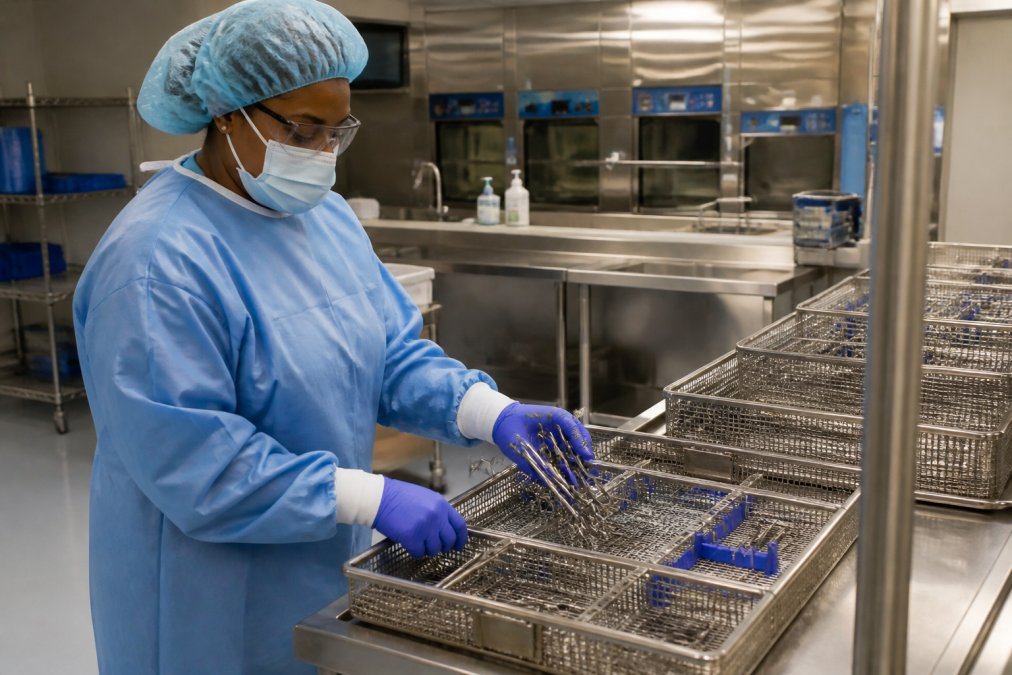
Your coursework should address instrument decontamination in detail, where most small facilities struggle due to older equipment or improvised workflows. You need to understand how different instrument materials respond to cleaning, why water quality matters, and what happens when you skip steps. High-level disinfection protocols receive significant attention because many small surgical facilities use this as an alternative to full sterilization, and the margin between effective disinfection and inadequate disinfection is thin.
Sterilization protocols form the backbone of the curriculum. Your team needs to understand autoclave operation: steam saturation, temperature maintenance, drying cycles, and what to do when parameters drift. They need to know how to package instruments so they remain sterile during storage and transport, and understand quality assurance testing with biological and chemical indicators.
A critical element often overlooked is regulatory compliance specific to your facility size. Small clinics have different documentation requirements than hospitals. Your reprocessing unit may fall under different oversight depending on whether it's in-house or third-party. The curriculum should clarify what applies to you rather than burying small facilities in hospital-scale requirements.
Practical coursework includes hands-on practice with actual surgical instrumentation. Your team handles instruments, learns proper assembly, practices decontamination procedures, and operates the sterilization equipment you actually use.
AAMI standards for sterile processing establish the baseline for safe, effective sterilization. AAMI (Association for the Advancement of Medical Instrumentation) publishes standards governing everything from steam sterilization parameters to sterilization container design. These aren't optional guidelines; they're the industry standard that regulators reference.
For small facilities, understanding AAMI standards means knowing which ones apply to your operation. A 10-bed surgical center follows the same sterilization standards as a 400-bed hospital, but implementation differs. You're running a lean operation where one person might manage sterilization, storage, and distribution.
Critical AAMI standards include those covering steam sterilization (parameters, cycle validation, load density), low-temperature sterilization alternatives, and sterilization container systems. Your training should clarify what these standards require, why they exist, and how to verify compliance in your environment.
Small facilities often struggle with documentation. AAMI standards require records of sterilization cycles, biological testing, and equipment maintenance. For a small facility, this might mean a simple spreadsheet rather than enterprise software. The standard is the same; the infrastructure differs.
Understanding AAMI standards also means recognizing when you need external expertise. If your autoclave shows drift in temperature or steam saturation, AAMI standards tell you when to stop using it and call for service. Your training should build confidence in these decisions.
The question of sterile processing training duration for small facilities has no one-size-fits-all answer, but realistic timelines matter more than compressed schedules. A typical entry-level program runs 6-12 weeks when structured for working professionals, assuming 5-8 hours per week of combined learning, hands-on practice, and assessment.
Why not faster? Compressed timelines create false competency. A technician who rushes through material in three weeks has memorized steps, not internalized principles. When something goes wrong, they're lost. Slower, distributed learning sticks better.
For small facilities, flexibility in scheduling is non-negotiable. Your team can't all attend class simultaneously. Audio and video modules let individual staff members learn on their own schedule. Webinar sessions accommodate different shifts. Hands-on practice happens in your facility with your equipment.
Mbawine Consultants offers flexible learning through audio, video, and web conferencing formats that recognize your operational constraints. A technician working 12-hour shifts can watch a 20-minute video module on their break. A manager can join a live webinar from their office.
The assessment phase typically takes 2-4 weeks after coursework ends. Your team applies what they've learned in real scenarios, demonstrates competency with actual instruments and equipment, and passes written assessments verifying knowledge retention.
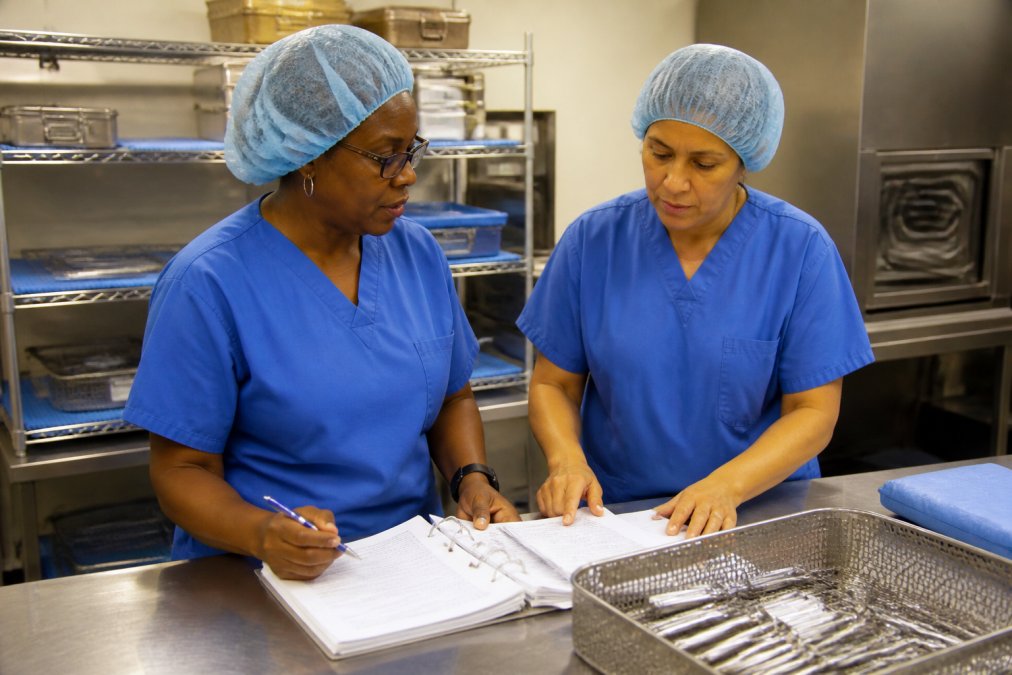
A sterile processing competency assessment checklist serves as your verification tool that staff have actually learned what they need to know. This checklist goes beyond a written test; it documents observed competency in real tasks.
Your assessment should verify these core competencies: proper use of personal protective equipment and biohazard safety protocols; correct decontamination procedures including water quality verification; proper handling and assembly of surgical instrumentation; correct packaging and labeling for sterilization; autoclave operation including parameter verification and cycle documentation; recognition of sterilization failures and appropriate response; quality assurance testing; proper storage and distribution of sterile instruments; documentation and record-keeping; and understanding of infection control principles.
Each competency should be assessed through written knowledge checks, practical demonstration, and observation during actual work. A technician might pass a written test on autoclave parameters but fail the practical demonstration if they can't properly load a chamber.
For small facilities, assessment often happens with your manager or an external consultant observing. The goal is ensuring your team actually knows what they're doing. When assessment reveals gaps, you address them before mistakes affect patient safety.
Document everything. Your assessment records become evidence that staff are competent, protect your facility during compliance audits, and show regulators that you take training seriously.
Certification requirements vary depending on which credential your staff pursues. The two primary certifications are the Certified Registered Central Service Technician (CRCST) and the Certified Instrument Specialist (CIS).
The CRCST represents the foundational credential. Eligibility typically requires a high school diploma plus documented work experience in central sterile processing. The CRCST exam covers medical terminology, instrument identification, sterilization methods, infection control, regulatory compliance, and quality assurance. Most people prepare for 3-6 months before attempting the exam.
The CIS credential focuses specifically on instrument handling, assembly, and maintenance. It's often pursued by technicians who specialize in complex instrumentation or seek supervisory roles.
For small facilities, having at least one CRCST on staff strengthens your credibility with surgeons, regulatory bodies, and referring physicians. For staff members, certification opens doors to advancement and higher pay.
Career advancement from sterile processing often leads toward management roles. A Certified Healthcare Leader (CHL) credential positions someone to manage a central sterile processing department or move into broader healthcare administration.
Regulatory compliance for small clinics differs in practice from hospital-scale compliance, though underlying standards remain the same. Your facility must follow the same sterilization standards, but your documentation might be simpler. Your infection control protocols must be equally rigorous, but implementation fits your volume.
Small facilities often operate under different regulatory oversight depending on structure. An ambulatory surgical center follows different rules than a hospital. A third-party reprocessing unit has different obligations than in-house processing. Your training should clarify what applies specifically to your facility.
Common compliance challenges for small facilities include inadequate documentation, equipment maintenance gaps, and staff turnover disrupting continuity. A training program designed for small-facility realities addresses these specific pain points. It teaches your team how to document efficiently without creating administrative burden, emphasizes preventive equipment maintenance, and builds redundancy in knowledge.
Scalability matters as your facility grows. A training program that works for 8 people needs to adapt as you hire more staff. Mbawine Consultants designs programs that scale: your initial cohort gets intensive training, but your onboarding process for new hires remains efficient and consistent.
The regulatory environment continues evolving. Your initial training shouldn't be your only training. Staff need access to updates on new standards, new equipment, and changing best practices.
Small-facility sterile processing training is the foundation of safe surgical care and regulatory compliance. The challenge is finding training that acknowledges your constraints without compromising rigor. At Mbawine Consultants, we've built our program specifically for facilities like yours. Our flexible remote learning through audio, video, and web conferencing means your team learns without abandoning their responsibilities. We offer no payment for the first 30 days, so you can evaluate whether our approach fits your facility before committing financially. Enroll today and transform your sterile processing department into a competitive advantage.
Sterile processing training duration varies based on the program format and learner pace. Full-time intensive programs may take 6-12 weeks, while part-time or hybrid models allow working professionals to complete training over several months. Remote audio and video modules offer flexibility for staff working 12-hour shifts, allowing them to progress at their own pace without sacrificing their current roles. Most facilities find that combining self-paced learning with hands-on clinical practice optimizes both time and competency development.
A comprehensive sterile processing competency assessment checklist covers infection control protocols, instrument decontamination techniques, autoclave operation, aseptic technique, packaging and storage procedures, surgical instrumentation identification, quality assurance processes, and regulatory compliance requirements. Small facilities should assess staff on both technical skills and knowledge of facility-specific protocols. Assessments should occur during onboarding and annually thereafter, with documentation maintained for compliance audits. This ensures all team members meet industry standards and your facility's operational requirements.
AAMI standards for sterile processing establish best practices for sterilization, instrument handling, and infection control. Small facilities can maintain compliance by implementing documented protocols aligned with AAMI guidelines, conducting regular staff training and competency assessments, maintaining equipment calibration records, and performing quality assurance testing on sterilization processes. Many small facilities benefit from interim management support or consulting services to conduct compliance audits and develop facility-specific procedures that meet AAMI standards without requiring extensive capital investment or staffing changes.
Remote training is effective for building knowledge foundation, medical terminology, infection control principles, regulatory requirements, and procedural understanding. However, hands-on clinical practice remains essential for developing proficiency with surgical instrumentation, autoclave operation, and decontamination techniques. The most effective approach combines remote audio and video modules for flexible learning with in-person clinical externship opportunities. This hybrid model allows working professionals to study on their schedule while ensuring they develop the practical skills required for patient safety and compliance.
This article was written using GrandRanker


