

Last Updated: October 20, 2026
Sterile processing is the behind-the-scenes system that makes safe surgery possible. It covers every step between a dirty instrument and a ready-to-use surgical tray: cleaning, inspection, assembly, sterilization, storage, and delivery to the operating room.
The job is not just running an autoclave. It is a chain of custody. One weak link, and the whole chain fails.
A modern department handles five core duties:
Each duty connects to the next. Skip a step, and sterility is a guess, not a fact.
The sterile processing workflow is a one-way path. Dirty items move in one direction, and sterile items never cross back. Facilities call this the clean-to-dirty flow, and it protects patients from cross-contamination.
The workflow breaks into three stages. Each stage has its own room, its own rules, and its own risks.
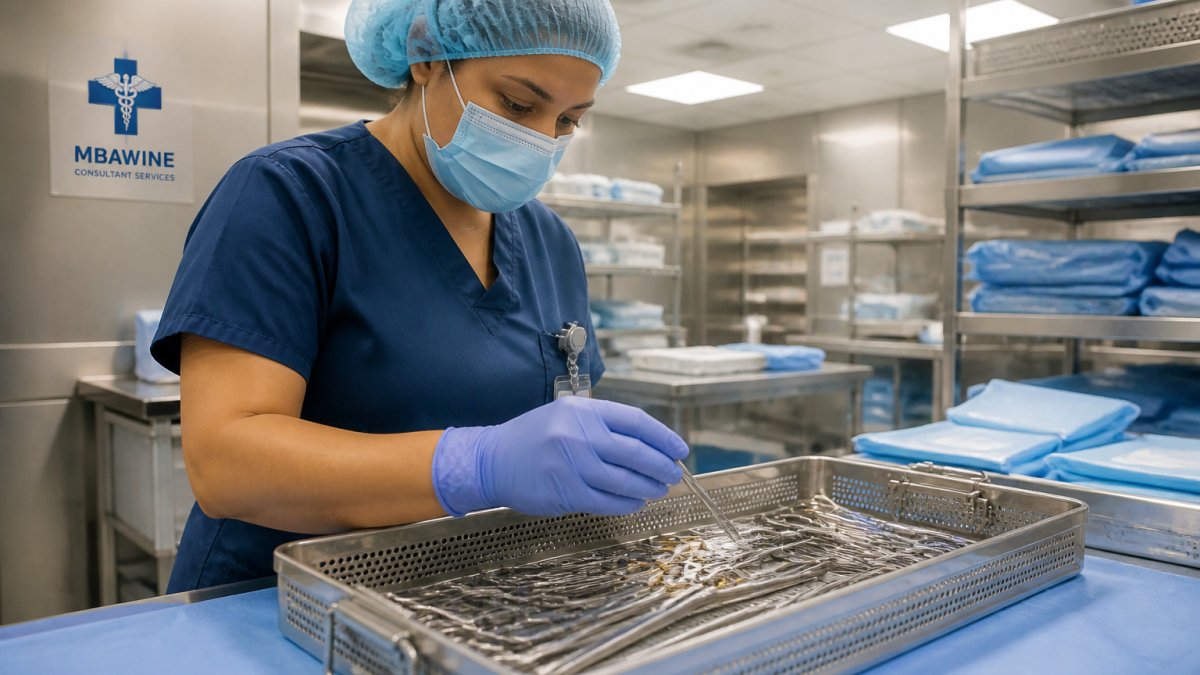
Decontamination starts the moment instruments leave the OR. Staff wearing full protective gear receive the items in a separate room.
The steps are:
A common mistake is letting instruments dry out before cleaning. Dried blood is far harder to remove. Many facilities also treat cleaning as the low-skill job. It is the opposite. If cleaning fails, sterilization cannot save the instrument.
Clean instruments move to the assembly area. Technicians inspect each item under magnification, test moving parts, and confirm it works. Damaged tools go out for repair.
Next comes assembly. Technicians build trays against a written list, called a count sheet. Every item, every position, every wrap must match.
Then the tray enters the sterilizer. Staff load it correctly, run the right cycle, and record the results. A failed cycle means the whole load gets reprocessed, never released.
Sterile trays need a clean, dry, temperature-controlled space. Staff check each package for tears or broken seals before it leaves. They also track expiration dates and rotate stock.
Delivery to the OR closes the loop. The right tray, at the right time, in the right condition. That is the whole goal of the sterile processing workflow.
CRCST certification is a professional credential for central service technicians, issued after passing a national exam. It signals that a technician knows the standards behind every step of reprocessing.
The credential matters for three reasons:
Certification requires continuing education to stay current. That keeps technicians tied to updated standards, not habits from years ago.
Sterile processing technician training mixes book learning with supervised practice. Most programs cover anatomy basics, microbiology, instrument names, decontamination, sterilization methods, and safety rules.
The classroom half is only part of it. The floor teaches what a textbook cannot: how to handle a 40-piece tray under time pressure, how to read a count sheet fast, and how to speak up when something looks wrong.
What most guides miss is the schedule problem. Many trainees work full-time while studying. That is why flexible formats matter. Our CRCST and CIS test preparation runs through audio, video, and web conferencing, so students can study from home around their shifts.
Training does not end at hire. New technicians should expect weeks of supervised work before handling trays alone.
Sterile processing jobs in New York, NY, are steady and competitive. Hospitals, ambulatory surgery centers, and third-party reprocessing units across the five boroughs all hire technicians, and demand stays consistent because surgery never stops.
What do employers look for? Three things stand out:
Pay varies by facility, shift, and experience, so we do not quote figures here. Check current postings for real numbers. Night and weekend shifts often pay more, and many facilities offer shift differentials.
For technicians aiming at leadership, the path runs through credentials like the Certified Healthcare Leader (CHL). Management roles reward people who understand both the workflow and the paperwork behind it.
Even well-run departments slip. These are the mistakes we see most often, and what each one costs.
| Mistake | Why It Happens | The Fix |
|---|---|---|
| Skipping cleaning verification | Time pressure | Check every load, every shift |
| Improper tray assembly | Rushed count sheets | Double-check against the list |
| Poor documentation | Logs treated as paperwork | Log at the moment, not later |
| Wet or damaged packaging | Storage issues | Inspect before every release |
| Dirty-to-clean crossover | Room layout or traffic flow | Enforce one-way movement |
The pattern behind all five is the same. People cut corners when they feel rushed. The fix is not more reminders. It is a workflow that makes the right step the easy step.
Staffing gaps make this worse. When a department is short-handed, temps who do not know the facility's protocols can create new risks. That is why staffing solutions should be built around people who actually know sterile processing, not warm bodies filling a shift.
Sterile processing carries real weight. Every tray you assemble and every log you sign protects a patient you will never meet. The workflow rewards discipline, and the credentials reward people who take it seriously.
If you are preparing for CRCST or CIS certification, or your facility needs interim management and trained staff, Mbawine Consultants can help. The programs offer fast-track test preparation, remote learning through audio and video, and staffing built on real sterile processing knowledge. Financing options include no payment for the first 30 days. Enroll with Mbawine Consultants and build a department, or a career, that holds up under pressure.
The sterile processing workflow runs through decontamination, inspection and assembly, sterilization, and sterile storage before distribution. Each step has documented handoffs, and skipping a verification point creates traceability gaps. Most departments use a one-way flow so dirty instruments never cross clean zones. If you are preparing for a CRCST certification exam, expect questions on workflow sequence and the consequences of breaching separation.
Most New York employers look for a high school diploma, completion of a sterile processing technician training program, and CRCST certification. Training covers instrument identification, decontamination, sterilization methods, and infection control. After hire, many facilities provide facility-specific onboarding. For sterile processing jobs in New York, NY, candidates with certification and hands-on training move through screening faster because hospitals and ambulatory-surgical centers need documented competency before staff touch instrument sets.
CRCST certification covers the full sterile processing role: workflow, decontamination, sterilization, documentation, and safety. CIS certification focuses on surgical instrumentation, including specialty sets, inspection, and assembly. Technicians often earn CRCST first, then add CIS to work with complex orthopedic, neuro, or cardiovascular trays. Check current eligibility and renewal requirements with the certifying body before you enroll in prep coursework.
Timelines vary. Some technicians complete a training program in a few months and sit for CRCST certification shortly after. Others train on the job and test later. Full-time work while studying is common, so self-paced audio and video modules help candidates keep up without missing shifts. Confirm the hours your state or employer requires for eligibility, and build a study schedule around your actual work rotation.


