

The integrity of a surgical suite is only as robust as the technical precision maintained within its sterilization core, yet many modern institutions continue to treat their reprocessing units as peripheral utilities rather than essential clinical cornerstones. Achieving comprehensive sterile processing department optimization requires a fundamental shift in perspective that views every instrument tray as a critical link in the chain of patient safety and institutional liability. It's no longer sufficient to merely meet the baseline requirements; the professional standard for 2026 demands a proactive commitment to technical mastery and systematic oversight.
You likely understand the profound frustration of navigating high staff turnover while simultaneously facing the pressure of increased surgical site infections and the looming threat of regulatory non-compliance during Joint Commission audits. It's a precarious position where the lack of certified technicians directly undermines the efficiency of the operating room and the safety of the patient. This article provides a definitive framework to transform these operational vulnerabilities into strengths through standardized education and strategic staffing initiatives. We will explore the synergy of interim leadership and professional consulting to ensure your facility achieves a streamlined workflow and a fully certified workforce, ultimately reducing operational costs while upholding the highest standards of medical excellence.
The modern healthcare facility operates as a complex ecosystem where the Central sterile services department (CSSD) serves as the engine of clinical viability. Without precise sterile processing department optimization, the logistical flow of the entire institution suffers, leading to a cascade of operational inefficiencies that extend far beyond the basement walls. The correlation between department throughput and Operating Room (OR) performance is absolute. A single missing or improperly processed instrument can halt a high-value surgical procedure, resulting in thousands of dollars in lost revenue for every minute of idle theater time. In the fiscal environment of 2026, where healthcare margins are increasingly thin, these avoidable delays represent a significant threat to institutional solvency.
Beyond the immediate loss of revenue, the legal and clinical risks associated with suboptimal processing are profound. Rigorous sterilization standards aren't merely suggestions; they're the primary defense against litigation and devastating institutional reputational damage. An optimized department establishes a foundation of public trust, ensuring that every patient who enters the facility is protected by a systematic, fail-safe process of instrument decontamination and sterilization. High-performing departments don't just react to surgical needs; they anticipate them through meticulous planning and expert professional consulting.
Biofilm management remains one of the most critical technical challenges in modern reprocessing. When microscopic biological layers persist on complex instrumentation, they become a primary vector for preventable post-operative complications and patient harm. Standardized processing protocols, enforced by a certified and highly trained workforce, ensure that these pathogens are neutralized before they can impact patient outcomes. In broader environmental management contexts, specialized technologies from QM Environmental International B.V. demonstrate how advanced microbial products can effectively mitigate bioburden risks. It's estimated by various industry studies that the financial impact of a single surgical site infection can cost a hospital upwards of $30,000 in additional care and extended stays, directly eroding the facility's operational margins.
Transitioning from a state of reactive maintenance to a culture of continuous compliance is essential for surviving unannounced inspections from the Joint Commission or CMS. Accuracy in sterilization logs and biological indicator documentation is non-negotiable in a high-stakes environment. Institutions must move away from the high-stress "scramble" that often precedes an audit and instead adopt a model of persistent excellence. This proactive approach ensures that every cycle is documented with precision, shielding the institution from the punitive measures, heavy fines, and potential loss of accreditation that follow regulatory non-compliance. Beyond clinical audits, maintaining the security and integrity of these digital records through ISO 27001 implementation services is a critical component of modern organizational resilience.
True sterile processing department optimization isn't achieved through incremental adjustments but through the rigorous application of Lean and Six Sigma methodologies. These frameworks allow administrators to identify waste, minimize variation, and establish a predictable flow of instrumentation from the point of use back to the sterile field. By mapping the value stream of every tray, facilities can pinpoint specific bottlenecks that compromise surgical schedules. This systemic approach transforms the department into a precision-engineered hub of clinical support.
Optimizing the physical layout is equally vital to preventing cross-contamination and enhancing ergonomic efficiency for technicians. A well-designed department ensures a unidirectional flow that strictly separates soiled and clean areas. Integrating automated tracking systems further refines this process by providing real-time visibility into the location and status of every instrument. This technology significantly reduces the incidence of lost items and assembly errors, which are frequent contributors to operating room delays. To support the digital infrastructure required for such systems, MEDITIL provides tailored IT solutions specifically designed for the healthcare sector.
The lifecycle of a surgical instrument begins with the critical checkpoints of manual cleaning and ultrasonic phases. Technicians must strictly adhere to validated CDC Sterilizing Practices to ensure bioburden is completely removed before sterilization. Standardizing tray assembly is a prerequisite for ensuring instrument functionality and completeness. To maintain institutional excellence in 2026, biological and chemical indicator protocols must be executed with absolute precision, providing documented proof that every load has met the required parameters for sterility.
Effective decontamination in these phases relies heavily on high-quality water and efficient waste disposal systems. While hospitals focus on clinical standards, industrial sectors like mining, oil and gas, and the military utilize similar principles for large-scale waste management; you can learn more about these specialized wastewater treatment solutions and the equipment required to maintain them.
Modern departments increasingly rely on data analytics to identify hidden bottlenecks in instrument turnover. These insights allow leadership to make informed decisions regarding equipment procurement and staffing adjustments. Implementing electronic Instructions for Use (IFU) management systems ensures that technicians always have access to the most current manufacturer requirements, reducing the risk of processing errors. For facilities seeking to modernize these technical workflows, you can explore our sterile processing consulting services to develop a customized roadmap for sterile processing department optimization. Mastering these complex systems requires a workforce that's both technically proficient and professionally certified. If you're ready to elevate your team's expertise, consider how you might enroll in advanced technical training to secure your department's future.
While the previous sections established the methodological and economic frameworks for institutional excellence, the ultimate success of any sterile processing department optimization initiative rests upon the technical proficiency and professional commitment of the individual technician. Many facilities continue to rely on informal, legacy-based on-the-job training, yet this approach often perpetuates non-standardized practices and historical errors that compromise patient safety. In contrast, comprehensive certification preparation provides a rigorous understanding of microbiology, surgical instrumentation, and the complex physics of sterilization. This foundational knowledge is essential for reducing mechanical failures and preventing the premature degradation of expensive surgical assets, which frequently occurs due to improper handling or incorrect chemical exposure during the decontamination phase.
Investing in professional education serves as a powerful deterrent to the high staff turnover rates that plague the industry. When technicians are treated as skilled clinical professionals rather than clerical laborers, their engagement with institutional standards increases significantly. A recent study on Lean Six Sigma for SPD Optimization highlights that process improvements only remain sustainable when the workforce possesses the advanced technical mastery to execute them consistently. By fostering a culture of continuous learning, healthcare leaders transform their reprocessing units from high-turnover cost centers into stable, high-performance departments capable of meeting the demands of modern surgery.
The curriculum requirements for modern sterile processing professionals are increasingly rigorous, reflecting the extreme complexity of 2026 medical technology. Certification through recognized bodies like HSPA or CBSPD ensures that technicians understand the intricate relationship between biofilm eradication and successful patient outcomes. Beyond technical mastery, these credentials instill a sense of professional advocacy and purpose, empowering staff to identify and halt unsafe practices before they ever reach the sterile field. For facilities seeking to elevate their internal standards, it's vital to prepare for the CRCST exam with our specialized classes, which bridge the gap between basic task completion and advanced clinical oversight.
The national shortage of certified technicians requires flexible educational pathways that accommodate the demanding schedules of working professionals. Online sterile processing technician programs offer a robust alternative to traditional classroom settings, ensuring that training remains aligned with the latest healthcare sterilization standards without disrupting daily department operations. This accessibility allows entry-level staff to transition into advanced roles, creating a clear pathway for professional growth within the institution. Ultimately, rigorous education transforms a technician into a guardian of public safety, ensuring that every instrument delivered to the operating room meets the highest possible standard of clinical integrity.
The persistent national shortage of certified sterile processing technicians has created a precarious operational climate where institutional excellence is frequently compromised by labor instability. Traditional generalist staffing agencies often don't provide the specialized expertise required for complex reprocessing tasks, leading to increased error rates and regulatory vulnerabilities. In contrast, strategic sterile processing department optimization necessitates a strategic alliance with specialized staffing providers who understand the high-stakes nature of the surgical environment. Much like how Broadway Security Services provides specialized protection for high-value business operations, these medical professionals arrive with the technical mastery required to integrate seamlessly into existing workflows, ensuring that patient safety remains uncompromised during periods of high surgical volume or internal transition. By prioritizing specialized expertise over generalist labor, facilities can achieve a more sustainable model of sterile processing department optimization that survives the pressures of the modern healthcare market.
Evaluating the return on investment for specialized staffing requires a shift away from simple hourly rate comparisons toward a broader assessment of clinical outcomes and OR throughput. Generalist staff often require extensive on-site training, which consumes the time of your existing senior technicians and slows the overall production cycle. Specialized interim professionals mitigate these hidden costs by maintaining high productivity from their first shift, effectively shielding the facility from the financial repercussions of surgical delays and instrument-related complications. It's a proactive approach that recognizes the department's human capital as its most vital asset. To further protect your facility's financial health through optimized administrative processes, you can check out Integrity Statements for professional billing and statement solutions.
An interim manager provides a critical objective lens during the first 90 days of an engagement, conducting a comprehensive audit to identify cultural and technical deficiencies. This leadership model focuses on establishing rigorous Key Performance Indicators (KPIs) that track both staff productivity and the quality of processed trays, providing a data-driven foundation for long-term improvement. By mentoring existing personnel, interim leaders ensure that the department's future leadership is prepared to uphold these elevated standards once the transition period concludes. This mentorship doesn't just fill a vacancy; it builds a foundation for permanent institutional growth. For those in the pharmaceutical and biotech sectors, achieving this level of operational excellence often involves partnering with APS Compliance Consultants Inc. to navigate complex GMP, Health Canada, and FDA validation requirements.
Operational continuity is often threatened by unexpected equipment failures or sudden surges in procedural demand, situations that can lead to catastrophic OR shutdowns if not managed with precision. Utilizing 24/7 emergency staffing allows an institution to maintain its commitment to public safety without exhausting its permanent workforce. For a deeper analysis of these strategies, consult our Emergency Sterile Processing Staffing: A Comprehensive Guide to Crisis Management. To begin the process of securing a technically proficient workforce for your facility, you may enroll in our professional staffing and education programs to ensure your team meets the highest industry standards.
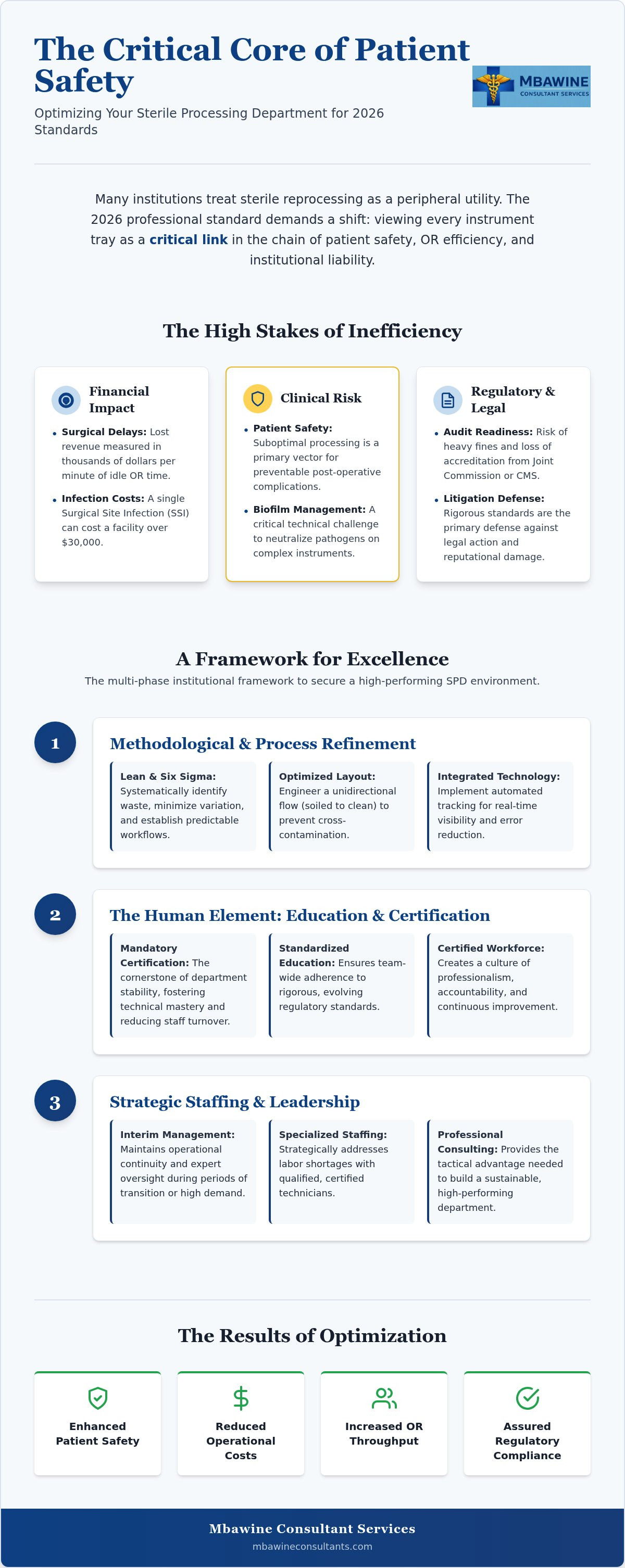
To illustrate the practical application of these principles, consider the transformation of an urban surgical center facing critical operational failure. The facility initially presented with a certification rate well below industry requirements and a consistent backlog of unsterilized trays that forced frequent cancellations of elective procedures. Root causes were identified as a combination of fragmented on-the-job training and a lack of standardized leadership oversight. By initiating a multi-phase strategy for sterile processing department optimization, the institution moved from a state of reactive crisis to one of proactive clinical excellence.
Success in such high-stakes environments isn't accidental; it's the result of a deliberate alignment between technical mastery and institutional strategy. The following phases outline how professional intervention can reset the trajectory of a struggling department and ensure long-term stability.
The intervention began with a baseline audit of existing staff technical skills and certification status. It's impossible to rectify systemic failures without a clear understanding of the current knowledge gaps. The facility partnered with specialized consultants to enroll your team in our comprehensive certification programs, ensuring every technician received instruction aligned with HSPA and CBSPD standards. This educational foundation wasn't merely about passing an exam. It established a common technical vocabulary and a shared commitment to the guardian role that technicians play in patient safety.
Simultaneous with the educational rollout, the facility introduced interim management to oversee the implementation of new protocols. This leadership reset focused on redesigning the workflow to eliminate redundant steps in the decontamination-to-sterilization lifecycle. By applying Lean principles, the department reduced its average tray turnover time significantly within the first six months of the intervention. The transformation concluded with the establishment of a culture characterized by academic and professional reliability, where staff members viewed themselves as essential clinical partners rather than peripheral support.
The results of this professional intervention were both immediate and enduring. Within one year, the department achieved near-universal certification among full-time staff. Operating Room satisfaction scores improved as instrument-related delays were virtually eliminated. This allowed the facility to increase surgical throughput without adding physical theater space. Sustaining these gains requires a persistent commitment to ongoing professional development and the periodic use of specialized consulting to audit performance against evolving 2026 standards.
While sterile processing is a highly specialized clinical function, the overall cleanliness of the facility remains a foundational requirement for safety; professional services such as Way Beyond Cleaning offer the expert commercial maintenance necessary to uphold these high institutional standards.
The path toward comprehensive sterile processing department optimization requires a dual commitment to technical precision and professional development. By standardizing workflow methodologies and prioritizing the certification of the workforce, institutions can effectively mitigate clinical risks while maximizing operational throughput. This commitment to quality often extends to the broader facility maintenance, where providers like BeVa Cleaning Solutions ensure that the entire professional environment remains clean and compliant. The transition from a reactive, crisis-driven environment to one of systematic excellence is only possible through the integration of rigorous education and expert leadership oversight. These elements create a robust framework that supports both patient safety and institutional solvency, ensuring that every instrument processed meets the highest clinical standards.
Mbawine Consultant Services stands as a dedicated guardian of these industry standards, serving as an authorized provider of CRCST and CBSPD preparation and a national leader in specialized sterile processing interim management. We possess a proven track record of improving department compliance and efficiency, providing the necessary bridge between entry-level requirements and advanced technical mastery. It's time to elevate your facility's operational integrity. Secure the future of your department by enrolling in professional sterile processing classes today. Embracing these high-level standards ensures that your facility remains a reliable pillar of public safety and clinical integrity in 2026 and beyond.
The primary goals of sterile processing department optimization are to enhance patient safety, maximize operating room throughput, and ensure full regulatory compliance. By standardizing workflows from decontamination to sterilization, facilities reduce the risk of surgical site infections and eliminate costly instrument-related delays. This process also focuses on workforce stability through professional certification and the implementation of Lean methodologies to minimize waste and improve ergonomic efficiency.
Technician certification acts as a critical driver of department efficiency by ensuring that every staff member possesses a standardized, technical understanding of complex sterilization protocols. Certified professionals are less likely to commit processing errors that lead to tray re-work or instrument damage. This foundational knowledge reduces the need for constant supervision and allows leadership to focus on high-level strategic improvements rather than basic task correction.
A healthcare facility should consider interim SPD management during administrative transitions, periods of persistent regulatory non-compliance, or when internal leadership lacks the specialized expertise to execute a large-scale turnaround. Interim managers provide an objective audit of current operations and implement rigorous KPIs to stabilize the department. This specialized leadership model is particularly effective for resetting department culture and mentoring existing staff to meet 2026 professional standards.
The primary difference lies in the credentialing bodies and their specific examination focus, though both HSPA and CBSPD are recognized as industry gold standards. HSPA's CRCST credential emphasizes a broad technical curriculum and hands-on experience requirements. Both certifications provide the necessary professional framework required for sterile processing department optimization by validating a technician's mastery of infection control and sterilization physics during every shift.
Online sterile processing classes offer equivalent educational value to in-person training when they utilize a comprehensive curriculum aligned with national certification standards. These programs provide the flexibility required for working professionals to pursue advanced technical mastery without disrupting daily hospital operations. High-quality online platforms use interactive modules and rigorous assessments to ensure that technicians understand the critical link between biofilm management and successful surgical outcomes.
The cost of an optimization project varies significantly based on the department's initial state, the scope of the leadership intervention, and specific staffing requirements. Factors such as the need for interim management, the volume of technicians requiring certification, and the complexity of existing technology all influence the final investment. Administrators should focus on the long-term ROI generated through reduced surgical site infections and improved theater throughput.
Technology serves as the backbone of modern workflow by providing real-time data analytics and automated instrument tracking. Electronic Instructions for Use (IFU) management systems ensure that technicians always follow current manufacturer requirements, while biological indicator tracking provides documented proof of sterilization efficacy. These tools allow for a more precise approach to sterile processing department optimization by identifying hidden bottlenecks and reducing the incidence of lost or incomplete trays.
Specialized staffing solutions provide immediate access to certified technicians who are well-versed in regulatory requirements and documentation standards. These professionals ensure that sterilization logs and biological indicator records are maintained with absolute precision, which is a primary focus during Joint Commission audits. Having a workforce that's already technically proficient allows the facility to demonstrate a culture of continuous compliance rather than scrambling to correct deficiencies during an unannounced inspection.

Article by
Mba Akuribila
Mba‑Akuribila is a healthcare leader, educator, and founder of Mbawine Consultants, a Bronx‑based institution recognized nationwide for advancing excellence in sterile processing and allied health workforce development. Born in Bongo in Ghana’s Upper East Region, his journey from rural beginnings to national impact reflects a lifelong commitment to service, empowerment, and community advancement.
For over two decades, he has trained sterile processing employees, mentored, and placed thousands of healthcare professionals across the United States. Through Mbawine Consultants, he established one of the country’s most trusted Sterile Processing Certification Test Prep Programs, preparing new Americans and career‑changers for successful entry into the field. The organization, as at 2026, has graduated more than 15,000 sterile processing technicians who now serve in hospitals, ambulatory centers, dental practices, and reprocessing facilities nationwide.
Under his leadership, Mbawine Consultants has expanded into a full Healthcare Staffing Agency, connecting nurses and allied health professionals to meaningful employment opportunities. His team also provides Interim Management Services, supporting hospitals and surgical centers with experienced leaders who stabilize operations, strengthen compliance, and improve workflow efficiency.
As a former surgical technician, sterile processing manager, educator, and system‑wide director, Mba‑Akuribila brings deep expertise to Sterile Processing Consulting, helping healthcare facilities elevate quality, safety, and regulatory readiness.
His work in the United States and Ghana continues to reflect his core philosophy: service above self, opportunity for all, and excellence without compromise.


