

Research indicates that 26.16% of surgical cases experience at least one instrument error directly attributable to inadequate staff training. Institutional leaders recognize that persistent instrument backlogs and surgical delays represent more than mere logistical inconveniences; they serve as critical indicators of systemic vulnerabilities that threaten patient safety and institutional fiscal health. This comprehensive guide details how sterile processing department workflow optimization, when integrated with rigorous human capital development and professional leadership, transforms these operational bottlenecks into engines of surgical throughput and institutional excellence. We'll examine the methodological application of ANSI/AAMI ST79:2026 standards, the evolving regulatory exigencies in states such as New York and Tennessee, and the strategic utilization of interim management to ensure consistent compliance. By prioritizing the professionalization of your technical staff and refining your systematic processes, your facility can achieve reduced turnaround times while fostering a culture of clinical reliability and staff retention. It's essential to understand that achieving these outcomes requires a bridge between entry-level technical requirements and advanced institutional mastery.
The sterile processing department serves as the circulatory system of the modern healthcare facility. When its functions are compromised, the entire institution faces immediate operational and clinical risks. Sterile processing department workflow optimization represents the systematic synchronization of decontamination, assembly, and sterilization to ensure that every surgical instrument is rendered safe for patient use without delay. This process is not merely a logistical necessity; it's a fundamental requirement for maintaining Operating Room (OR) throughput and safeguarding institutional reputation. Within a Central sterile services department, any disruption in the flow of instrumentation directly correlates to surgical cancellations and increased liability exposure. In 2026, sterile processing department workflow optimization is defined as the high-fidelity synchronization of decontamination, preparation, and sterilization cycles through a risk-based, data-driven framework designed to eliminate mechanical and cognitive latency.
Inefficiency in the SPD creates a cascading financial burden that extends far beyond the department's walls. Each surgical site infection (SSI) can increase hospitalization costs by $20,000 or more according to current research. These figures don't account for the revenue lost when an OR remains idle because of incomplete or contaminated instrument sets. Investing in a comprehensive department-wide workflow analysis allows facilities to identify hidden costs like high instrument attrition and excessive overtime. By streamlining these processes, institutions achieve a higher return on investment through increased case volumes and reduced procedural delays. Professional consulting services provide the objective assessment needed to turn these operational drains into institutional assets.
Maintaining workflow integrity is inseparable from achieving regulatory excellence. The ANSI/AAMI ST79:2026 standards require a proactive, risk-based approach to sterilization and sterility assurance. An optimized layout facilitates easier audits by ensuring that the physical separation of clean and dirty areas remains inviolable. This structural discipline supports technicians in adhering to HSPA and CBSPD standards, especially in states like New York and Tennessee where certification is now a legal mandate. Precise documentation within a high-velocity environment ensures that every cycle is audit-ready. This transformation shifts compliance from a source of anxiety to a routine professional standard. Facilities that prioritize these standards protect their accreditation and their patients simultaneously.
Effective sterile processing department workflow optimization begins with a granular diagnostic phase. Institutions must move beyond anecdotal observations to implement formal time-and-motion studies. These studies quantify the precise duration of every task within the decontamination area, identifying where physical layout or procedural ambiguity causes friction. By tracing the movement of a single instrument tray from intake to the sterile storage shelf, leaders can execute a "Decon-to-Sterile" audit. This methodology highlights cumulative delays that often go unnoticed during standard operations. Identifying these specific points of latency is the first step toward reclaiming lost procedural time and enhancing overall surgical throughput. To better manage the data generated by these audits, Distemicha provides comprehensive IT solutions tailored to the specific needs of businesses seeking operational clarity.
The decontamination area often acts as the primary bottleneck during peak surgical hours. Intake processes must be streamlined to prevent instrument pile-ups that lead to cross-contamination risks and staff fatigue. It's vital to standardize enzymatic soak times and manual cleaning protocols to ensure consistency across all shifts. Adhering to CDC sterilizing best practices ensures that speed never compromises the integrity of the disinfection process. Additionally, evaluating mechanical washer utilization rates helps determine if equipment capacity matches current surgical volume, preventing unnecessary downtime between cycles. A well-managed decontamination zone sets the pace for the entire departmental workflow.
The transition from decontamination to assembly represents a critical hand-off point in the reprocessing cycle. Lag times here often stem from poor workstation ergonomics or disorganized tray lists. Optimizing the physical layout minimizes unnecessary movement, allowing technicians to focus on the high-precision task of instrument inspection. Standardized tray lists are essential. They reduce cognitive load and assembly errors. This disciplined approach ensures that the assembly-to-sterilization transition occurs without unnecessary delay. Ergonomic design also plays a significant role in maintaining staff productivity and accuracy throughout long shifts. When technicians work in a space designed for efficiency, the quality of the output improves naturally.
Data-driven metrics allow managers to identify peak demand periods and align staffing levels accordingly. This proactive management prevents the "feast or famine" cycle that often plagues under-optimized departments. Sustaining long-term sterile processing department workflow optimization requires a commitment to continuous staff development. Ensuring your team is prepared for these rigorous standards is a foundational step for any institution. You might consider having your staff enroll in professional certification courses to bolster their technical proficiency and operational awareness.
While technical audits and physical layout adjustments provide the structural foundation for efficiency, the human element remains the primary driver of systemic efficacy. Sterile processing department workflow optimization is fundamentally dependent on the technical proficiency and decision-making capabilities of the department's staff. It's a common institutional error to view education as a secondary compliance cost rather than a primary operational asset. In reality, a well-trained team acts as a proactive defense against the micro-delays and reprocessing errors that aggregate into significant surgical backlogs. Specialized sterile processing classes do more than prepare students for an exam; they provide the diagnostic framework necessary for technicians to recognize and mitigate workflow disruptions before they impact the Operating Room.
The attainment of CRCST certification serves as a critical step in standardizing the technical vocabulary and procedural execution within a facility. When every technician operates from a shared, rigorous knowledge base, the variability in instrument set assembly is drastically reduced. This standardization is particularly vital when managing the complex, multi-component sets required for modern robotic and minimally invasive procedures. Certified professionals demonstrate a superior ability to navigate the sophisticated tracking software and smart sterilization containers that characterize 2026 institutional standards. Their advanced training allows for faster, more accurate assembly, which directly accelerates the transition from decontamination to the sterile field.
High staff turnover is a significant barrier to sustained sterile processing department workflow optimization. When a department experiences constant churn, the resulting loss of institutional knowledge creates a perpetual state of operational instability. Implementing healthcare sterilization training as a continuous improvement tool addresses this challenge by providing clear professional pathways for technicians. In-service education allows the team to adapt quickly to new surgical specialties, ensuring that the department remains agile in the face of changing clinical demands. This commitment to professional development fosters a culture of accountability and excellence. It transforms the department from a high-turnover entry point into a specialized hub of clinical expertise, ensuring that operational continuity is maintained regardless of external labor market pressures.
Lean integration provides a rigorous framework for sterile processing department workflow optimization by focusing on the relentless elimination of operational waste. The application of the 5S system—Sort, Set in order, Shine, Standardize, and Sustain—transforms the SPD floor from a reactive environment into a disciplined production center. Technicians begin by sorting through instrumentation to remove obsolete or damaged items, then set the remaining inventory in a logical sequence that mirrors the reprocessing cycle. This structural clarity reduces the time spent searching for components and ensures that the facility maintains its commitment to the highest clinical standards. By identifying and excising non-value-added steps within the reprocessing cycle, Lean principles directly compress instrument turnaround times and maximize procedural capacity.
Addressing the three primary categories of waste—unnecessary motion, waiting times, and defects—is essential for institutional excellence. Unnecessary motion often results from a poorly designed layout that requires technicians to travel excessive distances between decontamination and assembly stations. Waiting times occur when instruments sit idle between cycles, often due to a lack of synchronized staffing or equipment availability. Defects, such as incomplete trays or bioburden findings, represent the most costly form of waste as they necessitate a complete restart of the reprocessing sequence. Lean methodologies provide the analytical tools required to isolate these failures and implement corrective actions that stabilize the workflow.
Visual management tools serve as the interface between the SPD and the surgical suite, providing much-needed transparency regarding instrument status. Digital tracking systems allow OR coordinators to monitor the progress of specific trays in real-time, reducing the need for disruptive status inquiries. To ensure these critical digital infrastructures remain secure and reliable, healthcare providers can discover Trinity Networx, LLC for specialized managed IT and cybersecurity services. Implementing color-coded priority systems further refines this process by clearly identifying urgent instrument needs, such as those required for emergency trauma cases or back-to-back specialized procedures. These clear communication channels ensure that both departments operate with a shared understanding of priorities, which minimizes friction and enhances the overall velocity of the surgical schedule.
The philosophy of Kaizen, or continuous improvement, ensures that sterile processing department workflow optimization is a dynamic, ongoing process rather than a one-time project. Establishing regular feedback loops between technicians and management allows the team to identify emerging bottlenecks before they result in surgical delays. Incident reports should be treated as valuable data points for systemic adjustments rather than mere disciplinary records. When staff members are encouraged to lead initiatives for workstation optimization, they develop a deeper sense of ownership over the quality of their output. Facilities looking to instill these advanced operational philosophies should encourage their leadership teams to enroll in professional development programs that emphasize Lean integration and technical mastery.
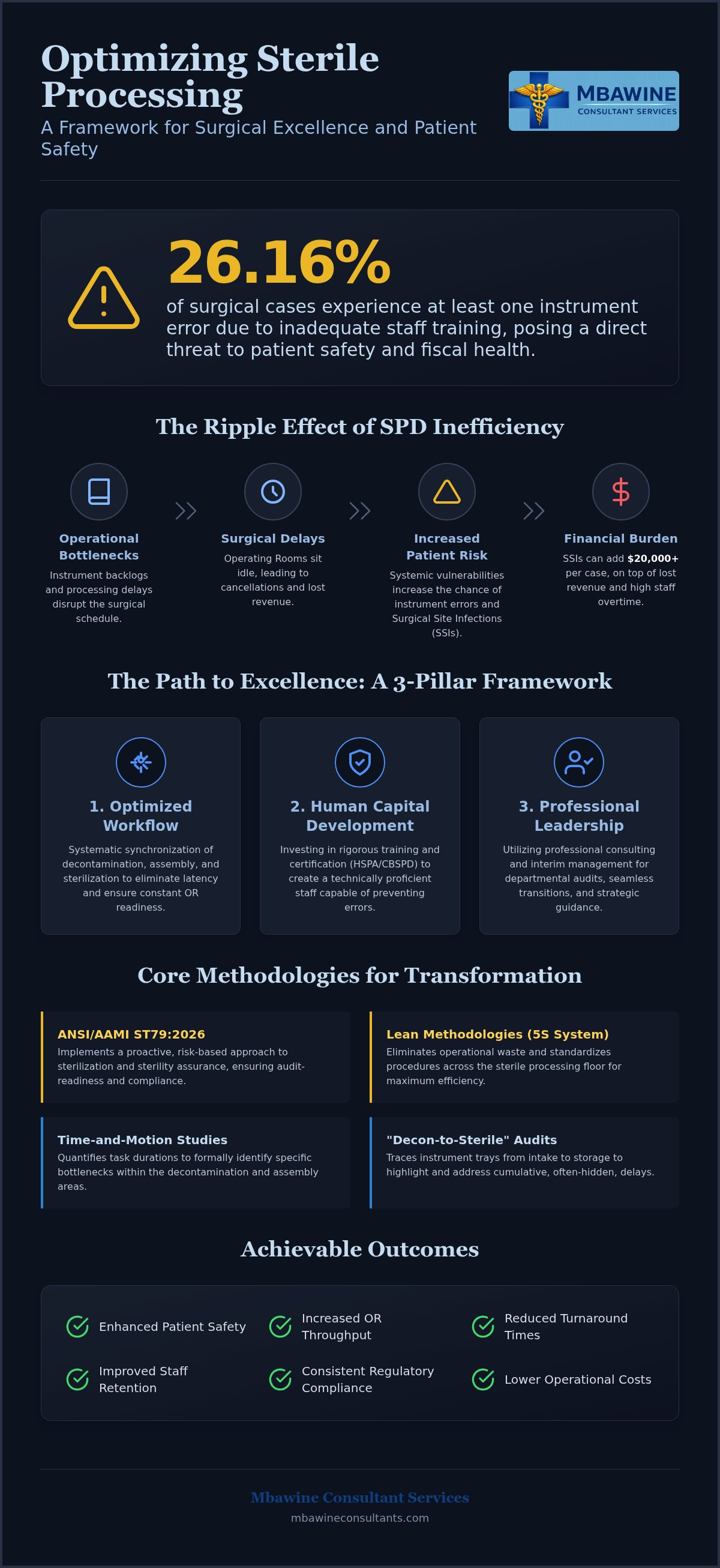
Achieving sustainable sterile processing department workflow optimization often necessitates a fundamental shift in institutional perspective that internal teams may find difficult to initiate in isolation. Specialized sterile processing consultant services provide the high-level diagnostic capabilities required to conduct exhaustive, objective departmental audits. These assessments are designed to identify the precise systemic gaps that exist between a facility's current operational state and the rigorous 2026 industry benchmarks. By customizing staffing solutions and technical protocols, professional consultants ensure that a facility maintains its workflow integrity even during peak surgical seasons or unexpected labor shortages. This level of expert intervention acts as a bridge, moving the department beyond entry-level requirements toward a state of advanced technical mastery.
Leveraging sterile processing interim leadership provides a critical stabilizing force during periods of organizational transition, departmental restructuring, or leadership vacancies. An external interim manager brings an unbiased perspective to the department, allowing for the identification of deep-seated inefficiencies that internal personnel might overlook due to institutional inertia. These leaders don't just manage daily tasks; they actively mentor existing staff to ensure that workflow improvements are sustained long-term. This focus on human capital development ensures that the department remains a guardian of public safety while simultaneously improving operational throughput. It's a strategic investment in continuity that prevents the degradation of standards during times of change.
Successful transformation requires the development of a phased implementation plan that reorganizes the workflow without causing disruptions to the active surgical schedule. Institutional leaders must measure the efficacy of these changes through specific key performance indicators (KPIs) such as tray error rates, instrument attrition, and sterilization cycle turnaround times. These data points provide a clinical and objective validation of the optimization efforts, allowing for real-time adjustments to the strategy. A structured reorganization ensures that every technical modification contributes meaningfully to the broader goal of institutional excellence. To initiate a professional assessment of your facility’s operations, contact Mbawine Consultant Services.
Achieving a state of departmental excellence requires a deliberate integration of systematic auditing, Lean principles, and rigorous staff professionalization. As surgical demands increase, the necessity for sterile processing department workflow optimization becomes a critical factor in maintaining institutional safety and fiscal health. Facilities that leverage specialized interim management and comprehensive certification preparation for CRCST ensure that their operations remain resilient against both regulatory scrutiny and surgical backlogs. By prioritizing these strategic pillars, you transform the department into a high-velocity center of clinical reliability. Mbawine Consultant Services provides national expertise in SPD interim management and 24/7 emergency staffing to ensure your operational continuity remains uncompromised during transitions. It's time to bridge the gap between entry-level technical requirements and advanced institutional mastery. You're invited to optimize your facility with expert Sterile Processing Consulting today. This journey toward operational excellence protects your patients and your staff's professional integrity.
Common bottlenecks often manifest in the decontamination area during peak surgical intake and within the assembly phase when tray lists are incomplete. These friction points cause cascading delays that impact Operating Room throughput. Sterile processing department workflow optimization addresses these issues by standardizing intake protocols and improving the physical layout of workstations. Eliminating these systemic hurdles is essential for maintaining a steady flow of validated instrumentation to the clinical team.
Professional certification, such as the CRCST designation, ensures that technicians possess a standardized technical vocabulary and a deep understanding of sterilization principles. This foundational knowledge reduces reprocessing errors and accelerates the assembly of complex instrument sets. Facilities with highly certified teams report greater operational reliability and a more proactive approach to troubleshooting equipment failures. Investing in staff education transforms the workforce into a primary driver of departmental efficiency and patient safety.
Lean methodologies are highly effective in smaller hospital environments where resource constraints require maximum operational efficiency. Applying the 5S system allows smaller departments to organize their limited physical space, reducing unnecessary motion and time spent searching for instruments. By identifying and removing wasteful steps in the reprocessing cycle, small facilities can achieve high-velocity throughput comparable to larger institutions. These principles are scalable and provide a structured framework for continuous improvement.
Interim leadership provides a stabilizing force and an objective perspective necessary for navigating complex organizational changes. These experienced managers identify operational inefficiencies that internal teams might overlook due to institutional familiarity. During a workflow optimization project, an interim leader mentors existing staff and ensures that new protocols are consistently followed. These leaders don't just manage daily tasks; they actively facilitate the transition toward more advanced technical and operational benchmarks.
Most healthcare institutions should conduct a comprehensive professional audit annually to ensure ongoing compliance with evolving standards like ANSI/AAMI ST79:2026. Frequent assessments are also necessary during periods of high staff turnover or before implementing significant technological upgrades. These audits provide a baseline for sterile processing department workflow optimization by identifying specific areas where current practices diverge from best-in-class standards. Regular external reviews help maintain a culture of accountability and clinical excellence.
In 2026, the most critical metrics for measuring success include tray error rates, instrument turnaround time, and staff retention levels. Monitoring the percentage of trays returned from the OR due to bioburden or missing components provides immediate feedback on quality control. Additionally, tracking the velocity of the decontamination to sterile cycle helps managers align staffing with surgical demand. These data points allow for a risk-based approach to management that prioritizes both speed and sterility.
An optimized workflow directly reduces the risk of Surgical Site Infections (SSIs) by ensuring that every instrument undergoes a validated sterilization process without exception. Efficient reprocessing also prevents surgical delays, which can lead to extended anesthesia times and increased patient risk. When the SPD operates with high-fidelity synchronization, the surgical team can focus entirely on clinical execution rather than worrying about the availability or integrity of their instrumentation.
The initial steps involve conducting a thorough time-and-motion study to collect objective data on current departmental performance. Institutional leaders must also align stakeholders across the SPD and the Operating Room to ensure shared goals for the reorganization. A professional departmental audit serves as the diagnostic foundation, highlighting the specific structural or procedural gaps that require intervention. Establishing these baseline metrics ensures that the reorganization plan is data-driven and focused on long-term institutional excellence.

Article by
Mba Akuribila
Mba‑Akuribila is a healthcare leader, educator, and founder of Mbawine Consultants, a Bronx‑based institution recognized nationwide for advancing excellence in sterile processing and allied health workforce development. Born in Bongo in Ghana’s Upper East Region, his journey from rural beginnings to national impact reflects a lifelong commitment to service, empowerment, and community advancement.
For over two decades, he has trained sterile processing employees, mentored, and placed thousands of healthcare professionals across the United States. Through Mbawine Consultants, he established one of the country’s most trusted Sterile Processing Certification Test Prep Programs, preparing new Americans and career‑changers for successful entry into the field. The organization, as at 2026, has graduated more than 15,000 sterile processing technicians who now serve in hospitals, ambulatory centers, dental practices, and reprocessing facilities nationwide.
Under his leadership, Mbawine Consultants has expanded into a full Healthcare Staffing Agency, connecting nurses and allied health professionals to meaningful employment opportunities. His team also provides Interim Management Services, supporting hospitals and surgical centers with experienced leaders who stabilize operations, strengthen compliance, and improve workflow efficiency.
As a former surgical technician, sterile processing manager, educator, and system‑wide director, Mba‑Akuribila brings deep expertise to Sterile Processing Consulting, helping healthcare facilities elevate quality, safety, and regulatory readiness.
His work in the United States and Ghana continues to reflect his core philosophy: service above self, opportunity for all, and excellence without compromise.


