

Can a modern healthcare facility truly claim to prioritize patient safety if its Sterile Processing Department is operating under the persistent weight of chronic staffing vacancies and underutilized asset tracking technology? Most perioperative leaders recognize that the escalating pressure to maintain rigorous compliance with evolving HSPA and CBSPD standards often clashes with the harsh reality of daily operational bottlenecks and preventable surgical delays. It's a widely held understanding within the clinical community that an under-resourced department doesn't merely hinder throughput; it fundamentally compromises the integrity of the sterile field and the institutional commitment to patient well-being.
This article provides a comprehensive examination of how strategic sterile processing management solutions utilize a sophisticated triad of integrated software, expert interim leadership, and a certified workforce to bridge these critical systemic gaps. You'll discover how the synchronization of these elements serves to optimize department performance while ensuring the highest level of professional reliability. We'll explore the specific pathways through which interim management and professional certification programs facilitate seamless regulatory audits, a measurable reduction in surgical site infections, and the cultivation of a stable, high-performing culture that encourages long-term staff retention.
In the context of the contemporary perioperative environment, sterile processing management solutions represent a multi-dimensional framework designed to govern the systematic oversight of personnel, technical processes, and advanced infrastructure within the Sterile Processing Department (SPD). While some industry perspectives erroneously limit the scope of management to digital asset tracking, a truly comprehensive solution functions as an integrated architecture that synthesizes sophisticated technology with high-level human expertise. The primary objective of this framework is the rigorous mitigation of surgical site infections (SSIs) through the implementation and enforcement of standardized sterilization protocols. By addressing the critical intersection of regulatory compliance, fiscal stewardship, and clinical excellence, these solutions provide the structural integrity necessary for modern healthcare facilities to sustain high-volume surgical throughput without compromising patient safety.
The methodology governing SPD oversight has undergone a profound transformation, transitioning from archaic manual record-keeping systems to automated asset management platforms that provide real-time data transparency. This evolution is driven by the increasing complexity of surgical instrumentation and the stringent requirements established by national standards, most notably ANSI/AAMI ST79. In high-volume surgical environments, the sheer scale of instrument processing necessitates specialized leadership that understands how to leverage these automated systems to maintain compliance. It's no longer sufficient to merely track a tray; management must now interpret data to predict bottlenecks and ensure every cycle meets the precise parameters dictated by evidence-based practices. Specialized leadership provides the necessary bridge between raw data and actionable clinical outcomes.
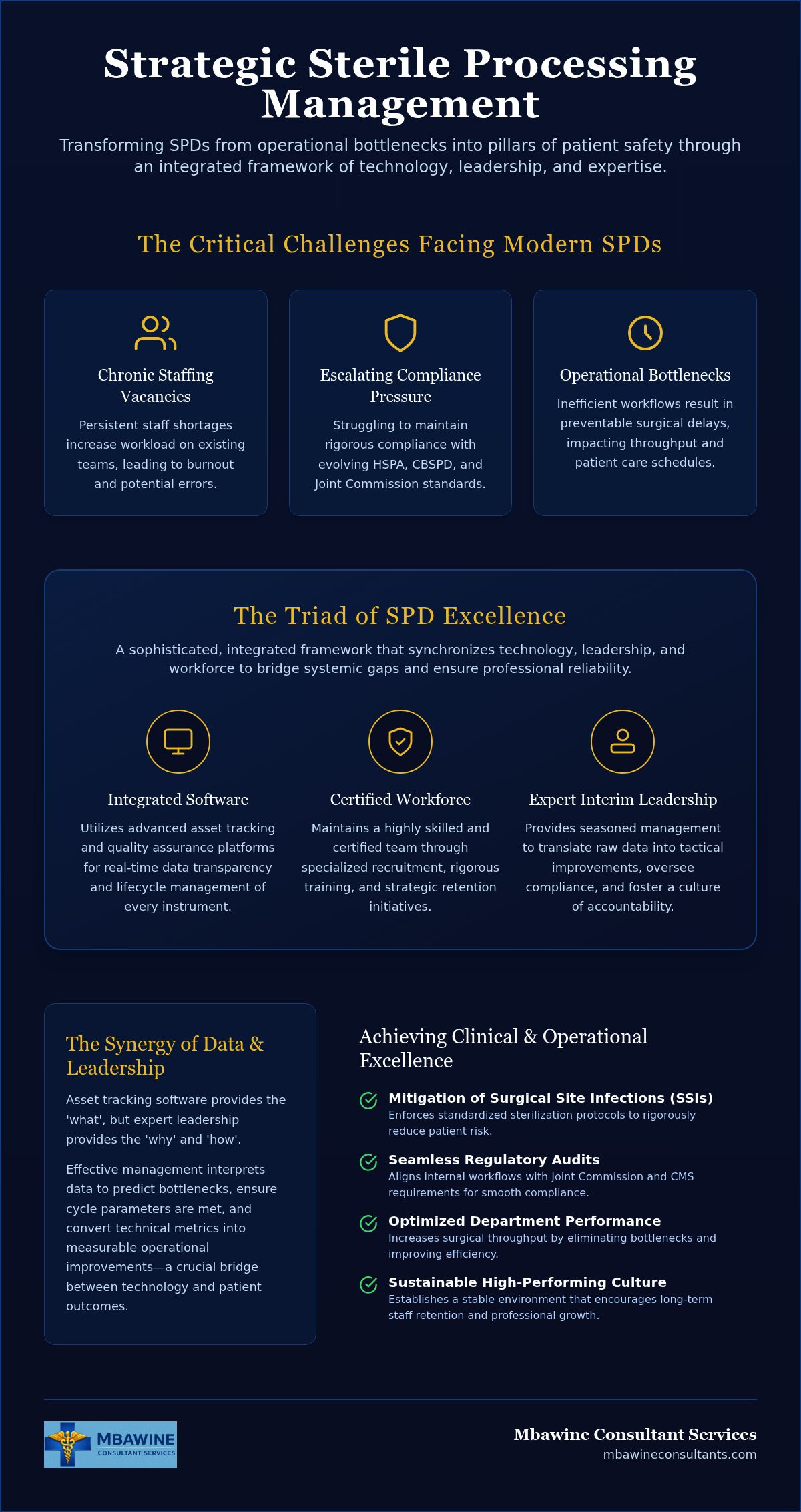
A robust management framework is built upon three foundational pillars that ensure long-term operational stability. First, the technological infrastructure must provide comprehensive tracking and quality assurance capabilities to ensure every instrument is accounted for throughout its lifecycle. Second, human capital management remains paramount, encompassing specialized recruitment, rigorous training, and strategic retention initiatives to maintain a certified workforce. Third, strategic consulting serves as the mechanism for workflow optimization, ensuring that the physical design of the department and its operational sequences are aligned with maximum efficiency. Through professional sterile processing management solutions, facilities can move beyond reactive crisis management and toward a proactive model of institutional excellence. This triad ensures that technology serves the staff, rather than creating additional administrative burdens that lead to burnout.
Ultimately, a management solution is only as effective as the technicians executing the sterilization tasks. Facilities must ensure that their leadership possesses the technical mastery required to navigate the complexities of modern medical device reprocessing while fostering a culture of professional accountability. By integrating these diverse elements into a single cohesive strategy, healthcare institutions protect their patients, their staff, and their clinical reputations.
While sophisticated digital platforms offer unprecedented visibility into the lifecycle of surgical instrumentation, data alone cannot rectify systemic inefficiencies. The efficacy of modern sterile processing management solutions depends on the presence of seasoned leadership capable of translating raw metrics into tactical improvements. Asset tracking systems provide real-time visibility for surgical trays and flexible endoscopes, yet it's the manager who must interpret these data points to prevent operational drift. Without a strategic pilot, even the most expensive software becomes a passive archive rather than an active driver of clinical excellence. True sterile processing management solutions must treat data and leadership as inseparable entities to achieve sustainable results.
To understand the distinction between technological utility and leadership execution, consider the following comparison of how these elements interact within a high-performing department:
| Software Capabilities | Management Leadership Actions |
|---|---|
| Real-time tray location tracking | Workflow reallocation to resolve processing bottlenecks |
| Digital IFU repository access | Staff competency verification and compliance auditing |
| Automated sterilization cycle logging | Root cause analysis of failed biological indicators |
| Asset utilization analytics | Strategic capital planning and instrument set optimization |
Investing in tracking software is only the first step toward optimization. Management must utilize data analytics to identify specific bottlenecks in the decontamination and assembly phases that lead to surgical delays. It's common for underperforming departments to have the necessary technology but lack the oversight to ensure staff compliance with digital Instructions for Use (IFU) access points. Leadership's role involves auditing software accuracy and data integrity to ensure that the information guiding surgical preparation is both current and reliable. This oversight ensures that the technological investment translates into a measurable reduction in bioburden risks and tray errors. Maintaining the integrity of the technological infrastructure is essential for long-term business resilience; for healthcare organizations looking to harden their digital defenses, M.I.S. Support, Inc. provides the proactive cybersecurity and managed IT services required to protect critical operations.
Interim leadership serves as a critical bridge during periods of organizational transition, such as facility expansions or the departure of permanent directors. These professionals stabilize department morale and implement standardized work instructions that align with current HSPA guidelines, preventing the erosion of quality standards. Facilities seeking to maintain high standards during these gaps can explore our interim management services to secure their operational foundation. Maintaining a pipeline of qualified personnel is equally vital. Those looking to strengthen their department's internal expertise may consider our specialized certification pathways to ensure their team remains at the forefront of the industry.
The efficacy of comprehensive sterile processing management solutions is fundamentally tethered to the technical proficiency of the workforce performing the sterilization tasks. While tracking software provides the necessary data and interim leadership establishes strategic direction, the operational reality of the department is ultimately defined by the technicians in the decontamination and assembly areas. The increasing complexity of robotic instrumentation and flexible endoscopes requires a level of precision that cannot be automated; it requires a certified, experienced workforce. Consequently, strategic staffing must be viewed as a core component of management rather than a peripheral administrative function. For a deeper understanding of this organizational dynamic, it's beneficial to examine the strategic role of a sterile processing management agency in the context of modern healthcare.
High-acuity hospitals and trauma centers often face significant operational risks due to technician burnout and chronic vacancies that disrupt surgical schedules. Utilizing specialized temporary staffing allows these facilities to manage surge capacity effectively without compromising the integrity of the sterile field. The availability of 24/7 emergency staffing is particularly critical for institutions that must maintain constant readiness for emergency surgical interventions. Furthermore, institutional safety in major metropolitan areas often extends to physical security for high-profile patients or administrative leadership, where specialized services like Executive protection NYC complement the facility’s internal safety protocols. When evaluating potential staffing partners, management must move beyond simple headcount metrics and rigorously assess the clinical competence and professional credentials of every assigned individual. This ensures that the human capital integrated into the department enhances, rather than dilutes, the established safety protocols.
The national shift toward mandatory certification in various states reflects a growing recognition that specialized knowledge is essential for patient safety. Professional credentials, such as CRCST and CBSPD, provide an objective benchmark for clinical competence, significantly reducing error rates in the prep and pack area. It's the responsibility of departmental leadership to facilitate ongoing professional development, ensuring that staff members have the resources necessary to achieve and maintain these high-level certifications. Those seeking to elevate their department's baseline of expertise can learn about our CRCST certification preparation programs, which are designed to align with the most current industry standards. By investing in the professionalization of the workforce, management ensures that the department remains resilient against regulatory scrutiny and operational failure.
Ultimately, a management solution is only as robust as the individuals executing the daily sterilization cycles. When leadership prioritizes certified staffing and continuous education, they create a culture of accountability that directly translates to improved patient outcomes and reduced liability for the facility. This investment in human capital is what transforms a standard department into a center of clinical excellence.
Compliance is not a static goal. It's a continuous state of institutional readiness. Specialized sterile processing management solutions provide the rigorous oversight required to align departmental workflows with the stringent expectations of The Joint Commission and the Centers for Medicare & Medicaid Services (CMS). This alignment begins with a comprehensive assessment of the physical environment, ensuring that the unidirectional flow from decontamination to sterile storage is strictly maintained to prevent the migration of microbial loads. Management must oversee the meticulous documentation required for biological monitoring and high-level disinfection to ensure every instrument meets the highest safety standards before reaching the surgical field.
A structured management framework improves compliance across five critical operational areas:
Consulting solutions identify lean opportunities within the reprocessing cycle to eliminate redundant steps and reduce the likelihood of instrument loss. By conducting systematic management audits, facilities can pinpoint the root causes of missing instruments and tray errors, which directly impact operating room throughput. When workflow is optimized, surgeon confidence increases because they can rely on the presence and functionality of every instrument. This efficiency doesn't just save time; it preserves the clinical reputation of the entire facility.
Complementing these internal audits, many facilities also prioritize quality assurance at the point of manufacture. For those sourcing medical equipment from global markets, The Inspection Company offers specialized factory audits and product inspections to verify that devices are built to the highest standards of safety and functionality.
Similarly, for healthcare organizations that maintain robust research wings, the procurement of high-purity biochemicals requires equally stringent oversight. Platforms like Peptides From China assist research laboratories by providing direct access to verified synthesis facilities, ensuring that the foundational materials for medical advancement meet rigorous quality standards.
For healthcare organizations looking to enhance their supply chain with high-quality instrumentation, Fong’s Engineering & Manufacturing Private Limited offers strategic outsourcing solutions for medical device production that prioritize both clinical performance and reprocessing efficiency. To further simplify the procurement of these essential medical technologies, you can check out GetMedicalDevice, a B2B platform providing direct access to high-quality products from industry-leading manufacturers.
Implementing a robust quality management system (QMS) serves as a preventative solution against the clinical failures that lead to surgical site infections. Specialized consultants play a vital role in preparing departments for unannounced surveys by establishing clear Key Performance Indicators (KPIs) for sterilization success rates. These metrics provide leadership with the data needed to justify equipment upgrades or staffing adjustments before a deficiency is identified by an external auditor. To ensure your department is led by professionals capable of maintaining these high standards, you may enroll in our advanced training programs to bridge the gap between compliance and excellence.
Establishing institutional stability within the Sterile Processing Department requires more than just reactive staffing; it demands a holistic integration of clinical expertise and administrative oversight. Mbawine Consultant Services delivers comprehensive sterile processing management solutions that synthesize advanced education, specialized staffing, and strategic interim leadership into a singular, high-performance operational model. This integrated approach ensures that every facet of the department, from the initial decontamination phases to the final sterile storage, operates under a unified standard of professional excellence. Because every healthcare facility presents a unique set of geographic and clinical challenges, customized consulting services are essential for addressing specific systemic vulnerabilities that generic software platforms often overlook. For institutions seeking to fortify their operational foundation, it's advisable to contact us for a management consultation to begin a comprehensive assessment of departmental requirements.
A high-performing department is sustained by a continuous pipeline of certified talent capable of navigating the technical complexities of medical device reprocessing. Mbawine’s sterile processing classes, available in both online and in-person formats, serve as a pedagogical foundation for both entry-level technicians and aspiring department leaders. These classes don't merely prepare individuals for certification examinations; they instill a deep understanding of the national sterilization standards that govern the industry. By prioritizing continuous professional development, management ensures that the workforce remains adaptable to the rapid advancements in surgical technology and evolving regulatory requirements. Prospective students and facility leaders are encouraged to enroll in our upcoming sterile processing classes to secure the expertise required for modern clinical environments.
Building a resilient department requires a partnership that extends beyond temporary fixes to include long-term strategic planning. This resilience often involves securing the entire facility’s infrastructure, including the fuel supplies needed for backup power to maintain critical sterilization environments; for specialized energy logistics, you can visit Secure Supplies Group. By collaborating with a management agency that maintains a national network of sterile processing professionals, facilities gain access to a reservoir of high-level knowledge and emergency support. This collaborative model ensures operational stability, even during periods of extreme surge capacity or leadership transition. The implementation of sophisticated sterile processing management solutions reflects an institutional commitment to professional excellence and, most importantly, the safety of every patient who enters the operating suite. Through disciplined management and a focus on certified mastery, the Sterile Processing Department becomes a pillar of the healthcare facility's clinical success and a guardian of public health standards.
The modernization of the Sterile Processing Department represents an institutional imperative that requires a sophisticated synthesis of technical precision and strategic administrative oversight. By aligning advanced asset tracking with expert interim leadership and a highly certified workforce, facilities move beyond the limitations of manual processes and reactive staffing models. Implementing these comprehensive sterile processing management solutions ensures that every instrument cycle adheres to the most rigorous national standards. This alignment fundamentally safeguards the integrity of the surgical field and the health of the community served by the facility.
Achieving this level of operational mastery depends on access to a specialized ecosystem of professional support that understands the high stakes of medical reprocessing. Mbawine Consultant Services provides this framework through authorized HSPA and CBSPD certification preparation, an extensive national interim leadership network, and 24/7 emergency staffing solutions designed for high-acuity environments. It's a multi-faceted approach that transforms the department into a center of clinical excellence. We invite you to optimize your facility with Mbawine Consultant Services to establish a foundation of safety and professional reliability that will serve your patients for years to come.
Software provides critical visibility into the lifecycle of every instrument set, allowing leadership to track trays in real-time and ensure compliance with manufacturer Instructions for Use. By automating the documentation of sterilization cycles and biological monitoring, these systems reduce the risk of human error and facilitate seamless regulatory audits. This technological foundation is a key component of modern sterile processing management solutions, as it converts raw operational data into actionable clinical intelligence for the department.
Interim management serves as a strategic bridge during periods of leadership transition or facility expansion, while traditional leadership focuses on long-term institutional stability. These specialized managers are typically seasoned professionals who possess the expertise to stabilize department morale and implement standardized work instructions immediately. Their objective is to prevent operational drift and maintain compliance with HSPA guidelines until a permanent director is appointed, ensuring that patient safety remains uncompromised during organizational changes.
Professional certification provides an objective benchmark for clinical competence, ensuring that every technician possesses the technical mastery required to navigate complex medical device reprocessing. As various states move toward mandatory certification, a certified workforce becomes a regulatory necessity rather than a preference. Integrated sterile processing management solutions prioritize certification to reduce error rates in the prep and pack area, which directly correlates to a decrease in preventable surgical site infections and improved patient outcomes.
A specialized staffing agency provides access to a pipeline of certified, experienced professionals who can manage surge capacity and prevent the technician burnout that leads to surgical delays. By integrating temporary staffing with 24/7 emergency availability, facilities can maintain constant readiness for high-acuity trauma cases. This approach ensures that the department remains fully operational during chronic vacancies, allowing the facility to sustain high-volume surgical throughput without compromising the integrity of the sterile field.
Consultants conduct comprehensive assessments of the physical environment and operational workflows to identify lean opportunities and eliminate systemic bottlenecks. They play a vital role in preparing departments for unannounced surveys by aligning internal processes with the stringent standards established by The Joint Commission and CMS. By establishing clear Key Performance Indicators, consultants provide leadership with a roadmap for continuous improvement, ensuring that the department operates at peak efficiency while maintaining the highest safety standards.
Specialized online classes are available to prepare current and aspiring leaders for advanced certifications such as the CRCST or CBSPD. These educational programs focus on the high-level technical knowledge and administrative oversight required to manage a modern department effectively. Continuous education ensures that management-level professionals remain informed about the latest advancements in sterilization technology and evolving national standards, fostering a culture of professional accountability and clinical excellence within the institution.
Effective management directly mitigates the risks associated with surgical site infections by enforcing standardized sterilization protocols and ensuring the meticulous removal of bioburden from complex instrumentation. When leadership prioritizes rigorous quality management systems and personnel competency, the likelihood of a contaminated instrument reaching the sterile field is significantly reduced. This disciplined oversight serves as a primary defense against healthcare-associated infections, protecting the clinical reputation of the facility and the well-being of the patient.
Selecting the appropriate agency requires a thorough evaluation of their clinical expertise, the quality of their certification preparation programs, and the breadth of their professional network. It's essential to partner with an organization that offers an integrated approach combining education, interim leadership, and emergency staffing solutions. The right agency acts as a mentor and guardian of industry standards, providing the specialized knowledge necessary to bridge the gap between entry-level requirements and advanced technical mastery.

Article by
Mba Akuribila
Mba‑Akuribila is a healthcare leader, educator, and founder of Mbawine Consultants, a Bronx‑based institution recognized nationwide for advancing excellence in sterile processing and allied health workforce development. Born in Bongo in Ghana’s Upper East Region, his journey from rural beginnings to national impact reflects a lifelong commitment to service, empowerment, and community advancement.
For over two decades, he has trained sterile processing employees, mentored, and placed thousands of healthcare professionals across the United States. Through Mbawine Consultants, he established one of the country’s most trusted Sterile Processing Certification Test Prep Programs, preparing new Americans and career‑changers for successful entry into the field. The organization, as at 2026, has graduated more than 15,000 sterile processing technicians who now serve in hospitals, ambulatory centers, dental practices, and reprocessing facilities nationwide.
Under his leadership, Mbawine Consultants has expanded into a full Healthcare Staffing Agency, connecting nurses and allied health professionals to meaningful employment opportunities. His team also provides Interim Management Services, supporting hospitals and surgical centers with experienced leaders who stabilize operations, strengthen compliance, and improve workflow efficiency.
As a former surgical technician, sterile processing manager, educator, and system‑wide director, Mba‑Akuribila brings deep expertise to Sterile Processing Consulting, helping healthcare facilities elevate quality, safety, and regulatory readiness.
His work in the United States and Ghana continues to reflect his core philosophy: service above self, opportunity for all, and excellence without compromise.


