

Last Updated: September 8, 2026
Surgical instrument management is the coordinated system of tracking, reprocessing, maintaining, and deploying surgical instruments to ensure they are available, sterile, and functional for every procedure. It connects the sterile processing department with the operating room, inventory control, and compliance teams.
Surgical instrument management covers the entire instrument lifecycle: acquisition, identification, decontamination, assembly, sterilization, storage, transport, use, and return for reprocessing.
Effective programs also manage the data around instruments, set lists, count sheets, maintenance histories, and usage patterns. A common mistake is treating management as purely physical inventory control while ignoring the information layer, which drives efficiency and compliance.
Quality assurance depends on this system. When instruments are tracked and workflows are standardized, facilities can demonstrate compliance with reprocessing standards and reduce the risk of surgical site infections. According to CDC guidance on disinfection and sterilization in healthcare facilities, proper reprocessing of medical devices is a cornerstone of infection prevention.
Instrument tracking systems replace manual count sheets and paper logs with digital records that follow each instrument through its lifecycle. The two dominant technologies are barcode scanning and RFID tags, but the real differentiator is how they integrate with the hospital's existing IT infrastructure, the EHR, the OR scheduling system, and the sterile processing department's workflow software.
Barcode systems are lower cost and widely adopted. Staff scan each instrument or tray at defined points, such as decontamination, assembly, and sterilization. The limitation is line-of-sight scanning: each item must be individually handled, which adds time. However, modern 2D barcode systems (QR codes and Data Matrix codes) hold more data than traditional linear barcodes, allowing you to encode lot numbers, expiration dates, and manufacturer part numbers directly into the code.
A practical pattern is tray-level tracking: scanning a tray ID at each step gives cycle-time data and chain-of-custody records without scanning 50 individual instruments per tray. Instrument-level tracking is reserved for high-value or loaner items.
RFID reads multiple tagged instruments simultaneously without line of sight, speeding up tray assembly and inventory counts. The trade-off is higher upfront cost, but passive UHF tags have dropped in price and the real ROI is data density.
RFID systems capture not just presence but also usage frequency, which feeds directly into predictive maintenance. When a specific hemostat is used in 40 cases per month and its RFID log shows 300 sterilization cycles, the system can flag it for inspection before it fails.
The most common failure point is not the hardware, it is the middleware. A system that creates a separate data silo forces double data entry. Successful systems integrate with:
| Tracking Method | Setup Cost per Tray | Scanning Speed | Data Granularity | Integration Effort | Best Use Case |
|---|---|---|---|---|---|
| Linear Barcode | $0.50-$2.00 | Slower (line of sight) | Tray-level only | Low | Smaller facilities, tighter budgets |
| 2D Barcode | $1.00-$3.00 | Moderate | Tray + high-value items | Low-Moderate | Mid-size facilities, regulatory-heavy environments |
| Passive UHF RFID | $15-$40 per tag + readers | Fast (batch reads) | Instrument-level, cycle counts | High | High-volume ORs, large inventories, multi-site systems |
| Hybrid (Barcode + RFID) | Varies | Moderate-Fast | Mixed | Moderate | Facilities transitioning between systems |
Before issuing an RFP, define your traceability requirements. AAMI ST79 and The Joint Commission require that you can produce, on demand, a record of which instruments were in a set, who processed them, and when. Ask these questions during vendor evaluation:
The system you choose should support traceability, recording which staff member processed each tray and which surgeon used it. The strategic value comes from using that data to identify bottlenecks: if a tray takes 45 minutes to assemble while similar trays take 20, the data shows which instruments cause the delay.
Daily operations hinge on standardized workflows, but standardization alone is insufficient, high-performing departments build in explicit quality checkpoints, measurable time targets, and closed-loop feedback between the OR and SPD.
The reprocessing cycle begins before the instrument leaves the OR. The circulating nurse or surgical technologist should perform gross soil removal at the point of use with a sterile water-soaked sponge. Do not use saline; chloride ions accelerate corrosion on stainless steel. Apply an enzymatic foam or gel if instruments will not reach decontamination within 30 minutes.
A common gap is the lack of a formal "soil hold" protocol. Define a maximum time between case end and decontamination, most facilities target under 60 minutes for routine cases and under 30 minutes for prion-risk tissue. Missed targets usually stem from transport logistics, not technician effort.
Decontamination follows a strict sequence: sorting, manual cleaning for delicate items, and automated washer-disinfectors for heat-tolerant instruments. Sorting separates instruments by material compatibility, anodized aluminum cannot go through the same alkaline wash as stainless steel. Verify cleaning visually and with protein residue tests where appropriate. ATP bioluminescence testing is recommended on a rotating sample basis, typically 1-2% of trays per day or any tray involved in a suspected infection.
For manual cleaning, use a neutral pH detergent and a soft-bristled brush. Never use steel wool or abrasive pads; they create micro-scratches that harbor bioburden and initiate corrosion. For lumened instruments, use a brush sized to the lumen diameter and flush with copious amounts of water, AAMI recommends a minimum of 15 seconds per channel with detergent followed by a distilled water rinse.
Assembly requires a clean work area and a current, accurate set list for each tray. Inspection is where quality assurance lives or dies. Implement a two-person verification protocol for high-risk trays, those containing microsurgical instruments, power tools, or loaner sets. The first technician assembles and inspects; the second performs an independent verification against the set list, a documented requirement for trays used in implant surgeries.
During inspection, use magnification (2.5x-4x loupes) to check for:
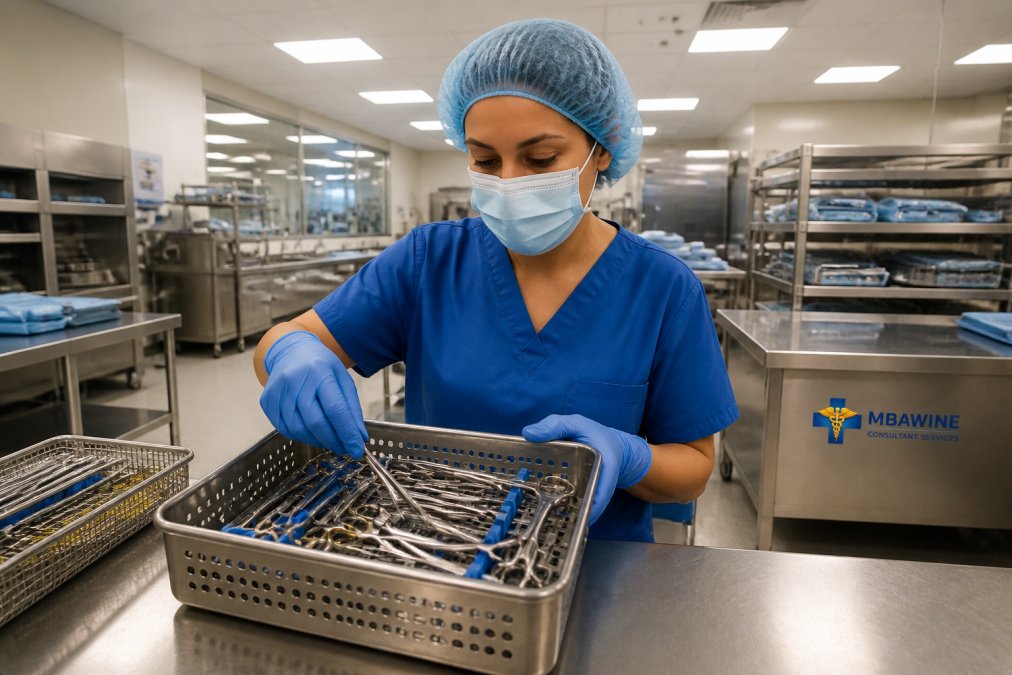
Choose the correct wrap or container system and verify that sterilizer parameters meet the manufacturer's written instructions. For steam sterilization, standard cycles are 270°F (132°C) for 4 minutes (gravity displacement) or 3 minutes (dynamic air removal). Low-temperature options for heat-sensitive instruments include ethylene oxide (EtO), hydrogen peroxide gas plasma, and peracetic acid.
Document every load with the sterilizer number, cycle number, and contents. Record the biological indicator (BI) lot number for each load that requires BI testing. The CDC recommends at least weekly BI testing, but many high-volume facilities run a BI with every load containing implantable devices and quarantine those loads until the result is negative.
A best practice that separates top departments is the formal "case review" process. When the OR reports a missing instrument, damaged item, or incomplete tray, that report must flow back to SPD with a timestamp and resolution. Track these as "instrument incidents per 100 cases" and review monthly. A rate above 1.5 typically indicates a systemic issue in set list accuracy, assembly inspection, or OR handling.
While specific targets vary by facility size and case mix, the following ranges represent common benchmarks reported by high-performing SPDs:
| Metric | Target Range | Measurement Method |
|---|---|---|
| Tray assembly time (standard set) | 15-25 minutes | Time from decontamination release to assembly complete |
| Decontamination cycle time | 30-45 minutes | Time from SPD receipt to decontamination complete |
| Sterilization load failure rate | < 0.5% of loads | Number of loads with failed chemical or biological indicators |
| Instrument incident rate | < 1.5 per 100 cases | OR-reported missing or damaged instruments per 100 surgical cases |
| Tray turnover time (case end to case-ready) | 90-120 minutes | Time from case end to tray available for next use |
These targets are operational guideposts, not regulatory mandates. If your department consistently exceeds these ranges, examine workflow bottlenecks, typically transport delays, insufficient staffing during peak hours, or inadequate washer-disinfector capacity.
Instruments wear out. Hinges loosen, cutting edges dull, and insulation on laparoscopic instruments degrades. Preventive maintenance is scheduled inspection and servicing that catches these issues before they cause a problem.
Sharp instruments need periodic sharpening. Scissors and rongeurs lose effectiveness with use, and a dull instrument damages tissue and prolongs surgery. Track sharpening schedules in your maintenance log rather than relying on feel.
The repair decision is economic. When repair cost approaches a significant portion of replacement cost, replacement is usually better. Track repair frequency per instrument type; repeated repairs on the same item signal it should be retired. This is where cost-per-case analysis ties maintenance spending to surgical volume.
A strategy connects the physical workflow to measurable outcomes. Start by defining your baseline: how many instrument sets you own, their condition, and your current turnover time between cases.
Set targets for key metrics. Instrument turnover time, from case end to case-ready, is a direct driver of operating room efficiency. Set a target for missing instrument incidents per month, trending toward zero. Track these numbers weekly, not quarterly.
Staff training is the human factor that makes or breaks the system. Cross-train technicians across decontamination, assembly, and sterilization so coverage gaps do not compromise quality. Ongoing education on new instruments and updated standards keeps skills current.
Sustainability is an emerging consideration. Reducing water and chemical use in decontamination and optimizing tray contents to eliminate unused instruments lower environmental impact and cost. Lean tray optimization reduces processing time and extends the life of the set.
Strong surgical instrument management reduces cost-per-case, improves operating room efficiency, and supports infection prevention. The fundamentals are consistent: standardized reprocessing workflows, reliable tracking for traceability, scheduled maintenance, and staff who understand the why behind each step.
Facilities that excel treat this as a leadership priority, not just a technician task. They invest in training, measure performance, and close the loop between the OR and the sterile processing department. For teams pursuing CRCST or CIS certification, or for managers needing interim leadership, professional education is the bridge between daily tasks and strategic oversight. Mbawine Consultants provides certification preparation and staffing support built around these principles.
Surgical instrument maintenance involves immediate point-of-use cleaning, followed by manual cleaning or automated washer-disinfectors in the sterile processing department. After cleaning, technicians inspect each instrument for damage, corrosion, or misalignment. Proper lubrication of hinges and boxes is essential. Regular maintenance schedules, based on manufacturer instructions and usage frequency, prevent costly repairs and ensure instruments function correctly for optimal clinical outcomes.
The seven steps are: 1) Point-of-use preparation at the bedside, 2) Transportation to the decontamination area, 3) Cleaning (manual or automated), 4) Disinfection, 5) Inspection, assembly, and packaging, 6) Sterilization, and 7) Storage and distribution. Following these steps consistently, as part of sterile processing department best practices, ensures instruments are safe, sterile, and ready for the next surgical case, supporting case readiness and surgical site infection prevention.
A surgical instrument tracking system improves operating room efficiency by providing real-time visibility into the location and status of every tray and instrument. This reduces time spent searching for missing sets, ensures case readiness by alerting staff to incomplete trays, and streamlines inventory control. By automating data collection through barcode scanning or RFID technology, these systems minimize manual counts, lower the risk of retained instruments, and provide traceability data to support quality assurance and compliance standards.
Staff certification, such as the CRCST or CIS, establishes a standardized baseline of knowledge in decontamination, sterilization, and instrument handling. Certified technicians are more adept at following workflow standardization, identifying instrument integrity issues during inspection, and adhering to compliance standards. Investing in certification education supports staff training and human factor engineering, leading to fewer processing errors, reduced instrument damage, and improved overall quality assurance within the sterile processing department.
Regulatory requirements for surgical instrument maintenance in the United States are set by the FDA, which classifies reusable devices and requires manufacturers to provide validated reprocessing instructions. Healthcare facilities must follow AAMI standards for sterilization and adhere to CMS Conditions of Participation. Compliance involves documenting preventative maintenance, tracking instrument lifecycle, and ensuring all reprocessing steps meet established guidelines. Regular audits and staff training are necessary to maintain compliance standards and support accreditation from bodies like The Joint Commission.
Building a resilient instrument management program takes more than new software or a new washer. It requires trained people, consistent processes, and leadership that measures what matters. Mbawine Consultants offers fast-track CRCST and CIS test preparation through remote audio and video modules, plus interim management and staffing for facilities that need experienced support. Enroll with Mbawine Consultants and build the systems that keep your instruments ready and your cases on time.


