

The pursuit of professional certification in sterile processing is not merely an academic exercise; it's a critical mandate for ensuring patient safety and maintaining the highest standards of clinical excellence. You likely understand the profound pressure associated with mastering an expansive volume of technical material while attempting to distinguish between the specific requirements of HSPA and CBSPD. This sense of apprehension is a natural response to the high-stakes nature of the medical field, where a single oversight in sterilization protocol can have grave consequences for public health. This comprehensive sterile processing study guide provides the structured methodology necessary to transform that uncertainty into technical mastery.
By engaging with this authoritative framework, you'll gain access to a systematic path designed to ensure first-time success on your certification exam. We'll navigate the complex domains of microbiology, decontamination, and sterilization through a clear, multi-phase roadmap that aligns with current institutional standards. This article details the essential knowledge required to bridge the gap between entry-level technical skills and the advanced credentialing that defines a leader in the healthcare sterilization field. Our objective is to provide a steady, deliberate progression from foundational concepts to the advanced mastery required for professional certification.
The Sterile Processing Department (SPD) serves as the indispensable heart of the hospital, a centralized hub where the safety of every surgical intervention is ultimately determined. Within this high-stakes environment, a sterile processing study guide acts as more than a preparatory tool; it functions as a comprehensive pedagogical framework for technical mastery. Rigorous adherence to standardized study protocols directly correlates with the mitigation of surgical site infections (SSIs), as technicians gain the specialized knowledge required to disrupt the chemical and biological chains of infection. By mastering sterilization methods and microbiology principles, professionals ensure that every instrument entering the sterile field meets the most exacting safety benchmarks. This transition from vocational knowledge to professional certification standards is what separates a routine task-oriented worker from a guardian of public health.
The healthcare industry has undergone a definitive shift from vocational, on-the-job training toward mandatory professional certification for all central service technicians. Professional organizations such as the Healthcare Sterile Processing Association (HSPA) and the Certification Board for Sterile Processing and Distribution (CBSPD) have established global benchmarks that define the modern standard of clinical care. This movement ensures that technicians operate with a profound understanding of institutional accreditation and the regulatory requirements that govern patient outcomes. Enrolling in formal sterile processing classes provides the academic foundation necessary to meet these evolving industry mandates and ensures that practitioners can navigate the complexities of modern surgical technology with confidence.
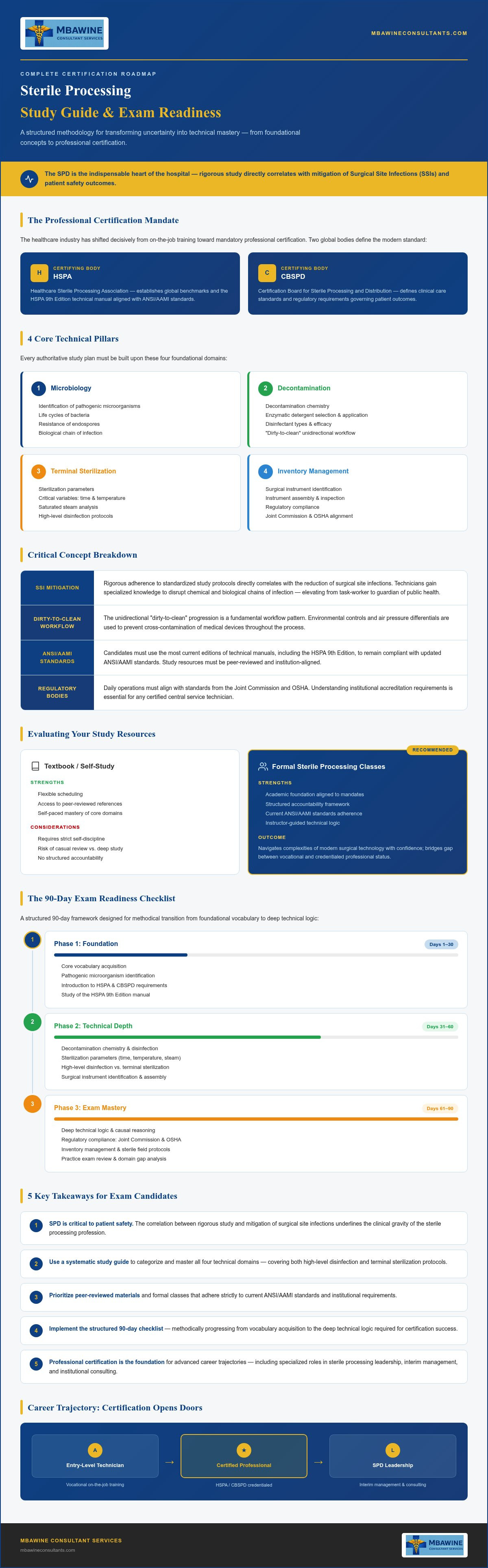
An effective study plan must be built upon four core technical pillars: microbiology, decontamination, terminal sterilization, and inventory management. It's imperative that candidates utilize the most current editions of technical manuals, including the HSPA 9th Edition, to remain compliant with updated ANSI/AAMI standards. This level of preparation requires a commitment to academic rigor rather than a casual review of materials. A robust sterile processing study guide facilitates this deep dive, ensuring that the technician's transition to a certified professional is supported by a thorough understanding of complex clinical processes. Success in this field demands a methodical approach to the following domains:
Mastering the technical domains of sterile processing requires an analytical understanding of the interdependencies between distinct clinical processes. A comprehensive sterile processing study guide must transition beyond rote memorization to explore the causal relationship between pre-cleaning, decontamination, and disinfection. Central to this mastery is the unidirectional workflow pattern, often described as the "dirty-to-clean" progression, which ensures that environmental controls and air pressure differentials prevent the cross-contamination of medical devices. Technicians must also develop an expert eye for surgical instrument identification and assembly, recognizing that the structural integrity and functionality of these tools are paramount to surgical success. This domain requires a methodical approach to inspecting box locks, serrations, and tungsten carbide inserts to ensure every tray is clinically prepared for the operative field.
In the decontamination area, the distinction between manual and automated cleaning processes is defined strictly by the manufacturer's Instructions for Use (IFU). Manual cleaning requires precise adherence to detergent chemistry and water quality standards, as high mineral content can significantly impede the efficacy of enzymatic solutions and lead to instrument pitting. Adherence to OSHA bloodborne pathogens standards is a non-negotiable professional requirement, mandating the correct application of Personal Protective Equipment (PPE) to safeguard the technician against biohazardous exposure. Understanding these regulatory and chemical interdependencies is a core component of formal sterile processing classes, which provide the structured environment necessary for technical proficiency and institutional safety.
Terminal sterilization involves complex modalities, including saturated steam, ethylene oxide (EtO), and low-temperature hydrogen peroxide. Each method possesses specific parameters for time, temperature, and concentration that must be rigorously monitored through physical, chemical, and biological indicators. Biological indicators remain the most definitive proof of sterilization, as they demonstrate the actual destruction of highly resistant bacterial spores. Comprehensive documentation of these monitoring results is vital for load release and the execution of potential recall procedures, serving as a legal and clinical record of institutional safety. Technicians must also distinguish between high-level disinfection (HLD) and terminal sterilization, as HLD is reserved for semi-critical items and doesn't guarantee the total elimination of all microbial life.
Selecting the appropriate educational materials is a critical decision that influences both examination outcomes and long-term clinical proficiency. An authoritative sterile processing study guide must meet rigorous criteria; it should be peer-reviewed, current, and strictly aligned with the latest ANSI/AAMI standards. While unvetted digital resources or outdated manuals might seem sufficient for basic memorization, they often lack the technical depth required to navigate the complexities of modern healthcare sterilization. Relying on unverified sources introduces the risk of learning obsolete protocols, which can jeopardize patient safety and lead to exam failure. Professional preparation requires a systematic approach that prioritizes academic reliability over the convenience of free, unauthenticated materials.
Textbooks provide a necessary foundation of knowledge, yet they often fail to cultivate the critical thinking skills essential for the situational analysis found in modern certification exams. Static materials cannot replicate the nuances of a clinical environment or explain the reasoning behind specific regulatory changes. This is particularly problematic in an industry where standards evolve rapidly. Using an obsolete sterile processing study guide can leave a candidate unprepared for the specific requirements of the HSPA 9th edition or current CBSPD benchmarks. For a deeper understanding of how structured learning impacts career trajectory, consult our Sterile Processing Classes: Certification Guide. Practice exams should be utilized as diagnostic tools to identify specific knowledge gaps rather than as simple memorization aids that encourage rote learning without comprehension.
Enrolling in professional sterile processing classes offers a dynamic educational experience that static study cannot match. These programs provide a structured environment where instructor-led pacing and peer accountability ensure consistent progress through the complex curriculum. Mbawine Consultant Services bridges the gap between theoretical data and professional application by providing students with real-world context and expert mentorship. This mentorship is invaluable for clarifying technical concepts like the chemical interdependencies in decontamination or the specific physics of steam sterilization. It's through this professional interaction that students learn to apply abstract principles to the high-stakes reality of the Sterile Processing Department. By participating in a formal classroom setting, candidates move beyond basic preparation to achieve the high-level technical mastery expected of a certified leader in the field.
A systematic approach to certification requires a chronological commitment that mirrors the "One-Way Workflow" of a high-functioning Sterile Processing Department. This linear progression ensures that foundational concepts are solidified before a candidate attempts to master complex technical logic. Utilizing a structured sterile processing study guide over a 90-day period allows for the gradual accumulation of knowledge, reducing the cognitive load and increasing the probability of long-term retention. This methodology transitions the student from a state of basic awareness to a level of technical verification required for professional leadership.
During the initial 30 days, the primary objective is the acquisition of technical vocabulary and foundational microbiology. Candidates should perform a thorough, initial read-through of the CRCST certification manual to understand the scope of the profession. It's essential to develop a comprehensive glossary containing over 200 medical and technical terms, focusing on the specific nomenclature of instrument anatomy and infection prevention principles. Mastery of these basics provides the linguistic framework necessary to interpret the complex regulatory and chemical standards encountered in subsequent phases.
Days 31 through 60 are dedicated to the deep analysis of process logic and regulatory compliance. This phase requires an investigation into instrument preparation and packaging techniques tailored to specific sterilization modalities, such as saturated steam or low-temperature hydrogen peroxide. Technicians must study the oversight roles of the FDA, CDC, and EPA to understand how institutional protocols align with federal mandates. Engaging in sterile processing classes during this period is highly recommended, as instructor-led discussions can clarify the nuances of manufacturer instructions for use (IFU) and complex decontamination chemistry.
The final 30 days focus on technical verification and the simulation of the examination environment. Candidates must complete at least three full-length, timed practice examinations to assess their readiness and identify remaining knowledge gaps. Every incorrect response should be meticulously reviewed by referencing the primary technical manual to ensure the underlying logic is understood. Simultaneously, candidates should finalize the 400 hours of hands-on experience mandated for full HSPA certification, ensuring their theoretical knowledge is anchored in practical clinical competence. To secure your position in a structured preparatory environment, enroll in our upcoming certification classes to ensure your study efforts align with professional standards.
Attaining certification represents a significant milestone, yet it's merely the inception of a dedicated professional journey. While a sterile processing study guide provides the necessary framework for passing the initial examination, true expertise is cultivated through a lifelong commitment to clinical excellence. Professionals must prioritize continuing education and the acquisition of CE credits to remain compliant with evolving ANSI/AAMI standards. This ongoing engagement ensures that practitioners don't just retain their credentials but actively contribute to the elevation of institutional safety. Networking within professional communities further facilitates this growth, providing a platform for the exchange of best practices and technical insights. Ultimately, the transition from a candidate to a certified professional requires a shift in perspective, viewing every shift as an opportunity to uphold the highest standards of patient care.
The modern Sterile Processing Department requires specialized knowledge that extends beyond general certification. Technicians often pursue advanced credentials, such as the Certified Endoscope Reprocessor (CER) or the Certified Instrument Specialist (CIS), to address the complexities of robotic surgery and flexible endoscopes. These specializations are essential for those aspiring to sterile processing interim leadership, where a profound understanding of departmental optimization and personnel management is required. Staying informed on emerging trends, such as those detailed in Healthcare Sterilization: 2026 Professional Standards, allows professionals to anticipate regulatory shifts. This proactive approach transforms a technician into a subject matter expert capable of leading an organization through complex accreditation surveys and institutional audits.
The career trajectory within sterile processing offers diverse opportunities for those committed to technical mastery. A certified professional can transition from a frontline technician role into positions of department management, interim leadership, or specialized consulting. Each step in this progression requires a deeper integration of the principles first introduced in your sterile processing study guide. To ensure a robust foundation for this journey, candidates should enroll in a structured program that prioritizes academic rigor and professional mentorship. This commitment to excellence isn't just about career advancement; it's a mission-driven dedication to the patients whose lives depend on the integrity of our work. Your certification is the cornerstone of a career dedicated to the highest standards of public health and clinical safety.
The journey toward becoming a certified professional requires a definitive transition from casual review to a structured, academic engagement with complex sterilization protocols. By implementing a systematic 90-day roadmap, you ensure that foundational microbiology and decontamination logic are anchored in clinical reality. A comprehensive sterile processing study guide serves as the essential blueprint for this transformation, bridging the gap between entry-level technical skills and the authoritative leadership required in modern healthcare environments. You don't just pass an exam; you master a discipline that serves as the guardian of patient safety across the clinical landscape.
To ensure your preparation aligns with current HSPA and CBSPD national certification standards, you should seek a structured environment that prioritizes technical accuracy and professional mentorship. Enroll in Professional Sterile Processing Classes Today to access an expert-led curriculum designed for maximum retention and comprehensive support for aspiring sterilization professionals. Your dedication to this field is a vital contribution to public safety and institutional integrity. We look forward to supporting your path toward professional credentialing and career excellence.
The HSPA focuses on the Certified Registered Central Service Technician (CRCST) designation, which requires 400 hours of hands-on experience in a sterile processing department. The CBSPD offers a technician certification that provides multiple eligibility tracks and doesn't strictly mandate pre-exam clinical hours. Both certifications are NCCA-accredited and recognized nationally, though specific healthcare institutions might prefer one over the other based on their internal accreditation standards and departmental protocols.
Candidates should ideally commit to a 90-day preparation period to ensure a comprehensive understanding of the expansive technical material. This duration allows for a methodical progression from foundational microbiology to complex terminal sterilization modalities. A structured sterile processing study guide facilitates this timeline by breaking down the curriculum into manageable segments. Committing to 10 to 15 hours of study per week is a common benchmark for achieving technical readiness.
It's technically possible to challenge the examination through self-study, but the high-stakes nature of the material makes formal education highly advisable. Formal classes provide the real-world context and expert mentorship that static textbooks often lack. These programs ensure that candidates don't just memorize answers but truly master the underlying technical logic. Structured education helps bridge the gap between abstract theory and the high-pressure reality of a clinical sterile processing environment.
The chapters covering decontamination, microbiology, and sterilization modalities are typically the most heavily weighted domains on professional certification exams. You must pay close attention to the specific parameters for steam sterilization and the chemical interdependencies of enzymatic detergents. Understanding the life cycles of pathogenic microorganisms is also critical for success. These core domains form the backbone of any authoritative sterile processing study guide and require the highest level of academic rigor.
Both online and in-person training can be equally effective if they're led by experienced professionals and follow a structured, peer-reviewed curriculum. Online classes offer necessary flexibility for working technicians, while in-person sessions provide immediate, face-to-face interaction with instructors. The key is ensuring the program aligns with current ANSI/AAMI standards and institutional requirements. Quality education focuses on the "why" behind the sterilization processes, regardless of the delivery method used for instruction.
Certification requirements and technical standards are subject to periodic updates as surgical technology and regulatory mandates evolve. Professional organizations like HSPA typically update their manuals every few years, as seen with the transition to the 9th edition. Technicians must maintain their certification through annual CE credits to stay current with these changes. This commitment to ongoing education is a professional mandate that ensures continued alignment with national patient safety benchmarks and clinical best practices.
Candidates who don't pass the exam on their first attempt are permitted to retake it after a mandatory waiting period. This interval should be used for a targeted review of the specific domains where the candidate showed deficiency. Analyzing the score report helps focus your study efforts on the technical areas that require additional mastery. It's often beneficial to enroll in a formal class at this stage to gain expert clarification on difficult concepts before retesting.
No, a standard sterile processing certification guide doesn't include instructions for surgical instrument repair. Instrument repair is a separate, specialized field that requires different training and certifications. The sterile processing curriculum focuses strictly on the identification, inspection, decontamination, assembly, and sterilization of instruments. Mbawine Consultant Services specializes in sterilization education and consulting rather than the mechanical repair of surgical devices or the performance of direct medical procedures.

Article by
Mba Akuribila
Mba‑Akuribila is a healthcare leader, educator, and founder of Mbawine Consultants, a Bronx‑based institution recognized nationwide for advancing excellence in sterile processing and allied health workforce development. Born in Bongo in Ghana’s Upper East Region, his journey from rural beginnings to national impact reflects a lifelong commitment to service, empowerment, and community advancement.
For over two decades, he has trained sterile processing employees, mentored, and placed thousands of healthcare professionals across the United States. Through Mbawine Consultants, he established one of the country’s most trusted Sterile Processing Certification Test Prep Programs, preparing new Americans and career‑changers for successful entry into the field. The organization, as at 2026, has graduated more than 15,000 sterile processing technicians who now serve in hospitals, ambulatory centers, dental practices, and reprocessing facilities nationwide.
Under his leadership, Mbawine Consultants has expanded into a full Healthcare Staffing Agency, connecting nurses and allied health professionals to meaningful employment opportunities. His team also provides Interim Management Services, supporting hospitals and surgical centers with experienced leaders who stabilize operations, strengthen compliance, and improve workflow efficiency.
As a former surgical technician, sterile processing manager, educator, and system‑wide director, Mba‑Akuribila brings deep expertise to Sterile Processing Consulting, helping healthcare facilities elevate quality, safety, and regulatory readiness.
His work in the United States and Ghana continues to reflect his core philosophy: service above self, opportunity for all, and excellence without compromise.


