

Last Updated: September 21, 2026
The CIS certification exam tests your knowledge of sterile processing fundamentals, instrument identification, and decontamination protocols. The exam outline provided by the certifying body breaks down exactly what percentage of questions fall into each content area, study that blueprint first, it's your roadmap to focused preparation.
Build your CIS certification study guide foundation by starting with core areas: terminology, sterilization methods, instrument classification, decontamination protocols, quality assurance, and regulatory standards. Create a study notebook organized by topic, writing definitions in your own words, this forces deep processing rather than passive reading.
Include clinical examples in your study guide. Instead of memorizing "steam sterilization occurs at 250-275°F," write: "Steam sterilization uses high heat and pressure to kill microorganisms at 250-275°F, works well for metal instruments but not heat-sensitive items."
The HSPA CIS practice test format mirrors the actual exam structure. Take a diagnostic test before studying to identify weak areas, use mid-study tests to track progress, and take a full-length mock exam one week before your test date. Review every wrong answer to understand why the correct answer is right, and look for patterns, if you consistently miss instrument identification questions, spend extra time there.
Terminology makes up 20-30% of the CIS certification exam. Visual recognition of instruments under pressure requires deliberate practice, not passive memorization.
Flashcards alone are insufficient. Create a layered system that engages multiple learning pathways:
Visual Recognition Layer: Study high-resolution images and videos of actual surgical instruments in context, in surgical trays, during procedures. Many candidates fail because they've only seen line drawings. Seeing instruments in action anchors names to function and builds recognition speed.
Functional Classification Layer: Group instruments by function: grasping (forceps, clamps, needle holders), cutting (scissors, scalpels, saws), retraction (retractors, spreaders), and probing/dilating (probes, dilators, specula). Understanding the mechanical "why", why a needle holder has a box lock, how Metzenbaum scissors differ from surgical scissors, makes recall automatic and improves performance under pressure.
Terminology Definition Layer: Write definitions with three components: (1) instrument name and alternates, (2) primary surgical function, and (3) handling requirements. Example: "A Bovie clamp (electrosurgical clamp) holds tissue during cauterization, requires careful handling to avoid tissue damage, and needs special precautions with pacemaker patients."
Many candidates struggle with the procedural sequences, which step comes before which, why certain parameters matter. Create a visual flowchart showing:
This visual representation helps you understand not just isolated facts, but the logical flow of sterile processing. When you see a question about why steam sterilization at 250°F takes longer than at 270°F, you'll understand it's about penetration time and microbial load, not just memorized numbers.
Don't cram terminology into one week. Use spaced repetition: review new terms after 1 day, 3 days, 1 week, and 2 weeks. This neurological pattern strengthens long-term retention far more effectively than massed practice. Dedicate 15 minutes daily to terminology review rather than 2-hour blocks.
The Certified Instrument Specialist exam difficulty varies based on your clinical experience. If you've worked on the sterile processing floor, many questions feel familiar. If you're new to the field, expect a steeper learning curve.
The exam typically allows a specific time window for completion. Most candidates have between 2-3 hours to finish. That's roughly 1-2 minutes per question depending on the total number. Don't rush through questions, but don't overthink either.
Pacing strategy matters. Read each question completely before looking at answer choices. Some questions include extra information designed to distract you. Underline key words in the question, what is it actually asking?
Common testing pitfalls include:
Practice maintaining steady pacing during mock exams. You want to finish with time remaining for a final review pass.
Working 12-hour shifts in sterile processing while preparing for certification is realistic, but only with a structured schedule that accounts for both time and mental energy. Many candidates fail not because they lack knowledge, but because they burn out psychologically before exam day. Consistent, shorter study sessions outperform marathon cramming every time, and they also protect your mental health.
Sterile processing is physically and mentally demanding. You're on your feet, managing high-volume instrument processing, and maintaining focus on safety-critical tasks. Adding exam preparation on top of this creates cognitive load that most candidates underestimate. The solution isn't more study hours; it's smarter study placement and psychological preparation.
Build your schedule around your work patterns and energy levels:
A realistic timeline depends on your starting point. If you have clinical experience, 6-8 weeks of consistent study works. If you're new to sterile processing, plan for 10-12 weeks. Don't compress this timeline just to test sooner; you'll likely fail and waste the exam fee, plus you'll damage your confidence.
Most study guides ignore this, but test anxiety and psychological readiness account for 10-15% of exam performance variance. Two candidates with identical knowledge can score differently based on mental state during the exam.
Identify Your Anxiety Triggers Early: Do you struggle with time pressure? Difficult questions? Multiple-choice ambiguity? Identify your specific trigger during practice tests, not on exam day. If you panic under time pressure, practice timed sections weekly.
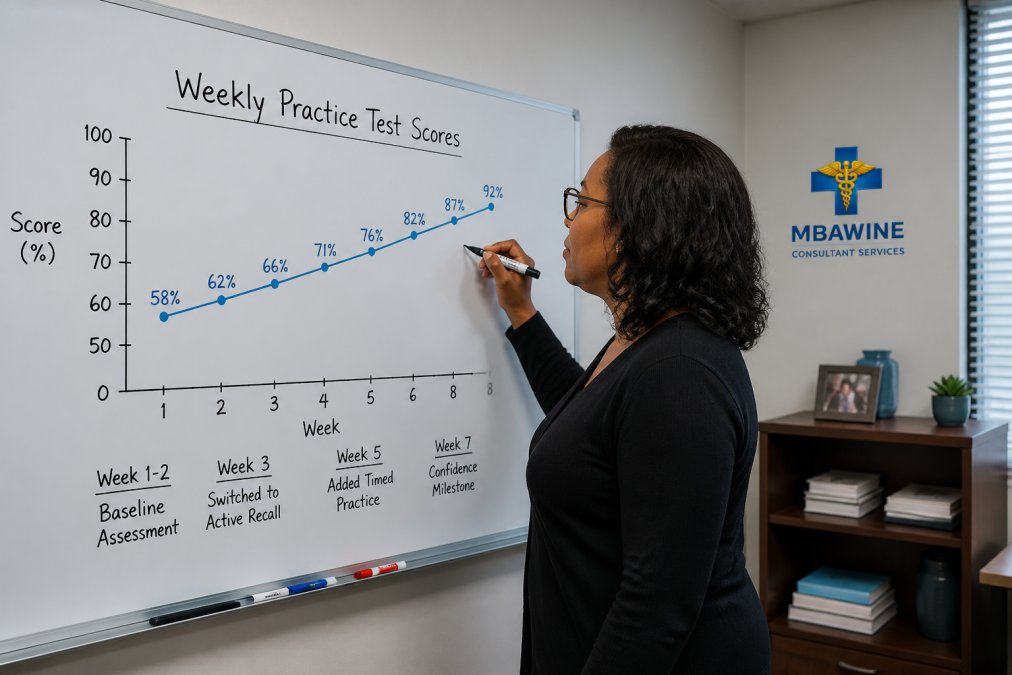
Track your study hours and practice test scores. Aim for 80-120 total hours before exam day. If you're at 40 hours and your exam is in two weeks, you're behind. Adjust your schedule or postpone the exam.
Here's a realistic 10-week study plan for candidates new to sterile processing:
Exam day success depends partly on what you know and partly on how you take the test. Smart test-taking strategies can boost your score by 5-10 percentage points.
Time management during the exam:
Passing the CIS certification exam requires structured study, realistic scheduling, and smart test-taking. Start with the exam blueprint to understand what you're preparing for. Build foundational knowledge through organized study materials. Use practice tests to identify weak areas and track progress. Master terminology and instrument identification through repetition and visual learning. Then execute a consistent study schedule that fits your work life, 30 minutes daily beats weekend cramming every time.
Most candidates benefit from 8-12 weeks of structured preparation, depending on your clinical experience and foundational knowledge. If you're working full-time in sterile processing, plan for 1-2 hours of study daily or 5-7 hours weekly. Those with less hands-on experience may need 12-16 weeks. The key is consistent, focused study rather than cramming. Use a CIS certification study guide to organize your preparation timeline and track progress through each content area.
The CIS exam typically contains 100-150 multiple-choice questions covering instrument identification, decontamination processes, sterilization standards, and quality assurance. You'll have 2.5-3 hours to complete it. Questions test both theoretical knowledge and practical application in sterile processing environments. Practice with HSPA CIS practice tests to familiarize yourself with question styles, pacing, and the types of scenarios you'll encounter on exam day.
The Certified Instrument Specialist exam difficulty is moderate to challenging, requiring both technical proficiency and clinical experience. It's less demanding than some advanced healthcare certifications but more rigorous than basic entry-level exams. Most candidates with 1-2 years of hands-on sterile processing experience and solid preparation pass on their first attempt. The exam emphasizes practical application over theory, so your real-world experience in decontamination, sterilization, and instrument handling significantly impacts your performance.
Yes, many working professionals pass the CIS certification exam while maintaining full-time employment. The challenge is time management and mental energy after long shifts. Use flexible, remote learning options like audio modules and video content that fit your schedule. Study during breaks, on days off, or early mornings before shifts. Break your study into 30-45 minute sessions rather than lengthy blocks. A structured prep course with asynchronous learning lets you progress at your own pace without adding pressure to your already demanding schedule.


