

Last Updated: October 2, 2026
Every instrument that touches a patient carries risk if it is not processed correctly. That is why top 10 surgical instrument sterilization standards exist: they turn an error-prone process into a repeatable system that protects patients and staff.
Sterilization standards are the written rules that define how medical devices are cleaned, packaged, sterilized, stored, and tracked before reuse. They set the minimum bar for safety across every sterile processing department (SPD).
This guide breaks down the ten standards that matter most in daily sterile processing work: what each requires, where teams slip up, and how to fix problems before they reach an operating room.
The AAMI ST79 guidelines are the single most important reference for steam sterilization in healthcare facilities. This standard covers steam sterilization and sterility assurance for healthcare facilities, from cleaning through storage.
For most SPD teams, ST79 shapes how you assemble instrument trays, which packaging materials you can use, and how you run and monitor each cycle.
A common mistake is treating ST79 as a one-time read. Check your tray weights, wrap choices, and load patterns against it every time your equipment or volume changes.
The surgical instrument decontamination steps begin at the point of use and end when the device is sterile and stored. Skipping or rushing any step raises bioburden and makes sterilization far less reliable.
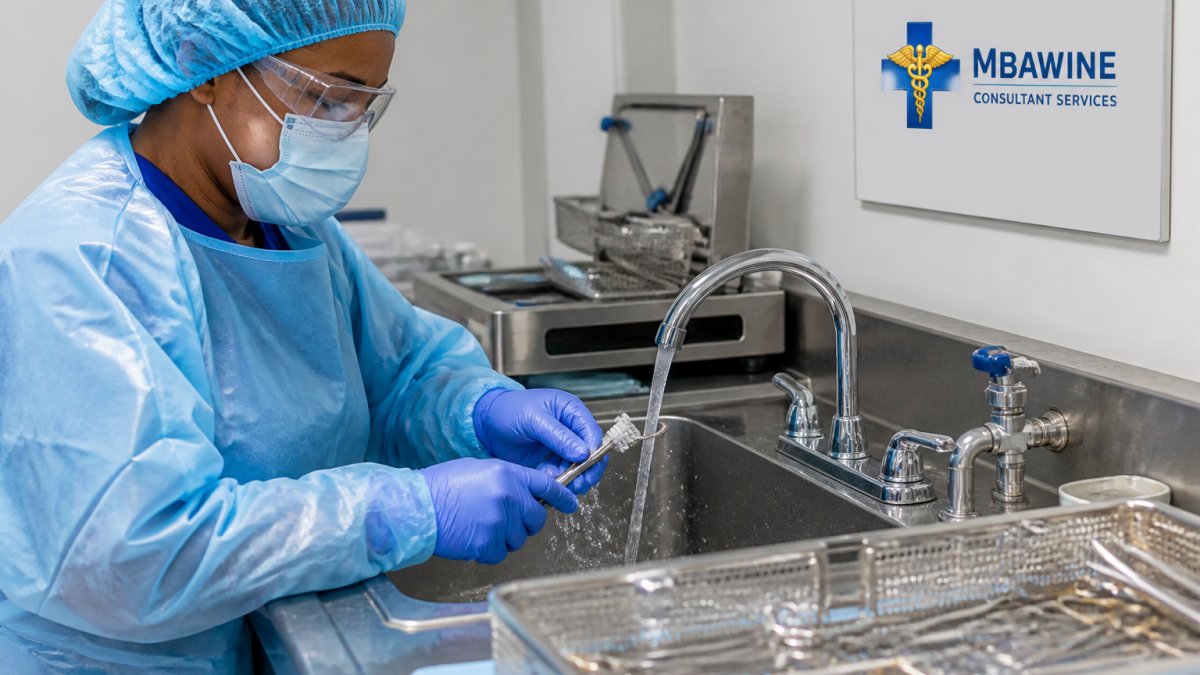
Here is the workflow most departments follow:
The CDC guidance on environmental infection control stresses that cleaning always comes first. If soil stays on a device, no sterilizer can guarantee sterility.
Manual scrubbing and ultrasonic cleaning do different jobs, and you need both. Brushes handle visible soil. The ultrasonic cleaner handles the hidden soil inside lumens and joints.
SPD quality assurance metrics are the numbers and records that prove your process works, turning "we think it's clean" into documented proof.
Track these on a set schedule:
| Metric | What It Shows | How Often |
|---|---|---|
| Biological indicator results | Whether sterilization actually worked | Every load with implants; daily for steam |
| Chemical indicator results | Whether the cycle met key conditions | Every package |
| Cleaning verification | Whether soil was removed | Per policy, on high-risk items |
| Load records | Traceability of each cycle | Every load |
| Recall turnaround | How fast you can trace a bad load | Tested regularly |
Biological indicators use live spores to confirm a cycle killed the hardest organisms; chemical indicators change color to show the package met conditions like temperature or steam contact.
Use them together, not as substitutes: the chemical indicator shows the package saw the right conditions, the biological indicator shows the process actually sterilized. For implants, hold the item until the biological result is read.
Each method fits a different device type, and picking the wrong one can damage instruments or leave them unsafe. Here is how the three main methods compare.
| Method | Best For | Main Trade-Off |
|---|---|---|
| Steam sterilization | Heat- and moisture-tolerant instruments | Can damage heat-sensitive devices |
| Ethylene oxide | Heat- and moisture-sensitive devices | Longer cycle and aeration time |
| Plasma (gas plasma) | Many heat-sensitive, moisture-sensitive tools | Limited to certain device types and sizes |
Steam is the workhorse: fast, reliable, and free of toxic residue. Ethylene oxide reaches devices that cannot take heat or moisture but needs careful handling and long aeration.
The FDA guidance on reprocessing medical devices reminds facilities that the device maker's instructions always come first.
Regulatory compliance ties your daily work to national rules and international standards. Most SPD teams assume these sources overlap or contradict each other; they do not. Each governs a different part of the chain, and knowing which is which keeps a department audit-ready.
Here is how the three main sources divide the work:
Accreditation surveys and state inspections rarely test your technique directly, they test your records. A surveyor will pick a sterilized tray off the shelf and trace it backward: which sterilizer, cycle, load, biological indicator result, operator, and day.
That is why documentation is the single most common compliance gap. The fix is not more paperwork, it is a traceability system that captures the record as a byproduct of the work rather than as a separate task.
Most sterilization guides stop at "keep good records," which is useless on a busy shift. The practical answer is a tracking system that ties each instrument and tray to its cycle automatically.
Manual logs are not automatically non-compliant, but they are slower to search, easier to lose, and more prone to gaps. A hybrid approach, electronic tracking for loads and implants, paper backup for downtime, suits departments that cannot yet invest in a full system.
ISO 13485 medical device quality standard
Most sterilization failures fall into a few repeatable categories.
| Problem | Likely Cause | Fix |
|---|---|---|
| Wet packs | Poor drying or overloaded trays | Recheck load and dry time |
| Failed biological indicator | Cycle fault or bad load setup | Quarantine load, review cycle |
| Stained or damaged instruments | Wrong method or residue | Match method to device |
| Missing load records | Gaps in documentation | Log every load at the point of use |
A common mistake is blaming the sterilizer first. In practice, the cause is usually cleaning, loading, or packaging.
Staff competency is the difference between a standard on paper and a standard in practice, and it is the area most sterilization guides skip entirely. They cover the standards; they rarely cover the people who execute them every shift.
Competency is not a one-time orientation. It is a cycle: train, verify, document, refresh. Build it with these habits:
Certification gives technicians a common vocabulary and baseline knowledge that on-the-job training alone rarely produces. The two most common entry points are CRCST (Certified Registered Central Service Technician), which covers the full sterile processing workflow, and CIS (Certified Instrument Specialist), which focuses on surgical instrument inspection, assembly, and care. Many departments use certification as a hiring preference or advancement requirement, and some states have moved toward requiring it for certain roles.
Certification is not a substitute for hands-on competency, but it shortens the ramp for new staff and gives experienced technicians a way to formalize what they already know.
Sustainability in sterilization is a genuine gap in most guides, which treat compliance and environmental impact as separate concerns. They are not: the same practices that reduce waste also reduce failed loads, the biggest source of wasted energy, water, and packaging in an SPD.
Sustainability and compliance pull in the same direction: both reward doing the process right the first time.
Mbawine Consultants helps sterile processing teams and individuals build that competency base through flexible remote learning and expert-led instruction.
The CDC recommends cleaning all instruments to remove gross soil before sterilization, then using a validated sterilization method based on the device type. Critical devices that enter sterile tissue require sterilization, while semi-critical devices contacting mucous membranes need at minimum high-level disinfection. Steam sterilization under pressure is preferred when the device can tolerate heat and moisture. Facilities should follow manufacturer instructions for reprocessing and maintain documentation of cycle parameters, biological indicator results, and staff competency.
Steam sterilization using an autoclave is the most widely used method in healthcare facilities. It is fast, cost-effective, and leaves no toxic residue. Gravity displacement and pre-vacuum cycles are the two main steam cycle types. Ethylene oxide is used for heat-sensitive devices, and hydrogen peroxide gas plasma serves as a low-temperature alternative for certain instruments. The choice depends on device material compatibility, lumen size, and manufacturer instructions for use.
AAMI ST79 provides comprehensive guidelines for steam sterilization and sterility assurance in healthcare facilities. It covers instrument tray assembly, packaging materials, loading configurations, cycle parameters, and quality monitoring. The standard requires biological indicators at least weekly and with every load containing implants. It also addresses event-related sterility, shelf-life considerations, and documentation requirements. Following AAMI ST79 guidelines helps departments meet accreditation surveyor expectations and maintain consistent sterility assurance levels.
Biological indicators should be used at least weekly for each sterilizer, according to AAMI ST79 guidelines. Every load containing an implant must include a biological indicator and be quarantined until results are available. For high-volume departments, daily biological monitoring is common practice. Chemical indicators go on the outside and inside of every package to verify exposure to sterilization conditions. Records of all biological indicator results should be kept for at least three years or per facility policy.


