

Last Updated: August 21, 2026
Before rolling out new protocols, document exactly where your team stands. Many facilities assume everyone's at the same competency level, they're usually wrong. Without a baseline assessment, your training will either move too fast for some staff or bore those who already understand the material.
Start by documenting what each technician currently knows about existing workflows. Ask specific questions: Can they explain the difference between high-level disinfection and sterilization? Do they understand why biological indicators matter? Can they troubleshoot a failed steam saturation cycle?
The baseline assessment also reveals which staff members can become peer trainers during your rollout. These internal champions often carry more credibility with colleagues than external instructors. Document your findings in a simple spreadsheet: technician name, current certifications (CRCST, CIS, or neither), years of experience, and specific competency gaps. This becomes your roadmap for customized training paths.
Your training manual is the foundation for consistent protocol implementation across your entire SPD. Organize it by actual workflow steps rather than by topic: receiving instruments, sorting by type, selecting the right decontamination method, loading the washer-disinfector, inspection, and packaging.
For each section, include:
Include real photos of your own facility and equipment rather than generic stock images. Add a glossary defining terms like "bioburden," "HLD," "autoclave," and "aseptic technique." Make the manual searchable and easy to update. Digital formats work better than printed versions because you can push protocol changes to all staff simultaneously.
Classroom instruction alone won't stick. Your staff need supervised hands-on practice with actual equipment, real instruments, and genuine workflow scenarios. Structure hands-on sessions around the most critical skills: proper decontamination technique, autoclave loading and operation, and troubleshooting common equipment failures.
The key is making mistakes visible during training. When a technician loads instruments too densely in the washer, they see immediately why spray patterns don't reach hidden surfaces. When they place a chemical indicator incorrectly in an autoclave load, the instructor can explain why that position doesn't validate sterilization.
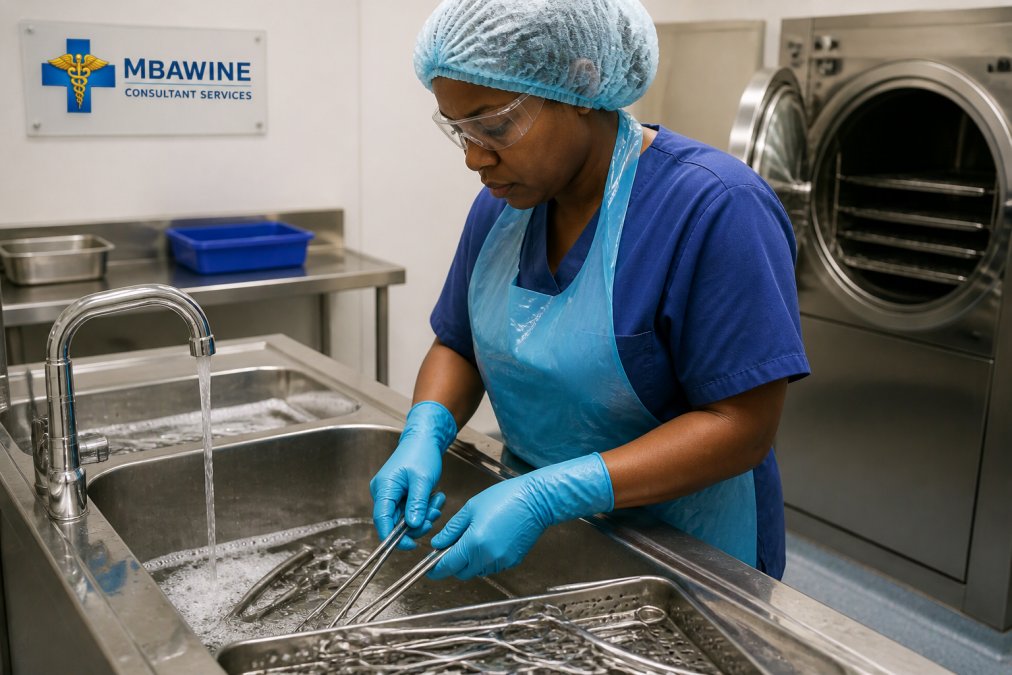
Build in scenario-based practice: "Your autoclave shows a failed biological indicator on a load that's already been released to the OR. Walk me through what you do next." These scenarios force staff to think through actual problems they might encounter.
Schedule hands-on sessions in small groups, no more than 4-5 technicians per instructor. Larger groups mean less individual practice time and more standing around watching others work.
This depends on the scope of change and your staff's existing knowledge. Minor protocol updates might take 2-4 hours of focused training plus supervised practice. Major protocol overhauls typically require 8-16 hours of instruction plus 10-20 hours of supervised practice.
Spaced learning works better than front-loading all training into a single day. A technician who receives 4 hours of training on Monday, then practices the new protocol with supervision on Tuesday and Wednesday, retains far more than someone who sits through an 8-hour marathon session (peer-reviewed research).
During the probationary period, typically 30-60 days after formal training ends, technicians should work under direct supervision on new protocols. A supervisor observing a technician's first 10 autoclave cycles catches technique problems early.
Budget time for competency reassessment. After the initial training period, use your competency assessment checklist to verify that each technician can perform new tasks correctly and independently. This typically takes 30-60 minutes per technician.
New protocols usually include updated infection prevention measures, different isolation techniques, new chemical disinfectants, modified sterilization parameters, or changes to aseptic technique. These directly affect patient safety.
Start with the evidence. Explain that infection prevention practices in sterile processing are built on evidence-based standards from organizations like AAMI (Association for the Advancement of Medical Instrumentation) and CDC guidance (the CDC). When a technician understands that a specific decontamination method was chosen because research shows it reduces bioburden more effectively than alternatives, they're more likely to follow it consistently.
Address the most common infection prevention mistakes: inadequate decontamination before sterilization, improper chemical indicator placement, compromised sterile barriers during storage, and aseptic technique failures during instrument handling. For each mistake, explain the consequence: bioburden carryover that survives sterilization, undetected sterilization failures, or contamination during patient care.
Make infection prevention personal. Tie it to patient outcomes: "The decontamination step you're performing prevents surgical site infections. When we skip or rush this step, patients get infected." Include scenarios that test infection prevention judgment to build the judgment that keeps protocols effective even when circumstances vary.
Your competency checklist verifies staff can actually perform new protocols correctly, not just understand them in theory. Focus on observable behaviors and measurable outcomes.
Structure the checklist around the specific tasks your new protocols require. For a technician trained on new decontamination equipment, the checklist might include:
Each item should have clear criteria for "competent" performance. Instead of "demonstrates proper technique," use: "Loads washer-disinfector with maximum 75% chamber capacity, with instruments oriented to allow spray access to all surfaces."
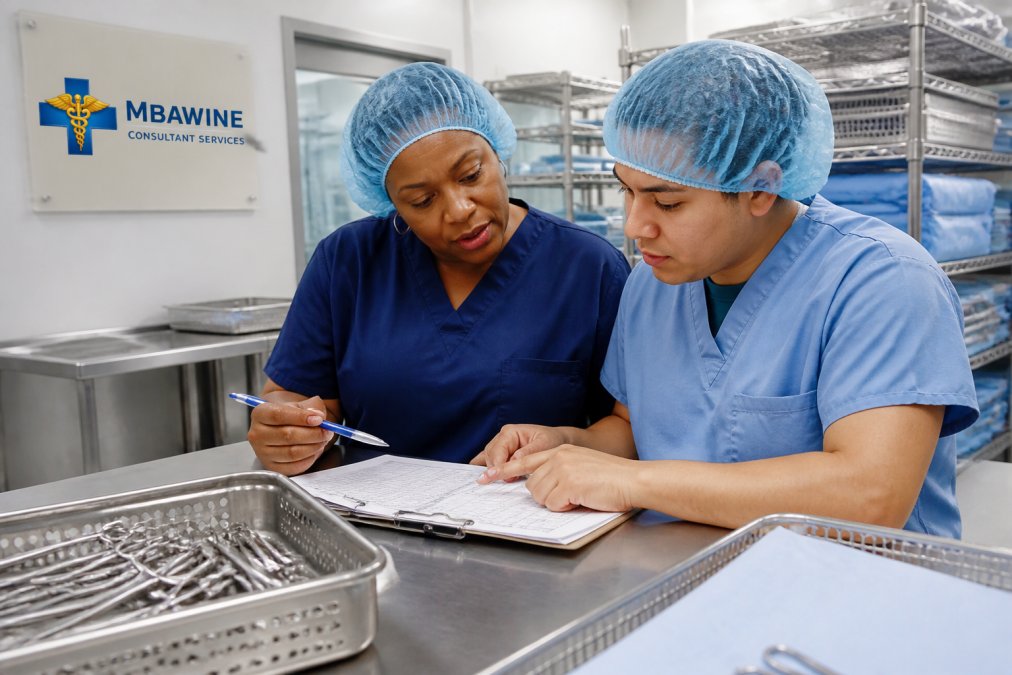
The assessment should be conducted by a supervisor or qualified trainer who observes the technician performing the actual task with real equipment. Observation takes 30-45 minutes per technician per major task. Document results clearly, noting which items the technician performed correctly, which need additional practice, and any specific coaching provided. Keep these records for compliance purposes.
Set a timeline for reassessment. For new protocols, consider reassessment at 30 days, 60 days, and 90 days.
| Assessment Timing | Purpose | Frequency |
|---|---|---|
| Initial (post-training) | Verify competency before independent practice | Once, before full release |
| 30-day reassessment | Catch technique drift early | Once, 30 days post-training |
| 60-90 day reassessment | Confirm sustained competency | Once, 60-90 days post-training |
| Annual reassessment | Verify ongoing competency | Yearly thereafter |
Protocol changes create uncertainty. Staff worry about doing something wrong or appearing incompetent. Psychological safety, the belief that it's safe to speak up, ask questions, and admit mistakes, directly affects how well new protocols get adopted.
Create this safety explicitly. During training, say: "You're going to have questions. That's expected. Ask them now, not after you're working alone." When a technician asks a question, answer it fully and thank them for asking. When someone makes a mistake during practice, treat it as a learning moment.
Communicate the reason for the protocol change. "We're updating our decontamination procedure because our current method doesn't consistently remove bioburden in hard-to-reach areas" is more compelling than "We're changing because management decided to."
Acknowledge that change is uncomfortable. "This is different from what you've been doing. It will feel awkward at first. That's normal. After a few weeks, the new way will feel automatic."
Address the fear of failure directly. "During the probationary period, you'll be supervised. That's not because we don't trust you. It's because we want to catch any issues before they affect patient care."
Create a culture where reporting errors or near-misses is encouraged, not punished. According to National Institutes of Health research on medical errors, the vast majority of errors go unreported because staff fear punishment. When you create psychological safety, errors surface early and get corrected before they reach patients.
Designate a peer mentor for each technician, someone who's already trained on the new protocols and can answer questions without judgment.
Manual tracking of training completion and competency assessments creates blind spots. A learning management system (LMS) tracks which staff completed training modules, when they completed them, and whether they passed associated assessments. It flags incomplete training so you know exactly who still needs instruction.
Beyond training completion, track performance metrics that indicate whether new protocols are actually being followed correctly in daily work:
Review these metrics monthly during the first 90 days after protocol implementation, then quarterly thereafter. Look for patterns. If one technician consistently fails biological indicator tests, they need additional autoclave operation training. If multiple technicians struggle with the same aspect of decontamination, your training manual or hands-on practice might need adjustment.
Share performance data with your team, not as punishment but as feedback. "Our biological indicator pass rate is 94%, which is solid, but we're targeting 98%. Here's where we're seeing failures, and here's the additional practice we'll provide."
Training sterile processing staff on new protocols requires more than a one-time classroom session. It demands a structured approach: baseline assessment to identify actual knowledge gaps, a clear training manual that matches real workflow, hands-on practice with real equipment, competency verification before independent practice, and ongoing tracking to catch issues early. The investment in thorough training pays off through better protocol adherence, fewer compliance issues, and ultimately, improved patient safety.
Mbawine Consultants specializes in exactly this kind of structured training implementation for sterile processing departments. Our team designs customizable training programs tailored to your facility's specific protocols, conducts hands-on instruction with your equipment, and helps you set up digital tracking systems to verify sustained competency. Whether you're implementing new decontamination methods, updating autoclave procedures, or rolling out comprehensive infection prevention changes, we provide the expertise and support to ensure your staff transition successfully. Enroll with Mbawine Consultants to access expert-led training that fits your facility's schedule and your staff's learning needs.
A: Effective sterile processing staff training combines evidence-based practice with hands-on learning. Start with a structured manual that covers core competencies, medical terminology, and standard operating procedures. Include decontamination, autoclave operation, steam saturation principles, and quality assurance protocols. Pair classroom instruction with supervised simulation before allowing independent work. Annual competency assessments ensure staff maintain proficiency. Psychological safety, where technicians feel comfortable reporting errors, strengthens compliance and reduces incidents. Remote learning modules work for theory, but hands-on practice with biological and chemical indicators must occur in-person in your SPD.
A: Timeline depends on protocol complexity and staff experience. Basic protocol updates typically require 2-4 weeks of structured training, including 1-2 weeks of hands-on practice with new equipment or techniques. Comprehensive reprocessing workflow changes may need 4-8 weeks. New hires in a Sterile Processing Department usually complete a probationary period of 3-6 months before independent certification. After initial training, annual education and competency assessments maintain standards. Remote modules can compress classroom time, but allow extra weeks for supervised hands-on learning to ensure proper autoclave operation, HLD (High-Level Disinfection) technique, and aseptic handling.
A: Compliance requires three layers: clear documentation, regular assessment, and accountability. First, provide a written SPD staff training manual template with step-by-step procedures, photos, and decision trees for common scenarios. Second, use a sterile processing competency assessment checklist to verify staff can perform each task correctly, don't assume understanding means execution. Third, implement digital tracking through an LMS (Learning Management System) to log who completed training and when. Fourth, conduct monthly audits of actual workflow for the first 90 days post-training. Finally, create psychological safety: staff who fear punishment hide errors rather than report them. Frame protocol updates as improvements that protect both patients and the team.
A: Training must align with AAMI (Association for the Advancement of Medical Instrumentation) standards and OSHA regulations for occupational safety. The CDC guidelines inform infection prevention and isolation techniques. ASC (Ambulatory Surgery Center) and hospital accreditation bodies (like The Joint Commission) require documented staff competency and annual continuing education. Your facility's compliance officer can specify which standards apply. Training documentation must be retained for audits. Infection prevention best practices, including proper decontamination, sterile barrier system handling, and biological indicator interpretation, are non-negotiable. If your facility processes instruments for external clients, third-party reprocessing units must meet additional FDA guidance on reprocessing medical devices.
This article was written using GrandRanker


