

Last Updated: November 1, 2026
Quick Summary
A sterile processing director is the operational leader responsible for every instrument that enters an operating room, from decontamination through sterile release back to surgical services. The director owns the system that keeps surgery safe and supplied, overseeing staff, compliance, inventory, and equipment.
A sterile processing director is the operational leader responsible for every instrument that enters an operating room, from the moment a contaminated tray arrives in decontamination to the moment a sterile set is released back to surgical services.
The day rarely follows a script.
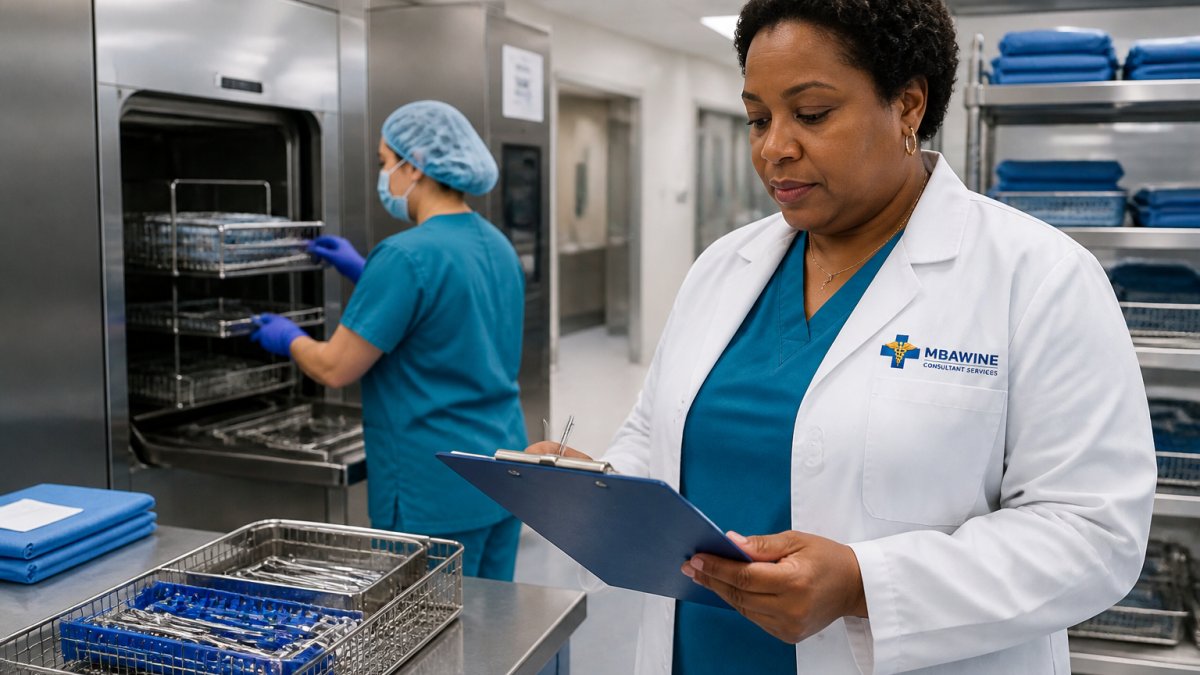
The director's scope covers department operations end to end. That includes oversight of cleaning, inspection, assembly, and sterilization workstreams; staff supervision and scheduling; inventory management for instruments and sterile supplies; equipment management and maintenance schedules; and the documentation that supports regulatory compliance.
Sterile processing sits inside surgical services as a service-line operation. The director reports upward through surgical services leadership or hospital operations and works daily with OR managers, infection prevention, and materials management. Sterile instrument availability is a shared outcome: when trays are late, the OR feels it first.
A sterile processing director job description centers on four duties: leading people, controlling process, ensuring compliance, and managing resources. The director sets policy for instrument reprocessing, supervises managers and supervisors, and answers for the department's audit results.
Reporting lines vary by facility size. In smaller hospitals, the director may report to the perioperative services director. In larger systems, the role can report to a vice president of operations and carry responsibility across multiple sites.
Scope also includes vendor sets and tray optimization decisions, storage and distribution standards, and coordination with central supply.
The sterile processing manager vs director distinction comes down to span and accountability. A manager runs daily operations in one department: schedules, workflow coordination, staff supervision, and immediate escalations.
Managers are closer to the bench. Many directors moved up from the manager seat, which is why the interim manager route matters: it lets a technician or supervisor carry management responsibility before committing to the director track.
Every sterile processing department runs the same cycle: point-of-use treatment, transport, cleaning, inspection, assembly into trays, sterilization, storage, and distribution back to the OR.
The review of sterile processing department reprocessing describes the department's core purpose as reprocessing surgical instruments to help prevent hospital-acquired infections during their use in surgery.
The cycle is also where most operational challenges surface. Instrument acquisition and tray optimization affect assembly time. Equipment downtime in sterilization stalls distribution.
Director postings vary by facility size and system, but the qualification pattern is consistent enough to plan against. Most employers stack four requirements: a degree, an active sterile processing certification, progressive reprocessing experience, and demonstrated leadership. The unique angle here is the mechanics, what each credential actually requires and how employers weigh them, which job listings rarely explain.
An associate degree is the common floor, and a bachelor's degree is increasingly preferred for director seats in larger systems. Relevant majors include healthcare administration, business, nursing, or a life-science field. Some directors enter with a clinical background, surgical technology or nursing, and cross into sterile processing leadership; others rise entirely through the reprocessing ranks. Neither path is disqualifying, but postings in multi-site systems tend to favor candidates who can show formal management coursework or a completed bachelor's.
The two credentials that appear most often in director postings are CRCST (Certified Registered Central Service Technician) and CIS (Certified Instrument Specialist), both administered through the Healthcare Sterile Processing Association (HSPA). A common baseline is an active CRCST plus several years of hands-on reprocessing experience; CIS signals deeper instrument expertise and is often paired with CRCST rather than substituted for it.
Eligibility is not automatic. HSPA sets its own requirements for each credential, including a combination of coursework, hands-on experience hours, and a proctored exam, and those requirements change over time. Verify current eligibility directly with HSPA before enrolling in a prep program, secondhand summaries go stale. For the definitive HSPA certification and advancement guide, start there.
A Certified Healthcare Leader (CHL) credential, also offered through HSPA, signals formal management training and appears in a meaningful share of director postings. Many directors pair it with quality or infection-prevention coursework, since the director answers for audit results and survey readiness. Certification maintenance matters too: most credentials require continuing education units to renew, and a lapsed certification can knock a candidate out of consideration before an interview.
Director postings commonly ask for several years of progressive sterile processing experience, often including supervisory or manager time. "Progressive" is the operative word, employers want to see scope growth, not just tenure. A technician who spent six years on the same shift reads differently than one who moved from technician to lead to supervisor and picked up budget or audit ownership along the way.
Beyond the checklist, directors are hired for judgment under pressure. Common screening criteria include:
Directors are accountable for outcomes, and hiring managers screen for evidence of outcomes, not just titles.
The career path usually runs technician, then lead or supervisor, then manager, then assistant director, then director. Each step adds people responsibility and budget exposure. The unique angle competitors miss is the preparation plan, what to deliberately accumulate at each rung so the director seat is a promotion, not a leap.
Technical mastery gets a candidate to manager; leadership skills get them to director. The skills that show up repeatedly in director postings include:
Director pay varies widely by facility type, region, and system size. What can be said with confidence: directors in large hospital systems typically earn more than those in standalone ambulatory surgery centers, and multi-site responsibility commands a premium.
The practical move is to benchmark against current postings in your own market rather than national averages, because pay can vary widely within a single metro.
A community hospital may accept an associate degree plus CRCST and five years of experience; a large academic system may prefer a bachelor's degree, CHL, and prior multi-site or assistant-director experience. Ambulatory surgery centers often run leaner departments where the director carries a broader operational load with fewer layers beneath them. Reading the posting carefully, especially the reporting line and the number of sites, tells a candidate more about the real scope than the title alone.
Directors live on a small set of metrics: turnaround time, sterile instrument availability, tray accuracy, audit compliance, and staff competency completion.
Standards and accreditation expectations shape the work. Facilities answer to accrediting organizations and to their own infection prevention committees, and survey readiness is a year-round job, not a scramble before a visit.
The hardest challenge is pressure to cut corners. Readers can also review sterile processing department management best practices for the challenges described here.
| Challenge | What It Looks Like | Director's Response |
|---|---|---|
| Turnaround pressure | OR adds cases, trays run late | Rebalance staffing by case load; audit workflow handoffs |
| Protocol shortcuts | Staff skip steps under time pressure | Nonpunitive reporting; re-train and re-audit |
| Equipment downtime | Sterilizer out of service | Preventive maintenance calendar; backup capacity plan |
| Staff turnover | Vacancies strain shifts | Cross-training matrix; pipeline partnerships |
Filling a director seat, or the manager and supervisor roles beneath it, is where many facilities stall. The department needs leadership that already understands instrument reprocessing, not a warm body learning on the floor.
Mbawine Consultants provides interim management and staffing solutions for surgical and ambulatory-surgical facilities, alongside certification preparation for CRCST and CIS through audio, video, and web conferencing.
A sterile processing director leads the sterile processing department, overseeing decontamination, cleaning, inspection, assembly, sterilization, and sterile storage of surgical instruments and medical equipment. They manage staffing, budgets, quality assurance, and regulatory compliance while coordinating with surgical services to keep instrument availability high. The role combines operational leadership with infection prevention and patient safety responsibilities across the facility.
A sterile processing manager runs daily floor operations: scheduling staff, monitoring workflow, and solving immediate reprocessing problems. A sterile processing director sets the department's strategic direction, owns the budget, answers to hospital administration, and leads quality and compliance programs. The director usually supervises managers and assistant directors, so the manager vs director distinction comes down to scope, accountability, and reporting level.
Most director postings ask for a bachelor's degree in healthcare administration, business, or a related field, plus several years of progressive sterile processing experience. Professional certification such as CRCST, CIS, or CHL strengthens a candidacy. Candidates also need working knowledge of AAMI standards, Joint Commission expectations, and instrument reprocessing workflows, along with proven staff supervision and budget management experience.
Start by earning CRCST certification and building hands-on skill in decontamination, assembly, and sterilization. Move into a lead or supervisor role to gain staff supervision experience, then pursue CHL or management coursework. Assistant director and manager positions build the operational and budget experience directors need. A structured sterile processing director career path typically takes several years of deliberate step-by-step progression.
CRCST and CIS establish technical credibility, while CHL signals leadership readiness. Some directors also pursue Certified Sterile Processing and Distribution Technician credentials or healthcare management certificates. Certification alone does not qualify someone for a director role, but it demonstrates commitment to quality standards and helps candidates stand out during promotion decisions.
Sterile processing carries real pressure because instrument availability directly affects surgical schedules. Sterile processing work can involve staffing strain and pressure to meet schedules. Directors manage that pressure by building reliable workflows, training staff well, and enforcing quality standards consistently.
The gap between a department that runs and one that merely survives is leadership depth. If your facility needs a director, interim manager, or a technician ready for the next step, Mbawine Consultants can help: interim management and staffing solutions, CRCST and CIS certification preparation with flexible remote learning, and financing options with no payment for the first 30 days. Get started with Mbawine Consultants and build a sterile processing team that holds its standards under pressure.


